ICRIER paper suggests 20% ethanol blending to remain the long-term target
The blend could temporarily fall to 15% during supply shortages or sharp food and feed price pressures
Sugar diversion should respond to stocks, while FCI rice should remain a residual feedstock and ethanol imports should be available
India should retain 20% ethanol blending as a long-term target but allow a temporary reduction to E15 when domestic ethanol supplies are inadequate or maintaining E20 starts putting disproportionate pressure on food and feed prices, the Indian Council for Research on International Economic Relations (ICRIER) said in a policy brief.
Titled, ‘Food vs Fuel: Recalibrating India’s Ethanol Blending Strategy’, the brief authored by Ashok Gulati and Tanmoy Adhikary said the ethanol blending programme needs to respond to changes in agricultural supply rather than operate with a fixed feedstock allocation.

1 October 2026
Get the latest issue of Outlook Business

India achieved its 20% ethanol blending target in the Ethanol Supply Year (ESY) 2025-26, five years ahead of the original 2030 schedule. Ethanol supplied to oil marketing companies rose from 1.73 billion litres in ESY 2019-20 to a projected 12 billion litres in ESY 2025-26, a compound annual growth rate (CAGR) of about 38%, the report said.

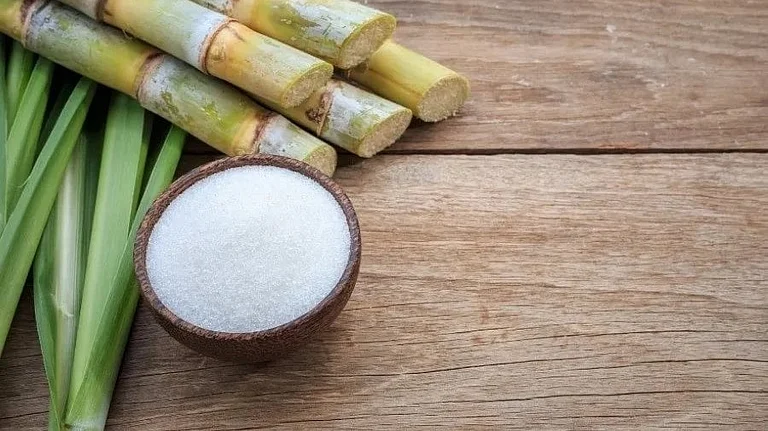

Over the same period, maize production grew at 11.4% annually, while rice and sugarcane production grew at 4.4% and 5.1%, respectively. The gap between ethanol demand and feedstock growth is creating a food-versus-fuel trade-off, it added.
The report said that the pressure is already visible in sugar. Low opening stocks, lower production and diversion of sugar towards ethanol have coincided with a 44% rise in modal retail sugar prices, from ₹45 per kg in July to ₹65 per kg by 29 August, ICRIER said.
Advertisement

E15 As Temporary Safeguard
ICRIER said the blending rate itself should provide flexibility during supply disruptions.
“The 20% target can remain the long-term objective, while a temporary reduction to E15 could be considered in years when domestic ethanol availability becomes insufficient or the cost of maintaining E20 becomes disproportionately high in terms of food and/or feed prices,” it said.
The choice between continuing with E20, importing ethanol or temporarily lowering blending should depend on the prevailing economic costs, it added.
Such flexibility would allow the programme to respond to temporary agricultural shocks without changing the longer-term E20 objective, the paper said.
Advertisement
Feedstock Allocation Should Change With Supply
The paper said sugar-based ethanol can remain important when sugar supplies are comfortable, but diversion should be reduced when stocks tighten. It proposed linking sugar diversion to a minimum stock-to-consumption buffer, with sugar-based ethanol procurement reduced progressively once stocks fall below the threshold.
FCI rice, meanwhile, should be used mainly when government stocks are genuinely surplus to food-security requirements. ICRIER said it should not become a structural source of ethanol feedstock.

The brief also called for greater scope for ethanol imports during domestic shortages. It said imported denatured ethanol had a 2025-26 CIF price of about ₹60.24 per litre, rising to around ₹63.55 per litre after the applicable duty and surcharge, before GST and transportation.
The paper also recommended an India-specific assessment of the full economic and energy costs of sugarcane, maize and FCI rice, including fertiliser, irrigation power, transport, processing, subsidies and the opportunity cost of alternative uses.
ICRIER said a longer-term expansion of ethanol should also move towards agricultural residues and other non-food biomass to reduce competition between food and fuel.
All India Distillers’ Association (AIDA) has dismissed the suggestions arguing that there is no shortage of stocks in the country.
"AIDA respectfully differs with the suggestion to roll back E20 to E15, as there is no feedstock shortage in the country. The very foundation of India's Ethanol Blending Programme is feedstock flexibility," said Bharati Balaji, Deputy Director General, of AIDA.
Balaji added that the government has "proactively diversified" the feedstock basket to include sugarcane juice, B-Heavy & C-Heavy molasses, surplus rice from FCI, damaged food grains and most importantly maize, the major contributor in the ethanol programme.
"This multi-feedstock approach itself was designed to ensure that there is never a shortage scenario and to balance farmer interests," Balaji said.