India plans ₹40,000 crore Oman-Gujarat deep-sea gas pipeline project
Proposed 2,000-km route aims to secure Gulf gas supplies independently
Project could benefit EPC firms amid rising Strait of Hormuz supply risks
In an effort to keep the gas supplies from the Gulf intact, India is planning to develop a ₹40,000c crore deep-sea gas pipeline from Oman, one petroleum ministry official informed The Economic Times. Once cleared, the pipeline would take five to seven years to build, it wrote.
The proposed 2,000-km pipeline, with a capacity of 31 MMSCMD and a depth of 3,450 metres, could become one of the deepest subsea pipelines globally. It will connect Oman directly with the Gujarat coast.

1 September 2026
Get the latest issue of Outlook Business

Reportedly, the ministry is set to direct state-run GAIL, Engineers India and Indian Oil Corp to prepare a detailed feasibility report. The government is also working off a pre-feasibility study submitted by the South Asia Gas Enterprise (SAGE), a New Delhi-based private sector consortium.
A dedicated pipeline from West Asia gives India stable, cost-competitive gas without depending on any transit country or maritime choke point.
The route will be built in a way so that it passes through the Arabian Sea via Oman and the UAE and avoids geopolitically sensitive regions. Through this, India can purchase gas from Oman, UAE, Saudi Arabia, Iran, Turkmenistan, and Qatar, a region holding 2,500trn cubic feet of gas reserves.
Advertisement
ICICI Direct research found that the proposed Oman–India deep-sea gas pipeline presents a sizeable long-term opportunity for India’s EPC, offshore engineering and industrial pipe manufacturing ecosystem, given the project’s estimated ₹40,000 crore capex and high technical complexity.
"Offshore EPC players with subsea execution capabilities, such as Larsen & Toubro, are likely to be key beneficiaries across engineering, procurement and offshore construction activities. Engineers India could benefit from feasibility studies, FEED engineering and project management consultancy assignments," it said.
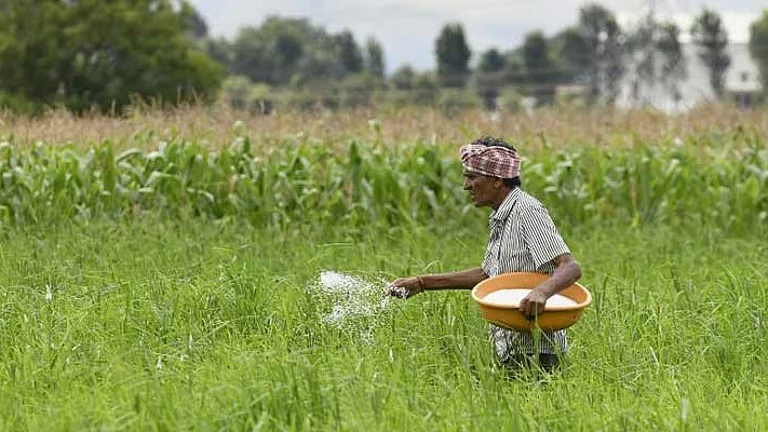
Gas Dependency
Around 80–85% of India's LPG imports transit through the Hormuz from Gulf suppliers.
Advertisement
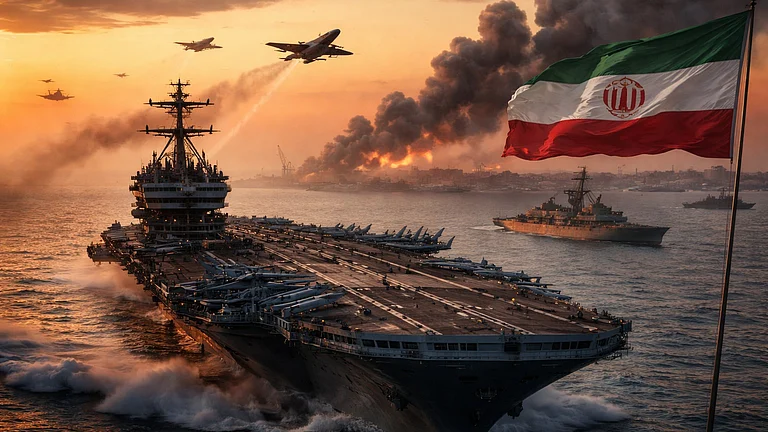
As peace talks between Iran and the US deadlocked, tensions around the Strait of Hormuz crisis linger. Iran took complete control of the strategic waterway and shut it following the Israeli-US joint military operation against it, which started on February 28.
Unlike oil, India does not maintain any strategic reserves for gas, which makes the supply disruption more critical for the country.