
CII has called for coordinated action between the RBI and the government to mitigate the economic impact of the West Asia conflict.
The industry body recommended targeted relief measures such as emergency credit guarantees, temporary MSME moratoriums, enhanced working capital limits and tax rationalisation.
It also proposed structural measures including a dedicated MSME crisis framework, forex swap window, liquidity support tools and a long-term Economic Shock Response Framework.
Amid no signs of conflict resolution, heightened supply-chain disruption concerns, and escalating geopolitical tensions in West Asia, the Confederation of Indian Industry (CII) on Sunday urged coordinated and calibrated policy measures from the Reserve Bank of India (RBI) and the Union government.
“The Government and the RBI have responded with speed, clarity and coordination. The early measures have helped stabilise sentiment and demonstrate that India’s policy framework is both responsive and resilient in the face of external shocks,” said Chandrajit Banerjee, Director General, CII.

1 September 2026
Get the latest issue of Outlook Business

However, amid the rapidly evolving geopolitical situation, the industry body raised concerns over underlying supply-side pressures in energy, logistics and trade channels. With the conflict expected to prolong longer than anticipated, CII highlighted that several sectors, particularly micro, small and medium enterprises (MSMEs), exporters and energy industries, continue to face operational and financial stress.
The government has already taken timely measures, including an excise duty cut and prioritisation of gas supply to households.
Advertisement
The RBI’s Monetary Policy Committee meeting began today, with market participants expecting the rate-setting panel to hold the benchmark repo rate steady, while shifting focus towards inflation, growth outlook and exchange-rate management.
“India’s experience during previous crises has shown that coordinated fiscal and monetary action can significantly strengthen resilience. The next phase of policy response may therefore need to focus on targeted liquidity support, credit facilitation, trade cost management and foreign exchange stability,” Banerjee added.
The industry body called for immediate, short-term and long-term policy recommendations to ensure policy measures remain ahead of the evolving situation. CII primarily urged the Ministry of Finance to consider introducing a time-bound conflict-linked Emergency Credit Line Guarantee Scheme for sensitive sectors.
Advertisement
It also called on the RBI to consider a temporary and clearly defined three-month moratorium and restructuring window for MSMEs, including flexibility in asset classification norms. Additionally, it recommended a Special Refinance Window for MSMEs and other affected sectors, along with supportive liquidity measures.
CII also suggested that banks reassess and enhance working capital limits for a limited period, with a calibrated increase in cash credit limits of up to 20% and concessional lending terms. The finance ministry was also urged to consider time-bound rationalisation of tax and duty structures on energy inputs, including a temporary waiver of the 2.5% customs duty on LNG imports.
The conflict has rattled global markets, particularly emerging market economies. To attract foreign capital and limit the flight of ‘hot money’, the industry body urged the Ministry of Finance to consider a temporary exemption on long-term capital gains tax for foreign investors.
“This calibrated incentive would signal stability, encourage patient capital, and help offset flight-to-safety sentiment triggered by the disruption,” CII said. It also recommended the introduction of accelerated depreciation benefits on capital goods.
Policy Response for Medium Term
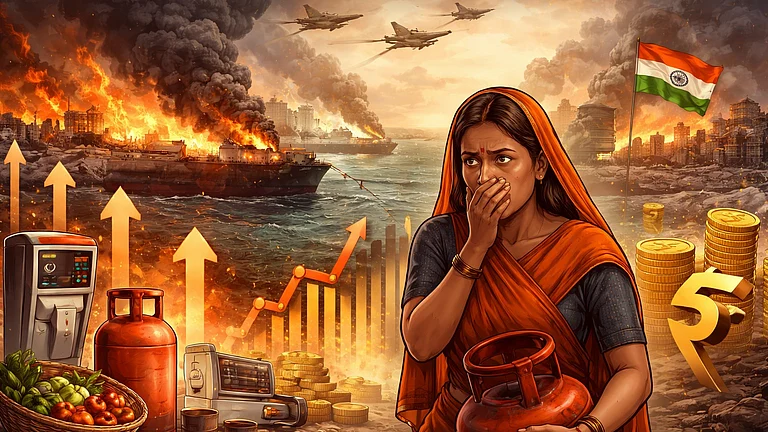
CII suggested institutionalising a standard MSME Crisis Response Framework, including a Crisis Credit Facility to support sectors affected by supply-chain disruption following the near-complete closure of the Strait of Hormuz. The central government was also urged to adopt improved subsidy management by gradually transitioning towards Direct Benefit Transfer-based delivery mechanisms.
Extension of financial and institutional assistance, along with diversification of suppliers to reduce dependence on a single geography, was also recommended.
It also called for revision of priority sector lending (PSL) norms, development of a Credit Information Company-based infrastructure financing framework, and a permanent conflict-linked Export Risk Support Facility.
Monetary Policy Measures
CII recommended that the central bank consider a special foreign exchange swap window for oil and gas public sector undertakings, alongside Open Market Operations (OMOs), to prevent undue volatility in bond yields and maintain financial stability.
The industry body also suggested that the Ministry of Finance and the RBI jointly institutionalise a standing Economic Shock Response Framework, featuring pre-defined, scenario-based policy playbooks linked to trigger points such as oil price thresholds of $100, $150 and $200 per barrel. The framework would integrate fiscal, monetary, trade and regulatory measures, supported by clear coordination protocols across ministries and regulators.
“As this is a supply-side shock, monetary policy—which operates largely through the demand channel—is not the appropriate tool. Instead, fiscal policy is better suited to addressing supply-side challenges,” said Gaura Sengupta, Chief Economist at IDFC First Bank, in a note ahead of the policy decision. “Monetary policy will need to ensure that the flow of credit is maintained in the economy, especially to at-risk sectors such as exporters and MSMEs. The policy stance may need to remain neutral to prevent further tightening of domestic financial conditions.”