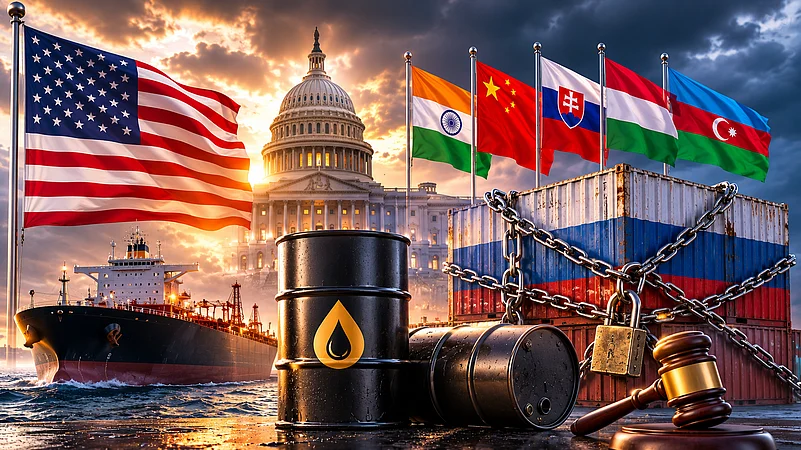

The US Senate has advanced a bipartisan sanctions bill targeting Russia and Iran
The Bill could allow the US President to impose tariffs of up to 100% on imports from countries buying large volumes of Russian crude
The proposed legislation combines sanctions on Russia with an extension of restrictions on Iran while giving the US President broad waiver powers
The US Senate has moved a step closer to approving a bipartisan sanctions package that could reshape Washington's economic pressure campaign against Russia while potentially affecting major buyers of Russian crude oil, including India and China.
The Senate voted 86-12 on Tuesday to clear the first procedural hurdle for the legislation, formally titled the Lindsey O. Graham Sanctioning Russia Act of 2026.

1 September 2026
Get the latest issue of Outlook Business

The bill is expected to expand from an earlier Russia-only proposal by adding provisions related to Iran after US President Donald Trump sought its inclusion.


If eventually enacted, the legislation would authorise the US President to impose tariffs of up to 100% on imports from certain countries purchasing large volumes of Russian crude oil or natural gas. However, the proposed tariffs would not automatically apply to India and remain subject to multiple legal and executive conditions.
Why Has US Senate Advanced Russia Sanctions Bill?
Democratic and Republican senators backing the measure said the legislation is intended to increase economic pressure on Russia over its war in Ukraine while also maintaining restrictions on Iran's energy and weapons sectors.
Advertisement
"We are proud to announce an agreement on legislation to stop purchasers of Russian oil and gas from fueling Putin's war machine and to continue restricting the Iranian regime's ability to support terrorism and build its nuclear programme," the bipartisan group of senators said, as per PTI.
The proposal was originally championed by the late Republican Senator Lindsey Graham. Following his death on July 11, his sister Darline Graham introduced the revised legislation along with Democratic Senator Richard Blumenthal.
The bill also extends the Iran Sanctions Act until 2031 and retains secondary sanctions on entities doing business with Iran.
Advertisement
What Does The Bill Actually Say?
The legislation goes well beyond tariffs and introduces a wide-ranging sanctions framework targeting Russian officials, financial institutions, energy companies and entities accused of helping Moscow bypass existing restrictions.
Under Section 112(a) of the bill, the US President would be authorised to increase duties on goods imported directly from Russia to up to 500% ad valorem.
The provision drawing the greatest attention for India is Section 113(a), which authorises duties of up to 100% ad valorem on imports from countries identified under Section 113(c).
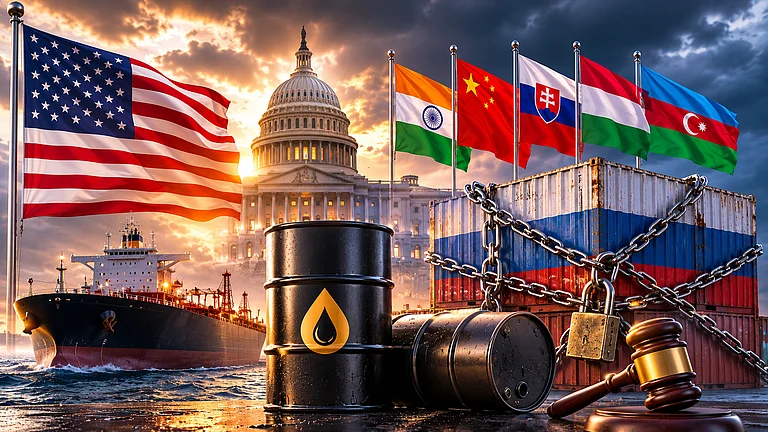
According to Section 113(c)(1), a country may fall within the scope of the measure if it knowingly makes new purchases of Russian-origin crude oil or natural gas after 30 days from the Act's enactment and is among the world's five largest importers of those commodities during the preceding 12 months.
The Section 113(c)(2) covers countries identified among the top five facilitators of Russian oil sanctions evasion.
The bill also requires the US Trade Representative to reassess the list every 180 days under Section 113(e) and adjust tariff rates depending on changes in purchasing behaviour under Section 113(b).
Why Is India In Focus?
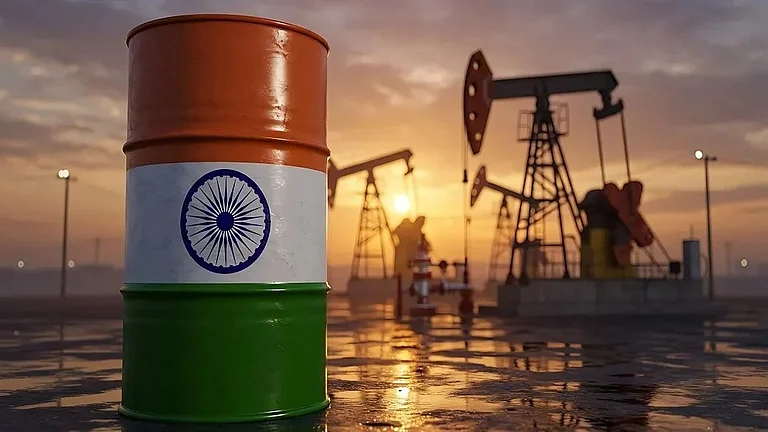
India has emerged as one of Russia's largest crude buyers since Western sanctions redirected Russian oil flows following the Ukraine conflict.
India and China are among Russia's biggest energy customers and could therefore fall within the scope of the proposed tariff framework if they meet the bill's qualifying conditions.
Senator Richard Blumenthal has identified China, India, Slovakia, Hungary and Azerbaijan among the countries likely to be affected under the revised proposal.
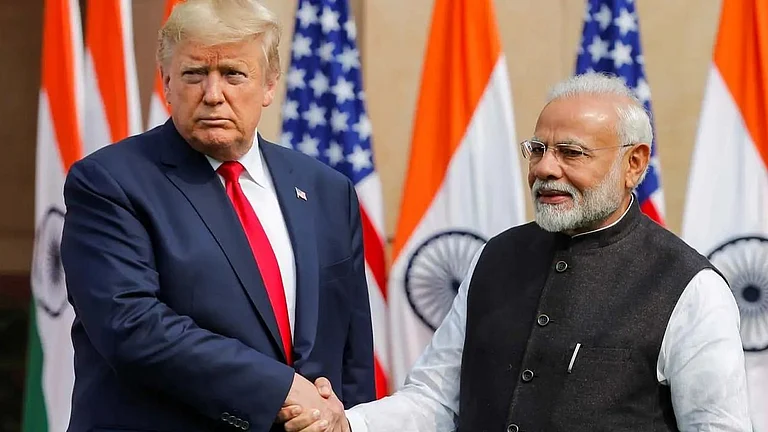
However, the bill itself does not name India. Instead, it establishes objective criteria based on import volumes and sanctions-evasion assessments under Section 113(c).
How Much India Depends On Russian Crude?
India's purchases of Russian oil have increased significantly over the past four years as refiners took advantage of discounted cargoes.
The Centre for Research on Energy and Clean Air (CREA) in a report had said that India's imports of Russian crude reached a record level in June 2026, with purchases worth EUR 4.5 billion, accounting for 83% of the country's Russian fossil fuel imports, as per PTI.
CREA said India imported EUR 5.5 billion worth of Russian hydrocarbons during the month, making it the second-largest buyer after China.
The report also noted that Russian crude imports climbed to around 2.7 million barrels per day, accounting for more than half of India's total crude imports in June, while deliveries to several Indian refineries rose sharply.

Would A 100% Tariff Automatically Apply?
The short answer is no. Although many reports have focused on the possibility of a 100% tariff, the legislation creates an enabling framework rather than an automatic penalty.
First, the bill must clear both chambers of Congress before becoming law.
Second, under Section 113(a), the President "shall... increase the rate of duty... to a rate of up to 100% ad valorem," giving flexibility over the eventual tariff level rather than mandating a fixed 100% rate.
Third, Section 115(a) allows the President to waive sanctions or duties if doing so is deemed to be in the national interests of the United States, subject to reporting requirements to Congress.
According to Reuters, the softer version reflects Washington's attempt to balance pressure on Russia with preserving strategic ties with partners such as India.

What This Means For India's Exports And Trade?
The proposed duties would apply to goods imported into the US from qualifying countries, rather than only to oil shipments.
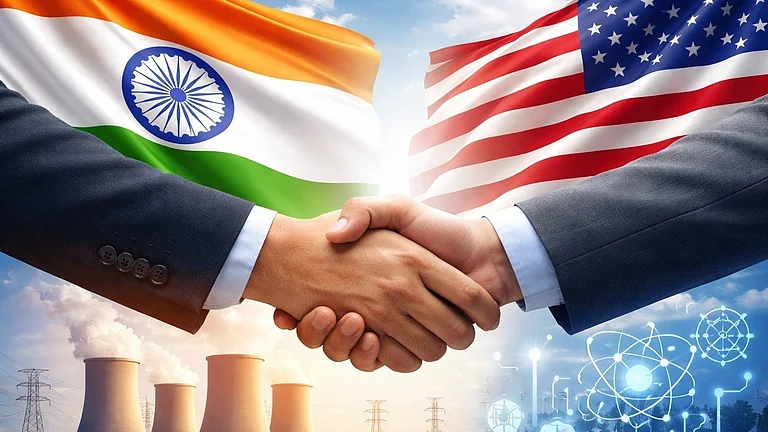
Moreover, India and US are negotiating a bilateral trade agreement (BTA) and aim to boost the trade between both the countries to up to $500 billion. India has also enhanced its energy imports from the US since last year following US pressure.
Eventually, the India-US BTA is expected to address all these concerns and come to an agreement where both the nations can focus on deeper trade while also preserving the individual relations with other countries.
Indian officials have previously expressed concern that imposing tariffs on countries such as India while providing exemptions for certain European gas importers amounts to "double standards" and could complicate bilateral ties at a time when both countries are negotiating a trade agreement, as per a report by The Economic Times (ET).

Even if the legislation is enacted, however, its eventual impact on India will depend on future presidential decisions, periodic reviews of Russian oil purchases and the use of waiver provisions contained in the bill.