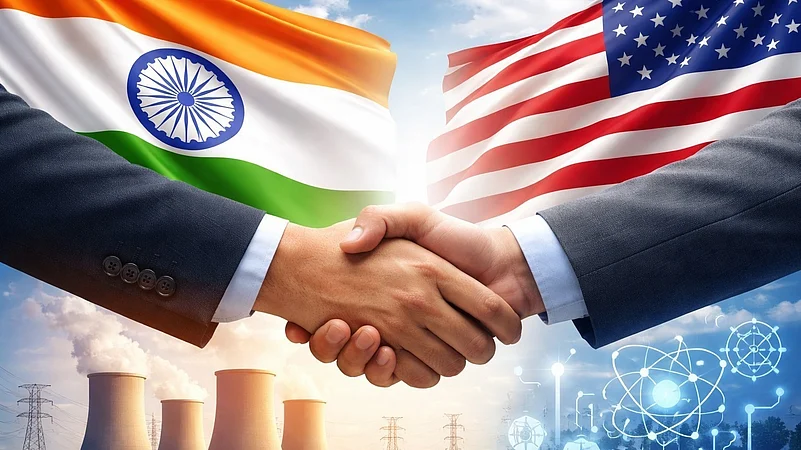

Ministry of Commerce said the government would remain engaged with the US to secure an early conclusion of the India-US BTA
Trump administration imposed additional duties ranging between 10% and 12.5% on imports from 60 trading partners
The textile and apparel sector has raised concerns over the impact of the new measures
India has reaffirmed its commitment to concluding a Bilateral Trade Agreement (BTA) with the United States after Washington imposed an additional 10% tariff on a range of Indian imports under its Section 301 investigation into forced labour-related trade practices.
The Ministry of Commerce and Industry on Friday said the government would remain engaged with the United States to secure an early conclusion of the India-US Bilateral Trade Agreement while continuing discussions on sector-specific issues, including textiles.
1 September 2026
Get the latest issue of Outlook Business

The ministry said the latest tariff is lower than the 12.5% duty proposed by the Office of the United States Trade Representative (USTR) in June, following sustained consultations and written submissions by India.


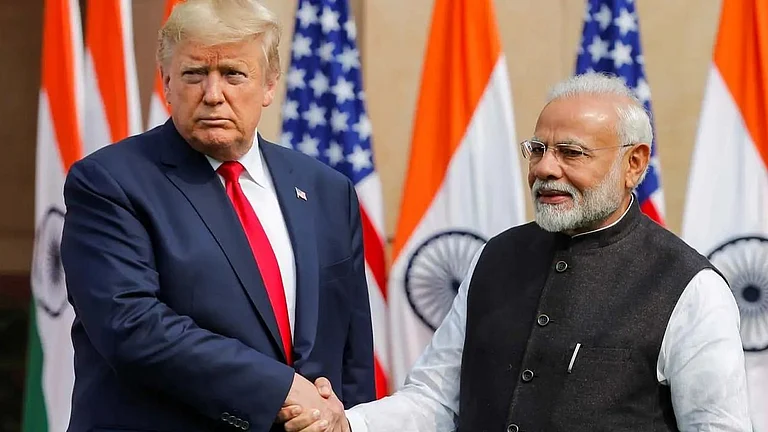
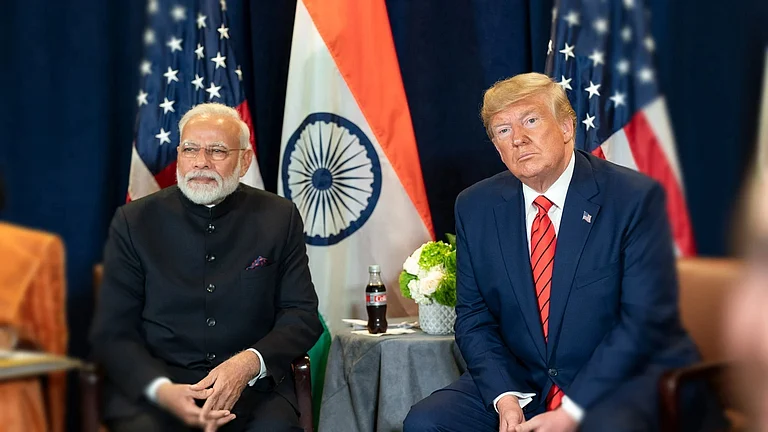
India has been placed in the lower tariff tier under the final Section 301 measures announced by the USTR on July 23. The government said this provides Indian exporters with a relative advantage over many other economies covered by the investigation.
The ministry added that several major export categories, including generic pharmaceuticals, smartphones and certain specified products, remain outside the scope of the additional duty.
Advertisement
Products already covered under Section 232 measures, such as steel, aluminium and auto parts, are also exempt from the new levy. As a result, an estimated 45% of India's exports to the United States will not attract the additional 10% duty, while the remaining 55% will be subject to it.
The Trump administration has imposed additional duties ranging between 10% and 12.5% on imports from 60 trading partners, alleging inadequate enforcement of prohibitions on goods produced using forced labour. The new Section 301 tariff is applied in addition to the existing US most-favoured-nation duties.
Textile Exporters Flag Competitive Disadvantage
The textile and apparel sector has raised concerns over the impact of the new measures. According to the Confederation of Indian Textile Industry (CITI), Indian exporters could lose competitiveness against regional rivals because India has been excluded from a proposed textile quota mechanism.
Advertisement

Under the proposed arrangement, specified textile and apparel shipments from Bangladesh, Cambodia, Indonesia and Malaysia made using US-origin cotton and fibre would be allowed to enter the American market without attracting the additional Section 301 tariff.
"The differential treatment risks diverting sourcing orders for textile and apparel items away from India," CITI Chairman Ashwin Chandran said, as per Reuters.
India's textile and apparel exports to the United States are valued at nearly $11 billion annually. Around 70% of Indian exports to the US — including garments, machinery, chemicals, plastics, leather goods, gems and jewellery, and furniture — could face both the regular import duty and the new Section 301 levy, according to a report by Global Trade Research Initiative (GTRI).
The Commerce Ministry also noted that the textile-specific mechanism mentioned in the US measures is yet to be established and operationalised, adding that India will continue discussions with Washington on the issue as part of the ongoing BTA negotiations.