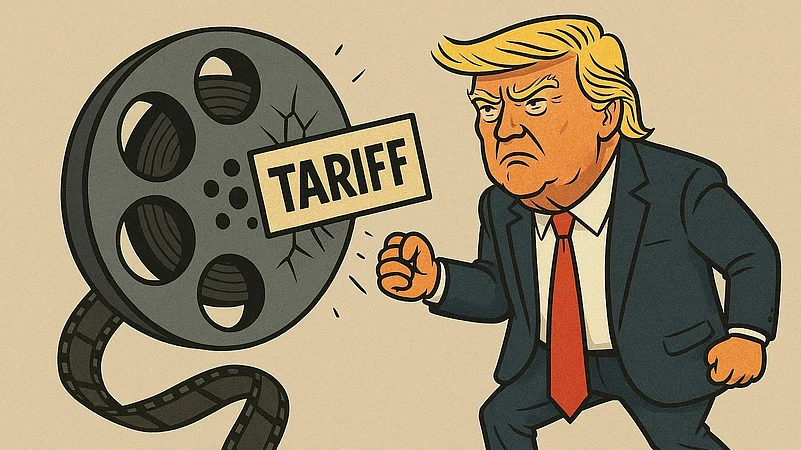

US Supreme Court expected to rule on legality of Trump's Liberation Day tariffs
A ruling against the administration could force $150 billion in refunds
Case contests if IEEPA emergency law permits import duties without Congressional approval
The US Supreme Court is set to issue rulings on Friday (EST) over the legality of President Donald Trump’s broad global tariffs. It comes after more than 900 lawsuits were filed by businesses seeking refunds on tariffs already paid, according to Bloomberg data.
Several business executives and other stakeholders are closely watching the decision, as an adverse ruling for Trump could open the door to an estimated $150 billion in refunds from the US government.

1 September 2026
Get the latest issue of Outlook Business

The court is expected to issue its rulings on Friday but, as is customary, has not indicated which case or cases it will take up. The decision is widely seen as a key test of the future direction of US trade policy and could have far-reaching implications for how tariffs are imposed, justified and legally challenged.




What is the Case?
The case revolves around Trump’s “Liberation Day” tariffs, announced on April 2, 2025. The decision imposed a 10% baseline duty on almost all imports, along with much steeper “reciprocal” tariffs, reaching nearly 50% in some cases, on goods from dozens of countries.
Advertisement
The tariffs were introduced through an executive order that invoked emergency powers under the International Emergency Economic Powers Act (IEEPA).
Many businesses argue that the White House lacked the legal authority to impose such broad, across-the-board tariffs. Importers have already paid substantial sums in duties, and the levies pushed up costs across global supply chains, raising prices for manufacturers, retailers and consumers. This has triggered hundreds of lawsuits seeking refunds of duties that companies say were unlawfully collected.
If the courts strike down the tariffs, the financial implications could be enormous. Reuters estimates potential refunds at roughly $133 billion to $150 billion, creating significant compliance, accounting and cash-flow challenges for both companies and government agencies. This would mark the first time the US Supreme Court has ruled on the legality of Trump’s sweeping tariff programme.
Advertisement
What Businesses Anticipate?
According to Reuters, expectations are rising that the US Supreme Court may strike down the tariffs imposed by Trump under the IEEPA. The anticipation follows comments made in November by both conservative and liberal justices, who questioned whether the law actually gave the president the authority to levy such duties.
Even so, some companies believe that invalidating the tariffs may not automatically translate into refunds. “It’s not in the government’s DNA to give back money. And Trump would not want to give back money,” said Jim Estill, CEO of Canadian appliance maker Danby, told Reuters. The company sells small refrigerators, microwaves and laundry equipment through major US retailers, including Home Depot, with products manufactured in China and other Asian countries hit by the tariffs.
Danby has paid about $7 million in tariffs so far. Estill said that even if the company succeeds in getting that money back, it could face pressure from retailers like Home Depot and ultimately customers, seeking a share of the refund. “It’s just going to be a dog’s breakfast,” he said, describing the likely complexity and confusion.
Trump is the first US president to use IEEPA to impose tariffs. Historically, the law has been used to sanction US adversaries or freeze their assets, not to levy broad-based import duties. According to Reuters calculations based on US Customs and Border Protection data, tariffs imposed under IEEPA generated an estimated $133.5 billion in collections between February 4 and December 14. Based on average daily collections in late September through mid-December, the total is now estimated to be approaching $150 billion.