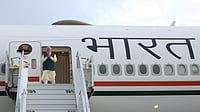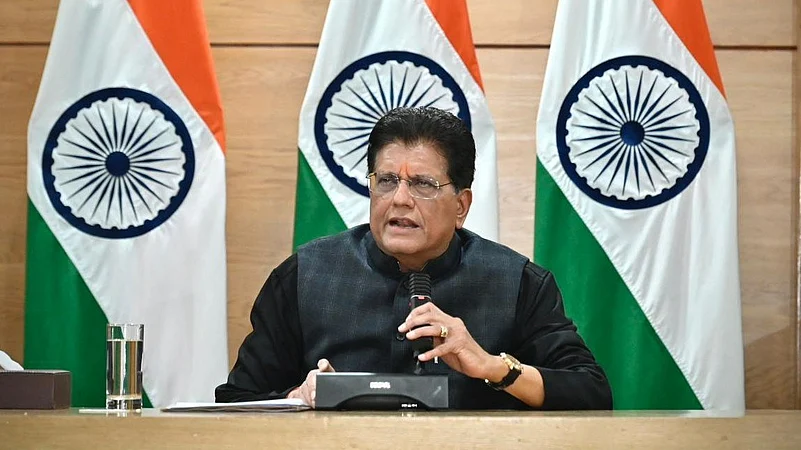
The first tranche of the India–US bilateral trade agreement (BTA) is to be formalised by mid-March this year, Commerce and Industry Minister Piyush Goyal said today — marking the first time New Delhi has officially outlined a timeline for the deal.
The minister also said that a joint statement would be released within the next four to five days and, once that is completed, an executive order would be issued. Following this, tariffs imposed on most Indian goods entering the US would be reduced to 18% from the current 50%.
“The joint statement will be released within the next four to five days. A formal agreement is being drafted which is to be signed by next month,” he said, adding that there is no investment commitment in the first tranche.
1 September 2026
Get the latest issue of Outlook Business

Commerce Secretary Rajesh Agrawal explained that tariff cuts on the Indian side can take effect only after the “legal element” of the agreement is completed. “On the Indian side, tariff reduction can only take place after the legal element, as their tariffs are executive tariffs. Our tariffs are MFN tariffs, so MFN tariff reduction can only take place after the legal element has been signed,” he said.
Agarwal also noted that India will receive further concessions after the legal formalities are done.
It remains unclear whether the signing ceremony will be conducted in person or through either side’s delegates. However, Goyal reiterated that bilateral trade is expected to reach $500bn, a target first articulated during Prime Minister Narendra Modi’s Washington visit last year.
Advertisement
India’s Purchase Commitments
In exchange for tariff concessions, India will buy around $500bn worth of US goods over the next five years, including $70–80bn in Boeing aircraft, Goyal said. India’s growth trajectory, he noted, will require substantial imports of energy, data-centre equipment, ICT products, aircraft and aviation components.
Agrawal said these planned imports are in line with India’s broader diversification strategy. “The items we have committed to buy are things that India currently purchases globally to the tune of over $300bn. Over the next five years, these purchases are expected to rise to $2trn. If we are able to source $500bn from the United States, it will enhance diversification and resilience in our supply chains,” he said.
Advertisement
India-US Trade Deal
On Monday, US President Donald Trump announced that tariffs on India would be reduced to 18% and that Washington had finalised the trade deal with New Delhi. The US had earlier imposed sweeping tariffs of up to 50% on India, including a 25% punitive duty linked to India’s purchases of Russian energy.
According to Trump’s claims, India has agreed to stop buying Russian oil and diversify its crude imports toward the US and potential Venezuelan supplies, prompting the rollback of the punitive tariffs. Prime Minister Narendra Modi said the agreement would open up opportunities for 1.2 billion Indians and give momentum to the government’s flagship Make in India initiative.
Goyal tabled the India–US trade deal in the Lok Sabha on Tuesday, stating that India had “successfully safeguarded” its sensitive sectors after nearly a year of negotiations with Washington. He also highlighted that the revised tariff rates for India are significantly lower than those faced by regional competitors, giving Indian exporters a relative advantage.