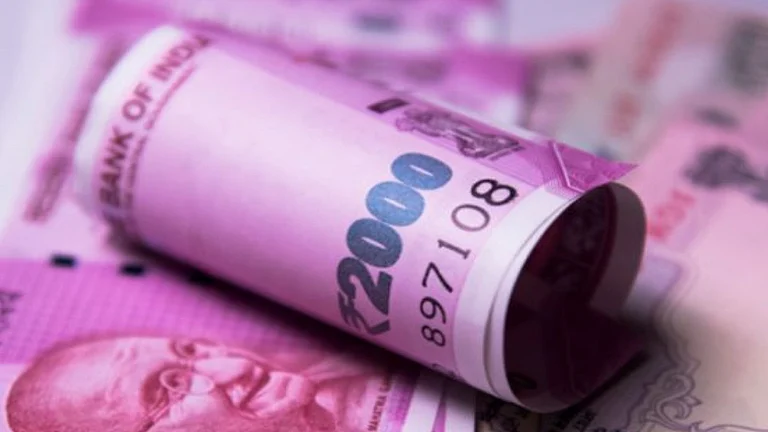
Rupee hits lifetime low of 95.21 per dollar despite RBI asking banks to cap net open positions at $100 million to curb volatility.
Rising crude prices and geopolitical tensions could widen India’s current account deficit to 2.5% of GDP by FY27, as per Standard Chartered estimates.
Closure risk of the Strait of Hormuz could push oil to $125 per barrel, potentially widening India’s balance-of-payments deficit by over $130 billion.
India’s current account deficit is going to take a drag owing to its relentless dependency on oil imports, making it difficult to stabilise the rupee as the war continues to weigh on sentiment, Bloomberg said. Despite aggressive and explicit interventions in the domestic forex market, the domestic currency continued to depreciate, breaching the psychologically crucial ₹95 per dollar on Monday amid rising uncertainties.
On Friday, the Reserve Bank of India issued a directive asking banks to limit their net open positions in the rupee to just $100 million at the end of every business day. The move is noted as a dramatic step to curb excess volatility driven by speculation in the forex market.

1 September 2026
Get the latest issue of Outlook Business

This action would require large and mid-sized banks to unwind or sell dollars, giving some cushion to the rupee. However, the decision provided only short-lived relief, as the rupee slumped to a lifetime low of 95.21 against the greenback after giving up gains from early trade.
According to the Bloomberg report citing economists, the price action seen in the forex market on Monday reflected India’s reliance on oil as the world’s third-largest crude importer.
Advertisement
Moreover, amid heightened uncertainty, India has been losing on both the current account and capital account fronts. Investors are pulling money out of domestic markets and fleeing to other safe-haven assets, including gold.
West Asia accounts for nearly 10 million Indian workers sending remittances, which are expected to fall, reducing foreign fund inflows and leaving a gap in the current account. With hot money fleeing, limited remittances, and dependency on oil imports, India’s widening current account deficit is set to worsen.
BoP Takes a Hit
As per the report, the current account deficit was projected to reach about 1% of GDP in the financial year ending March 31. It is now expected to widen to 2.5% in FY27, according to estimates from Standard Chartered Plc. Economists at Nomura Holdings Inc estimate that the current account deficit could widen by around 0.4% of GDP for every 10% rise in crude prices.
Advertisement
According to Bloomberg economists, under a scenario of prolonged closure of the Strait of Hormuz and escalating geopolitical tensions in West Asia, crude prices could average as high as $125 per barrel in FY27, which could widen India’s balance-of-payments deficit by over $130 billion. The report highlighted that such a hit would be an unprecedented shock to the Indian economy.
Before the war, Bloomberg economists expected India to post a balance-of-payments surplus of $10 billion. In FY24, India posted a surplus of $63.7 billion and a deficit of $5 billion in FY25, as per RBI data.
The report quoted Soumya Kanti Ghosh, Group Chief Economic Adviser of State Bank of India and a member of the Economic Advisory Council to the Prime Minister, as saying that such an economic plight “is something that has never happened since 1991.”