
RBI has cancelled the Paytm Payments Bank licence, stopping its banking operations.
Paytm says this won’t affect its app, UPI or other services.
RBI will move to the High Court for winding-up proceedings.
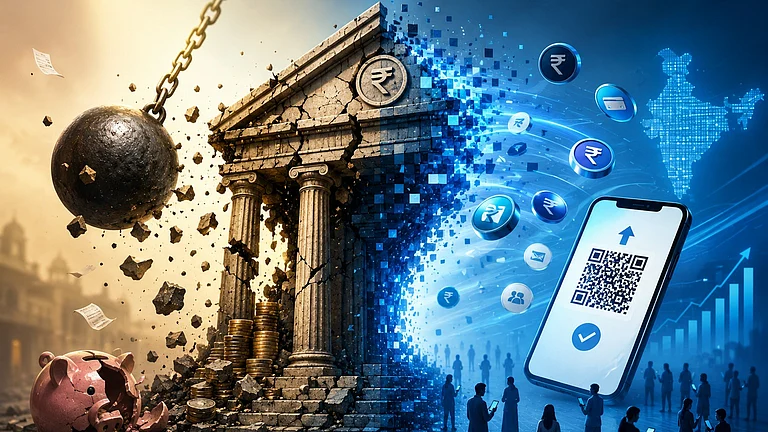
The Reserve Bank of India (RBI) on Friday cancelled the banking licence of Paytm Payments Bank Limited (PPBL) with immediate effect, more than two years after first restricting the lender from accepting fresh deposits. The central bank said it will approach the High Court to initiate the winding-up process.
Founded by One97 Communications and Vijay Shekhar Sharma, who held a 51% stake compared to One97's 49%, the payments bank will now cease operations entirely.

1 September 2026
Get the latest issue of Outlook Business

Why Did RBI Cancel the Licence?
The RBI cited persistent non-compliance as the primary reason for its decision. In its statement, the central bank said Paytm Payments Bank had failed to meet the conditions stipulated in its payments bank licence and had violated provisions of the Banking Regulation Act, 1949.


"The general character of the management of the bank is prejudicial to the interest of depositors as also the public interest… no useful purpose or public interest would be served by allowing the bank to continue," the RBI said.
Regulatory scrutiny of Paytm Payments Bank dates back to 2018, when an RBI audit of its customer onboarding process uncovered significant gaps in Know Your Customer (KYC) compliance, rules designed to verify customer identities and prevent financial fraud. Key violations included linking a single Permanent Account Number (PAN) to multiple customer accounts and allowing transactions beyond prescribed limits, raising concerns about potential money laundering.
Advertisement
The bank was also found to have failed to maintain a clear separation — known as a Chinese wall — between its operations and its group company, One97 Communications.
Timeline of Regulatory Action
The RBI's crackdown unfolded in stages. In June 2018, following its audit, the central bank directed the bank to stop onboarding new customers. This restriction was formally reissued with effect from March 11, 2022.
In October 2023, the RBI imposed a financial penalty of ₹5.39 crore on the bank. Then, on January 31, 2024, the regulator barred Paytm Payments Bank from accepting any further deposits, credits, or top-ups across customer accounts, prepaid instruments, wallets, FASTags and NCMC cards, a restriction that took effect from February 29, 2024.
Advertisement
Additional business restrictions followed on February 16, 2024. The licence cancellation on Friday marked the final step in this prolonged regulatory process.
What Happens to Customer Money Now?
The licence revocation has no concerning implications for depositors. The RBI has confirmed that Paytm Payments Bank holds sufficient liquidity to repay its entire deposit liability upon winding up. So, customer funds are safe.
Users can also continue using the Paytm app for UPI payments, mobile recharges, and other transactions as before, since these services operate independently of the payments bank.
Notably, One97 Communications, which owns the Paytm brand, moved quickly to reassure customers and investors. In a regulatory filing, the company stated it has no financial exposure to PPBL, having already written off its investment in the entity as of March 31, 2024.
The company confirmed that all key services — including the Paytm app, Paytm UPI, Paytm QR, Soundbox, card machines, Payment Gateway, and Paytm Money — will continue to operate without interruption.
"We would point out to all stakeholders that this matter is related to PPBL, a separate entity, and any reference to this matter should be made solely in the context of PPBL, and not attributed to the Company," One97 said in a regulatory note.
The RBI's earlier restrictions in early 2024 had already dealt a significant blow to One97 Communications, with its stock falling 40–50%. The company was forced to partner with banks like Axis and Yes Bank to migrate users and infrastructure, leading to temporary attrition to rivals like Google Pay and PhonePe. Over time, the company shifted toward a leaner, partner-driven model, a transition now made permanent with the bank's final closure.