The Quad announced fresh cooperation on critical minerals, energy security, maritime surveillance, and infrastructure projects, including a port initiative in Fiji.
The absence of any announcement on the next Quad leaders’ summit has sparked concerns over the grouping’s political momentum and strategic cohesion.
Analysts believe Donald Trump’s second term could reshape the Quad, with Washington appearing more focused on bilateral deals and burden-sharing than multilateral alliance-building.
The Quad — the strategic grouping of India, the United States, Japan, and Australia — met in New Delhi at a time when the platform is facing growing questions over its long-term political momentum and strategic relevance.
The foreign ministers announced new initiatives on critical minerals, maritime surveillance, energy security, undersea cables, and port infrastructure in Fiji, signalling that the grouping continues to expand cooperation beyond security issues. However, the absence of any announcement regarding the next Quad leaders’ summit sparked wider discussions over whether the grouping is entering a more uncertain phase under US President Donald Trump’s second term.

1 October 2026
Get the latest issue of Outlook Business

The Quad was revived in 2017 during Trump’s first presidency as part of Washington’s broader Indo-Pacific strategy aimed at countering China’s growing regional influence. Under former US President Joe Biden, the grouping evolved into a highly visible geopolitical platform with regular leader-level summits and cooperation on vaccines, semiconductors, supply chains, cyber security, and infrastructure.


Advertisement
Is Quad Undergoing Transition?
Unlike NATO, however, the Quad has no treaty obligations, collective defence mechanism, or permanent institutional structure. Experts suggest that the grouping depends heavily on political signalling and summit diplomacy to project unity and strategic deterrence, particularly toward China.
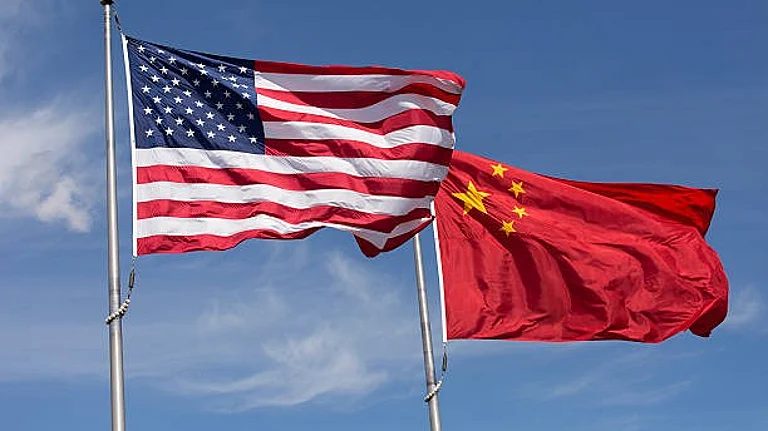
Beijing has consistently criticised the Quad as an attempt to contain its rise and often compares it to a potential “Asian NATO.” The grouping’s growing coordination on maritime security, critical minerals, and infrastructure has increasingly complicated China’s strategic ambitions across the Indo-Pacific.
Is Trump Reshaping QUAD?
A key announcement at the New Delhi meeting was the Quad’s first joint infrastructure project — a port initiative in Fiji — reflecting growing competition with China in the Pacific Islands region.
Advertisement
The grouping also unveiled a Critical Minerals Initiative Framework aimed at reducing dependence on Chinese-dominated supply chains.
However, analysts believe Trump 2.0 may reshape the Quad’s direction. While the administration continues to maintain a tough stance on China, Trump’s second term appears more focused on bilateral deals, tariffs, and burden-sharing rather than traditional alliance-building and multilateral coordination.
The shift has raised questions over whether the Quad can maintain the same level of strategic cohesion and visibility in the coming years.