The United States Trade Representative (USTR) has unveiled the findings of its Section 301 investigation into India and 53 other countries. Washington has proposed imposing an additional 12.5% tariff on economies that it says have failed to prohibit and effectively enforce restrictions on the production of goods linked to forced labour.
While India, China, Japan, South Korea, Brazil and Switzerland faces 12.5% tariffs, others will face a duty lower at 10%. The proposed duties will not take effect immediately and will be subject to public comments and further review.
According to reports, written submissions are due by July 6, while a Section 301 panel is scheduled to hold public hearings beginning July 7.

1 October 2026
Get the latest issue of Outlook Business

“The failure of our most important trading partners to address the importation of goods made with forced labor is unacceptable. This creates a dynamic where American workers are forced to compete globally on an unlevel playing field,” USTR Jamieson Greer said in a statement. “We will no longer tolerate this disparity,” he added in a notice.
Reports also stated that the USTR has proposed an additional tariff rate of 12.5% in certain cases, while duties on textile imports from some countries may be reduced.
The development comes as senior US negotiators continue discussions with New Delhi to finalise an interim bilateral trade agreement.
Advertisement
According to a report by The Economic Times, India is expected to focus on securing relief from Section 301-related measures and negotiating tariff rates that are lower than those imposed on competing economies.
Separately, Bloomberg reported that India has rejected allegations related to forced labour and has urged Washington to terminate the investigation.
New Delhi has also argued that such issues should be addressed through ongoing trade negotiations rather than unilateral trade measures.
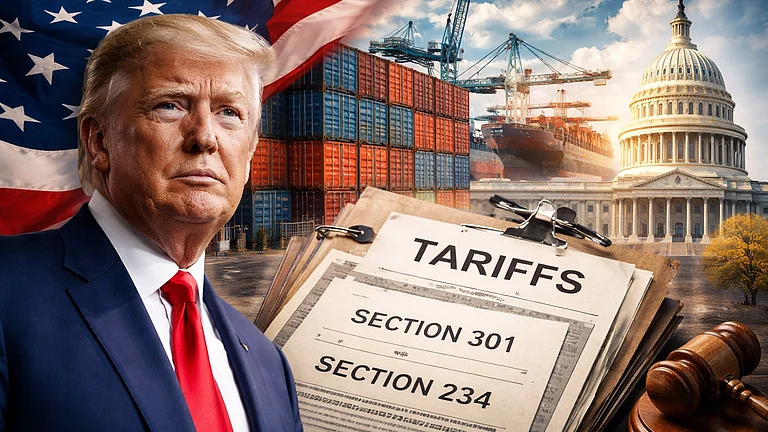
What Is Section 301?
Section 301 of the US Trade Act of 1974 is a trade enforcement mechanism that authorises the USTR to investigate the policies and practices of foreign countries. If an investigation finds that a country's actions are unfair, unreasonable, discriminatory, or harmful to US commerce, Washington can impose tariffs or other retaliatory measures.
Advertisement
The White House launched Section 301 investigations into several major trading partners after the US Supreme Court struck down President Donald Trump's "Liberation Day" tariffs.
According to the USTR's findings, India failed to impose and effectively enforce a prohibition on forced labour. The report alleged that this failure was "unreasonable" and placed a burden on or disrupted US commerce.


Union Commerce Minister Piyush Goyal said earlier this week that the bilateral talks are 99% completed between the two countries. Top envoys from Washington will be in New Delhi till June 4, with Greer expected to visit India once the bilateral trade agreement is finalized, according to a report by Reuters.