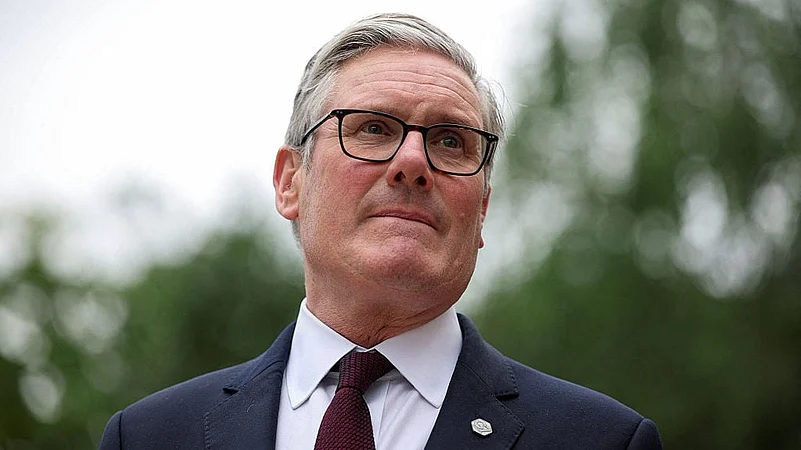

Starmer's government concluded the India-UK Comprehensive Economic and Trade Agreement (CETA), ending more than a decade of negotiations and paving the way for deeper economic integration.
The Labour leader worked to rebuild ties with British Indians and Hindu communities, distancing the party from earlier controversies and promoting closer engagement.
India-UK relations expanded into areas such as defence, technology, education, climate cooperation and strategic coordination during his tenure.
Keir Starmer's resignation as British Prime Minister marks the end of a chapter that saw India-UK relations reach one of their strongest points in recent years.
While his tenure will be assessed on a range of domestic issues, Starmer's government leaves behind a significantly strengthened partnership with New Delhi, anchored by the landmark India-UK Free Trade Agreement (FTA) and a broader push to deepen cooperation across strategic sectors.

1 September 2026
Get the latest issue of Outlook Business

The timing of his departure is particularly noteworthy. Just days before announcing his resignation, Starmer met Prime Minister Narendra Modi on the sidelines of the G7 Summit in France, where both leaders agreed that the India-UK Comprehensive Economic and Trade Agreement (CETA) would come into force on July 15.
The agreement is expected to provide a major boost to the bilateral trade relationship, currently valued at around £48 billion.
The FTA: Starmer's Biggest India Legacy
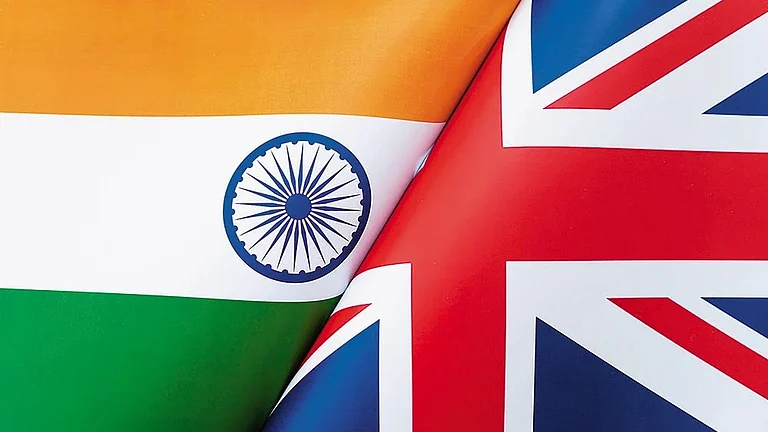
The India-UK Comprehensive Economic and Trade Agreement (CETA) was the culmination of more than a decade of negotiations between New Delhi and London, finally reaching the finish line under Starmer's government.
Advertisement
The foundations of a comprehensive trade partnership were first laid in 2013 during the United Progressive Alliance (UPA) government led by Prime Minister Manmohan Singh, with Anand Sharma serving as Commerce and Industry Minister.
On the British side, then-Prime Minister David Cameron had expressed interest in strengthening economic ties with India as part of the UK's broader international trade agenda.
However, negotiations progressed slowly over the years, complicated by differences over market access, tariffs, services trade, mobility of professionals and regulatory standards.
The UK's decision to leave the European Union following the 2016 Brexit referendum further altered the trajectory of trade discussions, requiring London to redefine its trade relationships outside the EU framework.
Advertisement
Subsequent rounds of negotiations continued under different governments in both countries, but several sticking points prevented a breakthrough.
Issues such as visa rules for Indian professionals, tariff reductions on automobiles and alcoholic beverages, and greater access for British goods and services remained contentious.
Momentum accelerated significantly under Prime Minister Narendra Modi's government and Starmer's administration.
Working alongside Union Commerce and Industry Minister Piyush Goyal, the two sides intensified negotiations and eventually secured a breakthrough that ended years of deadlock.
Scheduled to come into force on July 15, the agreement is expected to deepen economic integration between the two countries and unlock new opportunities across sectors ranging from manufacturing and services to technology and innovation.
During a visit to Mumbai in October 2025, Starmer described the agreement as more than a trade pact.
"It’s not just a piece of paper, it’s a launchpad for growth," he said, highlighting India's growing economic importance and the opportunities that a closer commercial partnership could create for British businesses.
With India projected to become the world's third-largest economy by 2028, London increasingly views New Delhi as a critical economic and strategic partner.
Repairing Labour's Relationship With India
Beyond trade, Starmer's contribution to India-UK ties was also political.
When he became Labour leader in 2020, one of the major challenges facing the party was repairing its strained relationship with sections of the British Indian community.
During Jeremy Corbyn's leadership, Labour had faced criticism over its stance on Kashmir and was accused by some diaspora groups of adopting positions perceived as hostile towards India's interests.
Ahead of the 2024 general election, Labour's manifesto pledged to establish a "new strategic partnership" with India, centred not only on trade but also on security, technology, education and climate cooperation.
Starmer repeatedly sought to distance the party from previous controversies and position Labour as a reliable partner for India.
Outreach to the Indian Diaspora
A key aspect of Starmer's India strategy involved engagement with the Indian diaspora in the United Kingdom.
During the 2024 election campaign, he visited the Shree Swaminarayan Temple in north London and stated that there was "absolutely no place for Hinduphobia in Britain." The message was widely viewed as part of Labour's effort to rebuild ties with Hindu and Indian-origin voters.
As Prime Minister, Starmer continued that outreach, regularly participating in cultural celebrations such as Diwali events at Downing Street and engaging with diaspora groups.
For many observers, this represented a significant shift in Labour's relationship with one of Britain's most economically and politically influential minority communities.
Expanding Cooperation Beyond Trade
While the FTA dominated headlines, India-UK relations under Starmer extended far beyond commerce.
Labour's vision for the bilateral relationship focused on deeper cooperation in areas such as defence and security, advanced technology, higher education, clean energy and climate action.
As geopolitical competition intensified and global supply chains underwent restructuring, both countries increasingly found common ground in strengthening economic resilience, technological collaboration and strategic coordination.
Britain's Indo-Pacific ambitions and India's growing global influence also provided a foundation for closer engagement.
A Stable Foundation for the Next Leader
Starmer's departure creates uncertainty about Britain's domestic political direction, but the trajectory of India-UK relations appears relatively secure.
With trade, technology, education and security cooperation now backed by institutional mechanisms, the bilateral relationship appears less dependent on political personalities than in the past.
Unlike earlier periods marked by diplomatic disagreements and political sensitivities, India and the UK now share a relationship that is increasingly driven by economic interests, strategic cooperation and people-to-people ties.


The Bigger Picture
Starmer's tenure helped move India-UK relations beyond the political frictions that occasionally defined the partnership in previous years.
By combining economic cooperation with renewed diaspora engagement, his government created momentum that future leaders in both countries are likely to build upon.
As CETA comes into force and Britain prepares for a new prime minister, the relationship appears more institutionalised, commercially significant and strategically aligned than it has been in over a decade.