FCNR(B), ECB and OFCB schemes attracted over $136 billion between June and August, far exceeding initial expectations.
The inflows have strengthened India’s forex cushion and helped the rupee recover to a two-month high, while potentially supporting the balance of payments.
Excess banking liquidity has surged to around ₹10 trillion, while high oil prices and uncertain capital flows could keep the rupee under pressure.
The Indian rupee strengthened to a two-month high of ₹94.60 against the US dollar on Thursday, helped by more than $136 billion in foreign currency inflows mobilised through a combination of Foreign Currency Non-Resident (FCNR-B) deposits, External Commercial Borrowings (ECBs) and Overseas Foreign Currency Borrowings (OFCBs).
The inflows have given the Reserve Bank of India (RBI) a sizeable foreign currency buffer at a time when global financial markets remain volatile, crude oil prices are hovering around $100 a barrel and geopolitical tensions are weighing on emerging-market currencies.

1 October 2026
Get the latest issue of Outlook Business

But the surge in foreign currency does not necessarily mean the rupee is set for a sustained rally.

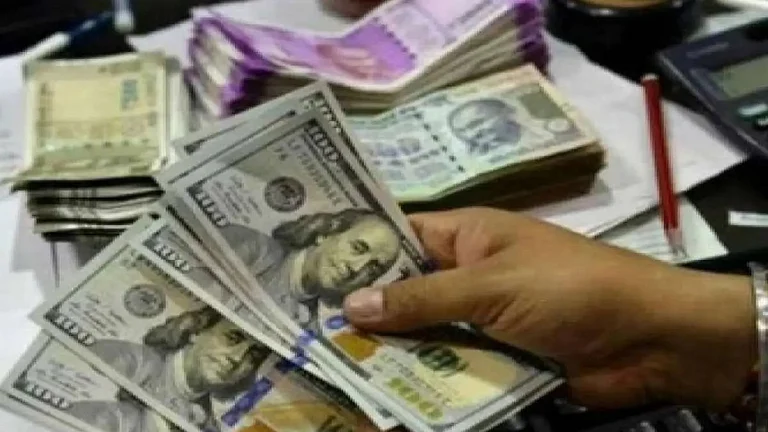
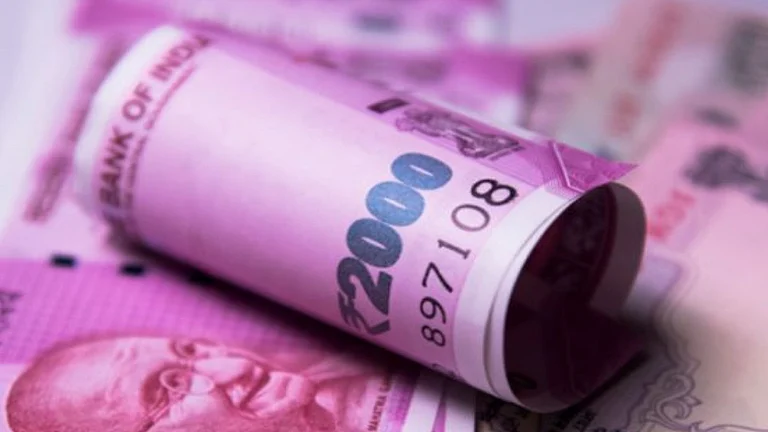

Economists say the inflows have helped arrest the currency’s weakness and strengthen India’s balance of payments position, but other factors — including oil prices, capital flows, interest rates and the trade deficit — will continue to determine the rupee’s trajectory.
Advertisement
Where Did The $136 Billion Come From?
Data released by the RBI show that the special foreign exchange measures have attracted more than $136 billion between June and August 2026. Of this, around $127 billion came through FCNR(B) deposits, while $5.26 billion was raised through OFCBs and another $3.89 billion through the ECB channel.
The RBI had initially announced the special swap facility and related measures in June, with the window scheduled to remain open until September 30. However, the central bank closed it a month early on August 31, after inflows far exceeded expectations.
State Bank of India research had initially estimated that the FCNR(B) scheme could attract around $70 billion. The actual inflow has therefore been substantially higher.
Advertisement
The latest inflows have also contributed to the RBI’s foreign exchange reserves, which stood at around $729 billion as of August 21.
Why Was The Scheme Needed?
The measures were introduced against the backdrop of significant pressure on the rupee and global markets.
Following the US-Iran conflict in late February, the rupee had depreciated by nearly 7.3% year-on-year against the dollar, while foreign investors pulled money out of Indian equities.
During periods of heightened uncertainty, investors typically move towards perceived safe-haven assets such as US Treasuries and the dollar. This can trigger capital outflows from emerging markets such as India and put additional pressure on their currencies.
At the same time, crude oil prices have remained elevated. India imports nearly 90% of its crude oil requirement, making the economy particularly sensitive to international oil prices. Higher crude prices increase the country's import bill and can put further pressure on the current account and the rupee.
Against this backdrop, attracting foreign currency through NRIs, overseas borrowings and other channels provides the RBI and the broader financial system with an additional external cushion.
Does More NRI Money Automatically Strengthen The Rupee?
Not necessarily. Remittances and NRI deposits provide foreign currency to the economy, but the rupee’s value ultimately depends on a broader set of factors.
“Remittances finance imports, consumption and investment, while NRI deposits provide banks with foreign-currency resources,” said Manoranjan Sharma, chief economist at Infomerics Valuation and Rating.
RBI data show that remittances financed roughly half of India’s merchandise trade deficit in FY24, helping cushion external shocks.
However, Sharma said exchange rates are ultimately influenced by trade deficits, capital flows, interest rates, oil prices and RBI intervention. Therefore, NRI inflows can support rupee stability, but they do not independently guarantee a stronger currency.
Can The $136 Billion Offset Foreign Investor Outflows?
The large inflows are expected to strengthen India's external position and could help compensate for some of the capital that has left domestic equity markets.
Reports citing economists have projected that the inflows could contribute to a balance of payments surplus of around $50 billion in FY27, assuming the current account deficit remains contained at around 1% of GDP.
India’s balance of payments had previously deteriorated to a 14-year low deficit of around 0.6% of GDP, making the fresh foreign currency cushion particularly significant.
The inflows also give the RBI greater room to manage periods of pressure in the currency market.
Why The 2013 Comparison Matters
There is also a precedent for using FCNR(B) deposits to stabilise the rupee. In 2013, during the US Federal Reserve’s “taper tantrum”, India introduced a similar FCNR(B) scheme under then RBI governor Raghuram Rajan as the rupee came under intense pressure.
The rupee subsequently appreciated by around 10% over three to four months, supported by strong capital inflows.
The current outcome has been different so far. While the latest inflows have helped stop the rupee’s sharp depreciation, the currency has remained relatively weak compared with several other emerging-market currencies.
SBI Mutual Fund Chief Economist Namrata Mittal said the RBI’s decision to close the FCNR(B) window early appears prudent in hindsight, given that the combined schemes attracted $136 billion in just three months.
The Liquidity Challenge
However, the massive inflows have created another challenge for the RBI: excess liquidity in the domestic banking system.
The banking system’s liquidity surplus has risen from near-neutral levels to around ₹10 trillion, raising questions about how aggressively the central bank will need to absorb the excess funds.
So far, the RBI has primarily relied on variable rate reverse repo (VRRR) operations to manage liquidity. Markets are now debating whether additional tools could be required if the surplus persists, market participants noted.
While the dollars strengthen India’s external buffer, their conversion into rupees can inject substantial liquidity into the domestic financial system.
What Next For The Rupee?
The immediate impact of the record inflows has been to arrest the rupee’s decline and strengthen India’s foreign exchange cushion. But economists caution against interpreting this as the beginning of a sustained appreciation cycle.
The 2013 experience shows that large foreign currency inflows can support the rupee, but the broader macroeconomic environment still matters.
With crude prices elevated, global uncertainty persisting and foreign portfolio flows remaining important, the rupee continues to face structural pressures.
Mittal expects the rupee to depreciate by around 4% over the year ahead, unless another major source of capital inflows shows sustained improvement.
The $136 billion inflow has bought India a much larger external safety net. Whether it translates into a stronger rupee will depend on what happens next to oil prices, capital flows, interest rates, trade and global risk appetite.