The RBI has received an unprecedented $127 billion through forex inflow schemes backed by its swap facility.
Estimated hedging costs could reach ₹36,000 crore over the next three to five years, potentially affecting RBI surplus transfers.
Strong yields on US government securities could offset currency-related losses and other costs, while the inflows may also ease pressure on the RBI to intervene in forex markets.
The Centre does not expect the Reserve Bank of India (RBI) to incur significant costs from the unprecedented $127 billion raised through foreign exchange inflow schemes backed by its special swap facility, people familiar with the matter told ET.
The assessment comes amid concerns that the FCNR-B and other forex deposit programmes could impose substantial costs on the central bank, particularly through hedging and liquidity management.

1 October 2026
Get the latest issue of Outlook Business

However, policymakers expect the RBI to earn healthy returns by investing the incoming foreign currency in US government securities, where interest rates have risen sharply. These returns could offset some or all of the expected costs, the people cited above said.


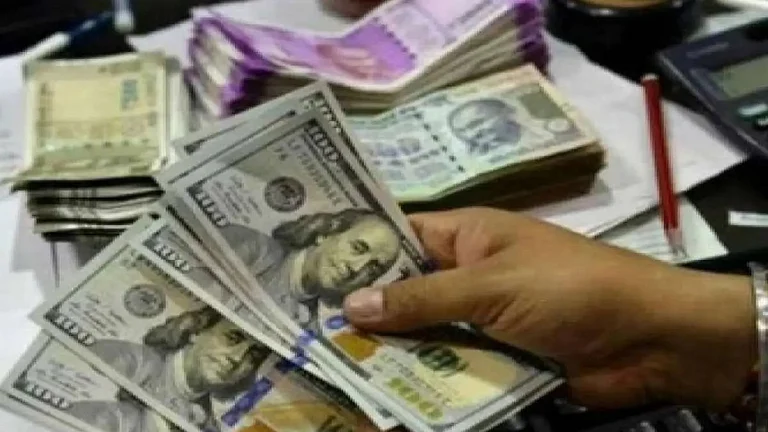
The yield on 52-week US Treasury bills stood at 4.14% on August 31, 2026. The large inflows could also reduce the RBI's need for costly currency-market intervention by providing a stronger buffer to manage volatility.
Advertisement
Two Key Costs For RBI
The inflows create two main challenges for the central bank.
The first is the cost of absorbing the additional rupee liquidity created when dollars enter the banking system, while the second is the exchange-rate risk associated with the foreign currency liabilities.
Economists say managing the excess liquidity will be the immediate priority. Over the medium term, however, the RBI will need to build a buffer to meet its dollar repayment obligations when the deposits mature.
Some economists estimate that hedging costs could be around 3%. On the roughly ₹12 lakh crore raised through the schemes, this could translate into a potential cost of up to ₹36,000 crore.
Advertisement
" The swap costs that RBI will bear on the dollar inflows could come to about 3% of approximately the Rs 12 lakh crore collected - or about Rs 36,000 crore - that will be reduced from the RBI's income in the next three to five years," said Madan Sabnavis, chief economist at Bank of Baroda.
He added that the RBI's contingent risk buffer (CRB) could also rise as its balance sheet expands, potentially reducing the surplus transferred to the government.
The CRB is a reserve maintained from the RBI's annual profits to cover monetary, financial stability and operational risks. For 2025-26, the CRB was set at 6.5% of the central bank's total balance sheet.
2013 Swap Scheme Offers A Precedent
Policymakers are also drawing parallels with 2013, when India turned to its diaspora for foreign currency deposits as the rupee came under severe pressure during the global "taper tantrum".
The rupee fell to a then-record low of ₹68.85 per dollar in 2013. Strong portfolio inflows subsequently helped it recover to around ₹61 per dollar in 2014.
By the time the three-year swap matured in 2016, the rupee had weakened again to around ₹67 per dollar. However, stronger foreign exchange reserves left the RBI in a better position to meet its repayment obligations.
The current programme carries a similar exchange-rate risk. If the rupee depreciates more than expected by the time the deposits mature, the RBI could incur losses.
Policymakers, however, believe the currency could appreciate as it did after the 2013 scheme, potentially allowing the central bank to make gains. Even if the rupee weakens, any resulting loss could be partly or fully offset by returns from investing the foreign currency assets in US Treasuries, one of the people said.
Excess Liquidity Could Reach ₹7 Lakh Crore
The other major challenge is the liquidity created by the record inflows.
Excess liquidity in the banking system could rise to around ₹5-7 lakh crore over the next six months. Policymakers believe India's strong economic growth should allow the financial system and broader economy to absorb much of this liquidity.
As a result, the RBI may not need to undertake aggressive liquidity absorption, they said.