
Germany signals progress on a long-awaited India–EU free trade agreement, with a possible end-January timeline.
Trade talks gain urgency as India–US negotiations stall amid rising tariff tensions.
Key sticking points remain, including tariffs, carbon levies, market access, and intellectual property rules.
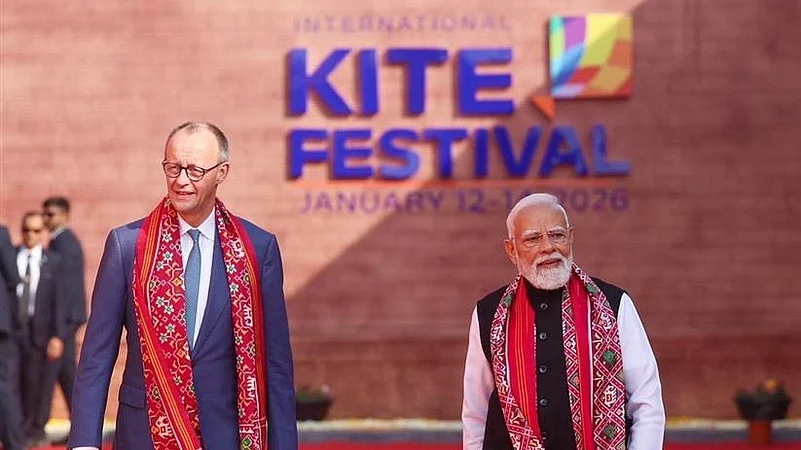
German Chancellor Friedrich Merz has signalled that an India–EU free trade agreement (FTA) could be concluded by the end of January, raising expectations around a long-awaited pact that could reshape global trade ties amid rising US protectionism.
The India–EU FTA has gained urgency as trade talks between New Delhi and Washington remain stalled, while tariff tensions continue to escalate.

1 September 2026
Get the latest issue of Outlook Business

“In any case, they will take another major step forward to ensure that this free trade agreement comes into being,” Merz said on Monday. EU officials have yet to formally comment.
Bilateral trade between India and the EU stood at €140.21 billion in 2024, making the bloc India’s largest trading partner.
Momentum Builds Amid Global Trade Shifts
The India–EU agreement would follow the EU’s recent trade deal with Mercosur, the South American trade bloc, and reflects Brussels’ efforts to diversify trade partnerships in a rapidly evolving global economic environment.
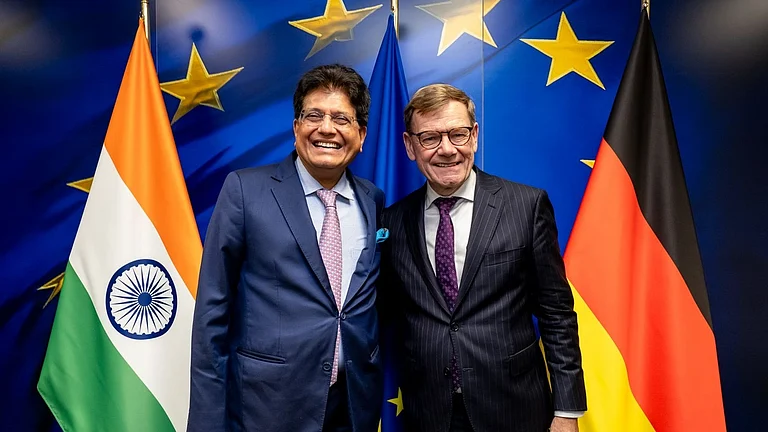
At a separate event, Union Minister of Commerce and Industry Piyush Goyal said the agreement was close to its final stages.
Advertisement
For New Delhi, talks with Brussels gained momentum after Washington imposed reciprocal and punitive tariffs. The proposed India–US trade deal recently collapsed following a breakdown in communication between the two governments.
Key Areas of Disagreement
The EU is seeking steep tariff cuts on automobiles, medical devices, wine, spirits, and meat, along with stricter intellectual property rules. India, in turn, is pushing for duty-free access for labour-intensive goods and faster recognition of its expanding automobile and electronics sectors.
Last month, Reuters reported, citing government officials, that disagreements between New Delhi and Brussels persist over steel exports, carbon border levies, and market access, requiring further compromise.
Advertisement
During Merz’s visit, India and Germany signed agreements covering critical minerals, healthcare, and artificial intelligence. Berlin has also urged New Delhi to reduce its dependence on Russian arms and energy imports.
“We are in complete agreement in our assessment of Russia’s war of aggression against Ukraine,” Merz said. “Obviously, it is not that simple in India, and I am the last person to visit other countries wagging my finger at them.”