
India–EU FTA cuts tariffs on European cars from 110% to 10% for 250,000 units.
European OEMs already localise 90–95% of India sales, limiting disruption fears.
Indian automakers see the pact boosting exports and attracting EU investment.
Geopolitical diversification drives both sides to open India’s protected auto market.
The concessions granted on European cars under the recently concluded India–EU free trade agreement (FTA) have emerged as one of the deal’s most consequential elements.
India currently levies a 70% duty on imported passenger vehicles priced below $40,000, while those above $40,000 attract an effective customs duty of 110%. European automakers today command less than 4% of India’s 4.4mn-unit car market, which is dominated by Japan’s Suzuki Motor and domestic manufacturers Mahindra and Tata, together accounting for nearly two-thirds of all sales.

1 September 2026
Get the latest issue of Outlook Business

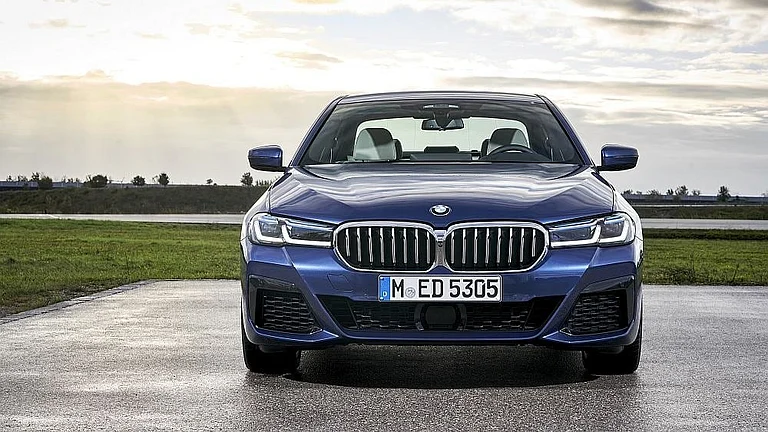
The long-pending FTA — finalised amid heightened tariff tensions with the US— provides for a sharp reduction in duties on EU-made cars, cutting tariffs to 10% from the existing peak of 110%, under a quota of 250,000 vehicles per year. This represents the largest opening to date of India’s historically protected passenger vehicle market to European OEMs.
Germany’s engineering association VDMA hailed the outcome as a “day of celebration for export-oriented mechanical engineering”.
Industry's Perspective
The concessions have prompted questions over whether domestic automakers could face competitive pressure. However, several industry leaders played down fears of disruption.
Advertisement
Mercedes-Benz India MD and CEO Santosh Iyer told PTI that more than 90% of the company’s sales in India come from locally manufactured “Made in India” models, with only around 5% of sales via CBU imports from the EU. As a result, he said, the company does not expect any price reduction arising from the FTA.
Echoing this view, CS Vigneshwar, president of the Federation of Automobile Dealers Associations (FADA), said the agreement would bolster Make-in-India, given that more than 95% of European OEM sales in India are already produced locally. He added that the pact expands consumer choice while opening reciprocal export opportunities for Indian manufacturers.
Advertisement
Anish Shah, Group CEO and MD of Mahindra Group, framed the agreement as a net positive for the sector. “We see a huge positive for the auto sector as it provides duty-free access to European markets and will attract European OEMs to invest further in India,” he said. “It lowers in-quota duties only at higher-priced segments, which will enhance scale in the core segments relevant to Make in India for the world. We feel this will not change any competitive dynamics in the industry.”
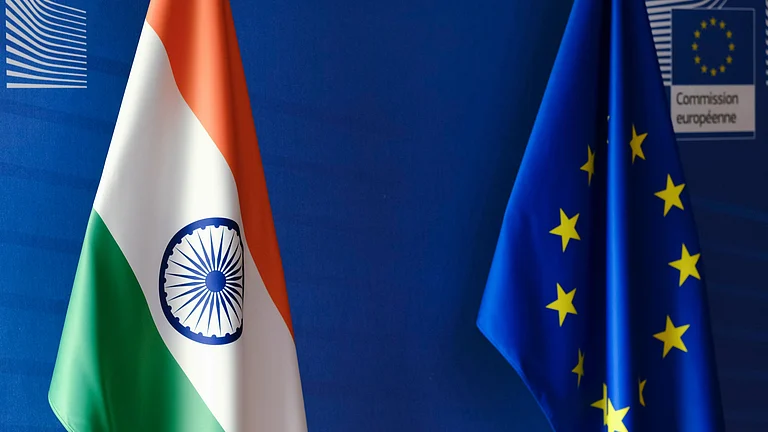
Global analysts are also viewing the deal through a geopolitical lens. Speaking to CNBC, Eugene Hsiao, head of China equity strategy and China autos at Macquarie Capital, said: “We all know the geopolitical events over the last week or so, and I think if you’re the EU or India, then you’re looking to diversify. That’s the first thing and this is probably the crux of why they would do something like this at this point.”