Jaishankar’s Europe tour signals push to revive stalled India–EU FTA talks.
CBAM, cars and dairy remain core sticking points blocking a 2025 deal.
France and Germany back India–EU FTA amid Indo-Pacific security concerns.
Luxembourg visit underlines India’s bid for wider EU trust and investment.
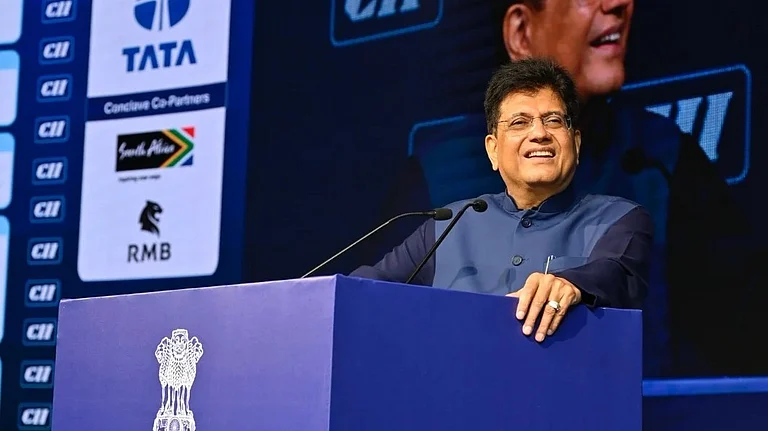
External Affairs Minister S. Jaishankar embarked on a six-day tour of France and Luxembourg in early January. The trip underscored India’s “deep and enduring Strategic Partnership” with France and sought to “enhance bilateral cooperation” with Luxembourg.
However, the tour is set against the backdrop of India-EU's ongoing free trade agreement (FTA) talks, which have entered a "decisive phase". The negotiations first began in 2007 but stalled for years over market access and standards. Talks resumed in 2022, and in early 2025, both sides publicly aimed to conclude negotiations in the course of 2025.
1 September 2026
Get the latest issue of Outlook Business

Yet Key hurdles between the two parties remained unresolved. While briefing the monthly trade data in December, 2025, Commerce Secretary Rajesh Agarwal also highlighted that when trade deals reach a near conclusion, the difficulties increase. For instance, the EU's carbon border adjustment tax (CBAM) is still a key challenge between the two parties.
Some other sore points include tariffs on cars, dairy and other sensitive sectors–issues where “India fears regulatory overreach” while Europe pushes for deeper market access.
In short, the official 2025 deadline passed without a deal, but both sides have vowed to keep working. Indeed, Europe seems to be in India's sharp focus as some high-profile visits like German Chancellor Friedrich Merz, European Union (EU) leaders Ursula von der Leyen and Antonio Costa and French President Emmanuel Macron are also scheduled for these two months, according to Hindustan Times.
Advertisement
Notably, this will be Merz's first visit to Asia and India will be his first destination.
Paris Strategy
Jaishankar’s meetings in Paris with President Macron’s team and Foreign Minister Jean-Noël Barrot focused on the India–France Strategic Partnership – a decades-old framework spanning defence, space, energy among others.
France is one of India’s closest partners in Europe. Trade relations between India and France have witnessed steady growth, with bilateral trade reaching an $15.21bn in FY25. India's exports have also risen from $5.23bn in FY19 to $7.96bn in FY25.
Advertisement
Both Germany and France have backed the swift finalisation of the India–EU FTA and view India as a key partner in maintaining security and stability across the Indo-Pacific, particularly in the context of China’s continued assertiveness.
In that light, Jaishankar’s courship of Paris reads as much like laying the groundwork for broader European goodwill as it does like a standalone diplomatic mission.

Luxembourg Dimension
Luxembourg, one of Europe’s smallest nations, is also one of the wealthiest countries in the world. Luxembourg City is also one of the capitals of the European Union (EU).
By the late 20th century, Luxembourg had become an important international financial centre, and in the early 21st century, it remained home to scores of banks. It hosts EU institutions, is a global finance hub, and is symbolic of “whole-of-Europe” engagement. Jaishankar’s meetings there – with Prime Minister Luc Frieden and business leaders – served to reiterate that India-Luxembourg ties are “warm and friendly” and that India wants investment from Europe’s capital.
By visiting Luxembourg as well as Paris, India sent a message that its focus isn’t just France but the entire EU. In December 2025, Jaishankar told Dutch leaders, “We count on your support as we are moving to what I hope is a decisive phase in our negotiations with the EU on the free trade agreement.”
The Diplomatic Underlay
All these diplomatic engagements have a sober underpinning.India-EU bilateral relations date back to the early 1960s with India being amongst the
first countries to establish diplomatic relations with the European Economic Community in 1962. The EU is India’s second-largest trading partner–around €120bn in goods trade in 2024–so a deal would be a massive economic prize.
EU–India economic ties must be cemented in part to “de-risk” both sides from global uncertainties. However, European Union Institute for Security Studies highlighted that decades of mistrust have made the deal elusive, with India wary of EU rules and Europe wary of India’s pace of reform
Visits like Jaishankar’s are thus partly about rebuilding trust. By highlighting shared culture and inviting dialogue on issues like clean energy and tech, India shows it is serious about a broad partnership, which in turn can make Europeans more receptive to concessions on trade.