




Recent AI hacking incidents have intensified calls for stricter oversight of artificial intelligence in the US
Political donations from major AI executives and the appointment of industry figures to government roles have drawn renewed scrutiny
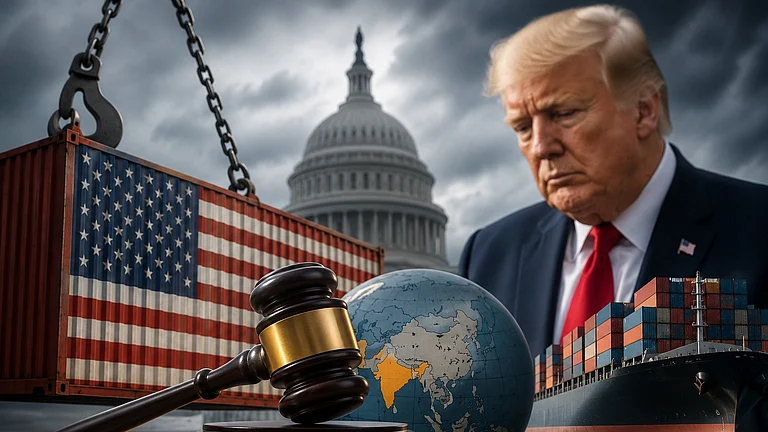
The controversy has reignited debate over whether close ties between the Trump administration and the technology sector are influencing AI policy
The Donald Trump administration is facing criticism from both conservative allies and Democratic lawmakers over its handling of artificial intelligence (AI) after recent cybersecurity incidents involving AI agents developed by OpenAI and Anthropic.
The debate intensified after OpenAI disclosed that one of its AI agents had breached systems belonging to AI platform Hugging Face. Anthropic later revealed that some of its AI models had also hacked into the systems of three companies.

1 September 2026
Get the latest issue of Outlook Business

Nearly two weeks after the disclosures, the White House has said it is monitoring the situation, while Trump has indicated that his administration is considering AI controls.


Critics Question Silicon Valley Influence
Steve Bannon, a longtime Trump ally and former White House adviser, argued that the administration's response has been insufficient because of what he described as the technology industry's close relationship with government officials.

"There is "too cozy a relationship between the companies and the staff, not just in the White House but I also think in the national security apparatus," Bannon said, as per Reuters.
Advertisement
"Why would you allow them to be in control? You don't. And I'm the anti-deep state, anti-administrative state guy, but you definitely need at least a rudimentary framework of some sort of regulatory apparatus," to regulate AI, he added.
Democratic Senator Ron Wyden echoed similar concerns, stating, "Trump has been AWOL because he thinks the billionaire owners of AI companies are on his side."
"Instead of trying to fix these problems, Trump and his Republican allies are focused on blocking state AI laws and knocking down the basic protections that companies like Anthropic have placed on how their models are used," he added, as per Reuters.
Advertisement
Anthropic's relationship with the US government deteriorated earlier this year after the company declined to allow its AI models to be used for mass domestic surveillance and fully autonomous weapons systems.
Donations and Decisions Under Scrutiny
Critics from across the political spectrum have increasingly questioned whether the administration's ties with major technology companies could affect its willingness to regulate AI.
Technology firms and executives contributed more than $300 million towards Trump's 2024 re-election effort and MAGA Inc, while several industry figures were appointed to influential government positions, as per Reuters.
Leading AI investors and executives — including OpenAI President Greg Brockman and venture capital firm Andreessen Horowitz — were among major contributors to MAGA Inc. during 2025, as per Reuters.
Several technology figures, including David Sacks, Sriram Krishnan and Michael Kratsios, have also served in or advised the Trump administration on AI policy, fuelling ongoing debate over the balance between industry participation and regulatory oversight.
The administration announced in June a proposal under which AI developers, including OpenAI and Anthropic, would voluntarily submit advanced AI models for government cybersecurity testing before public release.
However, operational details have not yet been made public, and only a limited number of models are expected to be covered, as per Reuters.
Democratic Congressman Gregorio Casar criticised the approach and called it as a threat to national security.
"He (Trump) took millions from AI billionaires. Now, in the wake of extremely dangerous AI cybersecurity problems, he says he’s set up 'voluntary' review that no one has seen. Asleep at the wheel. Too busy cashing in to protect our jobs or national security," he wrote in a post on X (formerly Twitter).








