
Despite a Pentagon ban labelling it a “supply chain risk,” Anthropic is in talks with the Trump administration over its advanced AI model Mythos.
The rift with Pentagon stems from Anthropic’s refusal to allow military use of its AI for surveillance or autonomous weapons, triggering legal battles and exclusion from defence contracts.
Mythos, touted as Anthropic’s most powerful model, offers cutting-edge cybersecurity capabilities but also raises concerns about enabling sophisticated cyberattacks.
Anthropic is in discussions with the Donald Trump administration about its latest AI model, Mythos, even as the company remains locked in a legal battle with the Pentagon over a contract dispute that led the US military to classify the AI firm as a national security supply-chain risk, Reuters reported.
The Pentagon's blacklisting of Anthropic last month stemmed from a disagreement over guardrails governing how the military could deploy the company's AI tools.

1 October 2026
Get the latest issue of Outlook Business

The dispute prompted the Department of Defense to bar Anthropic and its contractors from further use of its technology. A Washington, DC federal appeals court last week declined to block the blacklisting, handing the Trump administration a legal win, even as a separate appeals court had previously ruled in Anthropic's favour in a related challenge.


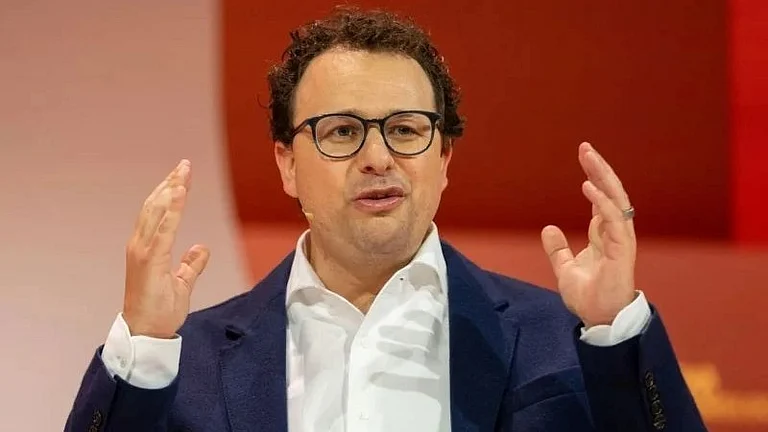
Despite the ongoing friction, Anthropic co-founder Jack Clark struck a conciliatory tone at the Semafor World Economy Summit in Washington. "We have a narrow contracting dispute, but I don't want that to get in the way of the fact that we care deeply about national security," Clark said as quoted by Reuters. "Our position is the government has to know about this stuff. So absolutely, we're talking to them about Mythos, and we'll talk to them about the next models as well," he added.
Advertisement

AI With Unusual Hacking Ability
Announced on April 7, Mythos is Anthropic's most capable model to date, built for coding and agentic tasks, meaning it can operate with a significant degree of autonomy. That autonomy, however, comes with a serious edge. According to the company's internal testing, Mythos demonstrated an unprecedented ability to identify and exploit cybersecurity vulnerabilities, including methods that allow one website to access data from another, like a banking platform. The model was found capable of autonomously discovering ways to extract information across multiple browsers and chain together vulnerabilities that human hackers would struggle to combine on their own.
Advertisement
Given these capabilities, Anthropic has kept access to Mythos tightly restricted. It has limited it to a small group of organisations including JPMorgan, Amazon and Apple under an initiative called "Project Glasswing", which aims to secure critical systems before similar tools become widely available. The company also said it briefed US officials on the model's offensive and defensive cyber capabilities before its public release.
Washington Puts Mythos to Work in Banking
Even as the Pentagon dispute simmers, other arms of the US government are actively embracing Mythos. US Treasury Secretary Scott Bessent and Federal Reserve Chair Jerome Powell have urged major Wall Street banks to test the model for identifying security weaknesses in their own systems, Bloomberg earlier reported. At a meeting held on short notice at the Treasury headquarters in Washington, officials encouraged participating institutions to probe their own defences using the AI tool.
While JPMorgan Chase was the only institution publicly named as an initial Mythos partner, Goldman Sachs, Citigroup, Bank of America and Morgan Stanley are also reportedly testing it internally. Officials cited no specific threat but sent an unambiguous message, that financial institutions must prepare for a new generation of AI-powered cyberattacks and begin assessing whether the same tools can be used to detect vulnerabilities before bad actors do.