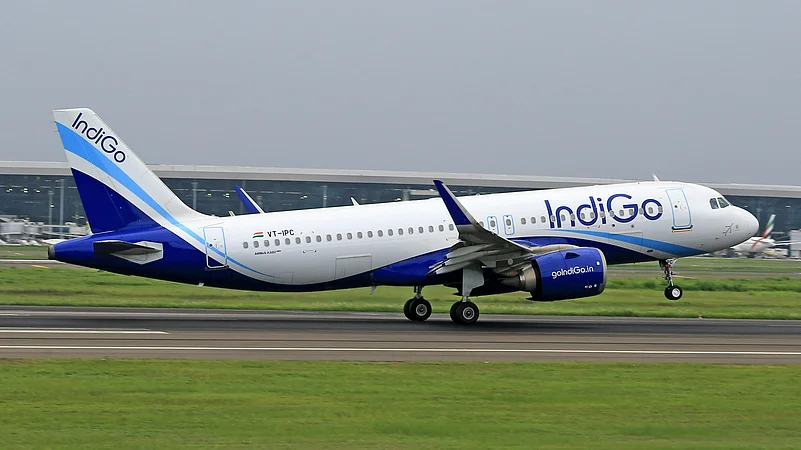

IndiGo’s domestic market share fell from 65.6% in October to 63.6% in November, even before major disruptions began in December.
The airline cancelled 1,232 flights in November, mainly due to crew and FDTL constraints.
The DGCA had investigated the November situation, however, the airline faced major crisis in December.
India's largest airline, IndiGo lost a portion of its dominance in the domestic market share even before its operational disruptions. According to Directorate General of Civil Aviation (DGCA) data, IndiGo's market share slipped from 65.6% in October to 63.6% in November, while the major disruptions began in early December.
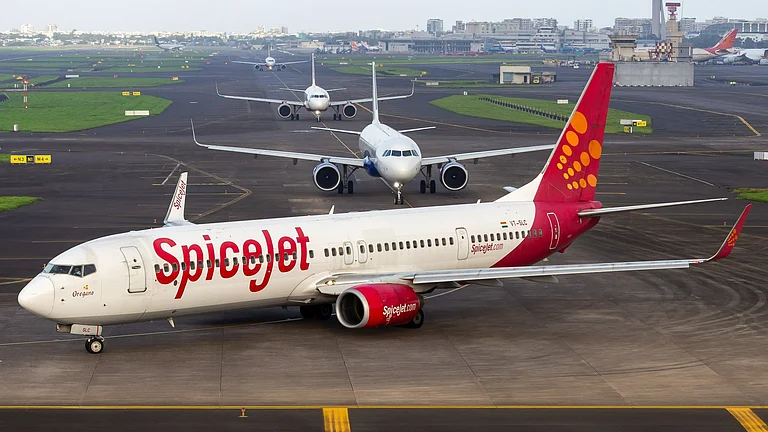
The data meanwhile indicated that its competitors, Air India and SpiceJet saw a slight rise in their market share. Air India's domestic market share rose from 25.7% in October to 26.7% in November, and SpiceJet saw a rise from 2.6% in October to 3.7% in November.

1 September 2026
Get the latest issue of Outlook Business

Notably, the overall cancellation rate of scheduled domestic airlines for the month of November was 1.33%.


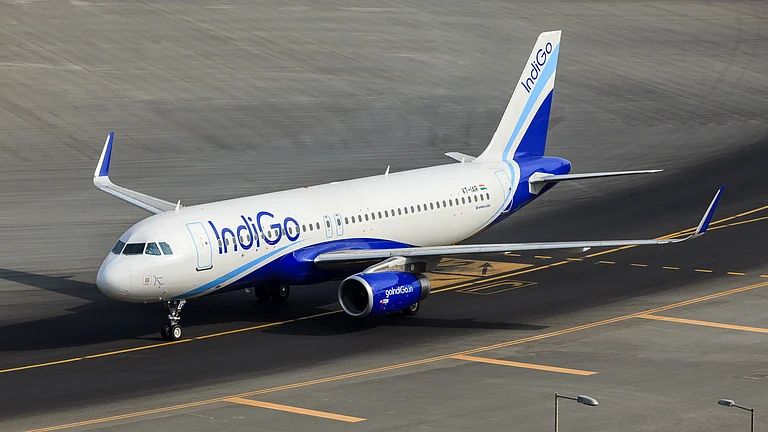
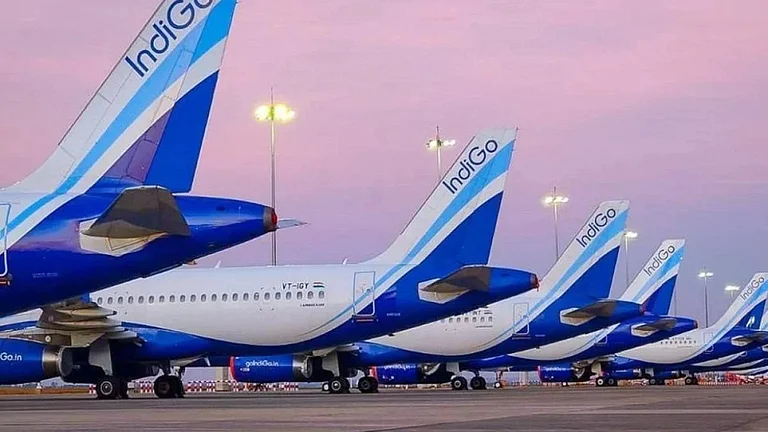
Meanwhile, passengers carried by domestic airlines during January-November 2025 were 1526.35 lakh as against 1464.02 lakh during the corresponding period of the previous year thereby registering an annual growth of 4.26% and monthly growth of 6.92%.
The on-time-performance (OTP) of IndiGo in November across six major airports, Bangalore, Delhi, Hyderabad, Mumbai, Chennai, and Kolkata, was 69%, dropping from 84.1% in October.

The IndiGo situation was one of the most significant airline crises in the country. Its operational issues led to the cancellation of thousands of flights and leaving hundreds of thousands of passengers stranded across multiple airports.
Advertisement
But even before the disruptions began in December, IndiGo had cancelled 1,232 flights in the previous month. The carrier had then released a statement saying that 755 cancellations were due to crew and Flight Duty Time Limitations (FDTL) constraints, 92 were caused by ATC system failures, 258 by airport or airspace restrictions, and 127 by other factors. It added that many of these issues were beyond the operator’s direct control.
IndiGo further said that the DGCA had began investigating the situation to minimise cancellations among other factors.
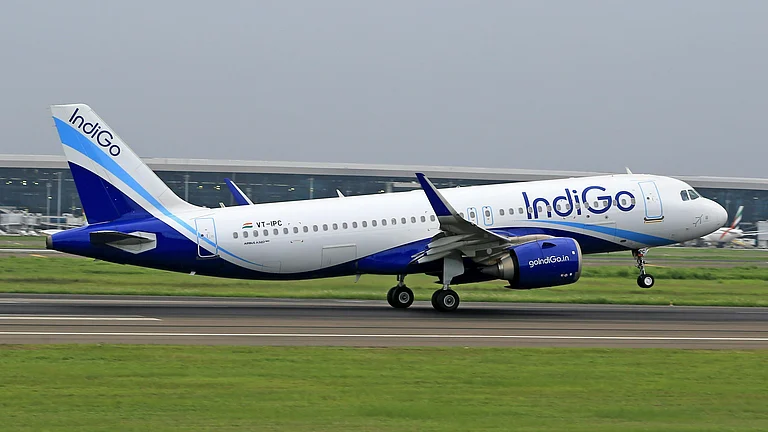
However, the situation worsened in the next month especially on December 5 when over 1000 flights were cancelled in a single day.
Advertisement
Earlier in the month, the aviation regulator had instructed the airline to trim its winter schedule by 10% following the operational hurdle.
The operational meltdown has been linked to the implementation of new FDTL rules, which came into force on November 1. These rules increase mandatory rest periods for pilots, limit night-time flying duties, and require at least 48 hours of rest each week.
IndiGo reportedly did not fully adjust its crew scheduling systems to comply with the stricter rules, resulting in a shortage of available pilots.
As a result, the airline cancelled around 4,500 flights during the first week of December alone.