




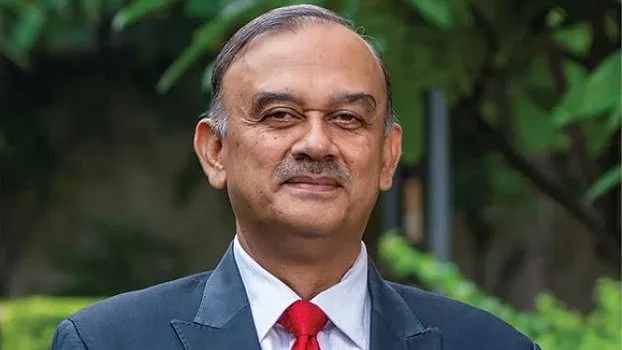

Atanu Chakraborty said he quit after a prolonged “incongruence” with the bank’s functioning over nearly two years.
He cited differences over values, ethics, and certain internal practices that did not align with his principles.
Reports, however, point to deeper boardroom tensions and strategic disagreements with CEO Sashidhar Jagdishan driving the exit.
Atanu Chakraborty, the former part-time Chairman of HDFC Bank has finally spoken about his abrupt resignation. He said his decision stemmed from a growing sense of "incongruence" between his personal values and the bank's governance approach over the past two years.
Speaking to CNBC-TV18, Chakraborty said his resignation letter was "self-explanatory" and described the exit as a personal decision that arises when a "dilemma" develops between one's value framework and an organisation's approach.

1 September 2026
Get the latest issue of Outlook Business

Without divulging boardroom discussions, he pointed to issues that had already entered the public domain, chiefly, lapses at the bank's Dubai operations dating back to 2018, involving customer onboarding and conduct irregularities that drew regulatory scrutiny both in India and overseas. While the bank's management, led by CEO Sashidhar Jagdishan, had described these as "technical" lapses in documentation or interpretation, Chakraborty viewed them differently.



He also pointed to delays in accountability, noting that penalties against officials involved in the mis-selling of AT1 bonds in Dubai came several years after the lapses occurred, raising questions, in his view, about the timeliness of corrective action.
Advertisement
For Chakraborty, the distinction between reactive correction and proactive ethical alignment was central to his unease. He argued that for an independent director, the role goes beyond oversight of performance metrics, it must extend to safeguarding probity, ensuring transparency and aligning business conduct with the long-term interests of depositors and shareholders. When those principles are not prioritised, he said, it becomes a personal call to exit.

He clarified that CEO Jagdishan's reappointment was never discussed during his tenure, seeking to dispel speculation that leadership continuity played a role in his exit. He also said personality differences had been overstated and were not a determining factor. The issues, he suggested, ran deeper than individual equations.
Advertisement
On the HDFC Ltd merger, Chakraborty pushed back against concerns that the integration had created structural stress, saying the transaction was broadly aligned with regulatory expectations and had strengthened the bank's overall position.
The Exit That Rattled Markets
Chakraborty's resignation on March 18, which came midway through an extended term that was due to run until May 2027, triggered one of the sharpest single-day falls in HDFC Bank's stock.
Shares nosedived nearly 9% on March 19, wiping out approximately ₹1 lakh crore in market value. At its lowest, the bank's market capitalisation dropped to just over ₹11.85 lakh crore. The bank's American Depository Receipts also closed 7.5% lower.
In his resignation letter, Chakraborty had written that certain practices he had observed over the past two years were "not in congruence" with his personal values and ethics, adding that there were no other material reasons for his decision. Neither the bank nor Chakraborty initially elaborated further, leaving investors and analysts scrambling for answers.

Damage Control and Law Firm Probe
The country's largest private lender moved quickly to contain the fallout. It called an early analyst meeting, appointed veteran HDFC banker Keki Mistry as interim part-time Chairman for three months. Notably, at one point, RBI also issued a rare public note affirming there were no material concerns about the private bank's governance or financial health.
On March 23, the bank's board approved the appointment of external domestic and international law firms to review the issues cited in Chakraborty's resignation letter, according to an exchange filing. The firms have been asked to submit their report within a reasonable timeframe.
Jagdishan, earlier spoke to the Economic Times and said the bank would act "ruthlessly" against any misconduct, calling dealing with the fallout "like fighting a ghost."
The bank now has 90 days to find a permanent successor to Chakraborty, who was first appointed part-time Chairman in April 2021 and reappointed in May 2024.









