Tata Sons tried to avoid an IPO by exiting the NBFC framework after repaying more than ₹21,000 crore of debt in 2024
RBI’s revised rules and Tata Sons’ ₹2.01 lakh crore asset base have made that route harder
The listing battle now overlaps with the leadership transition, putting additional pressure on Noel Tata as N Chandrasekaran prepares to leave
The Reserve Bank of India’s (RBI) rejection of Tata Sons’ request to surrender its registration as a core investment company has brought the $185-billion-revenue-generating Tata Group’s long-running listing dispute to a decisive point.
The move has caught Tata Trusts Chairman Noel Tata off guard, with his team now reportedly examining options to challenge the decision.

1 September 2026
Get the latest issue of Outlook Business

Why Is Tata Sons Against Public Listing?
Tata Sons is the holding company at the centre of the Tata Group and owns stakes across businesses including Tata Consultancy Services (TCS), Tata Motors, Tata Steel, Air India and other group companies.



A listing would subject the holding company to regular market disclosures and greater scrutiny over its finances, investments and capital allocation. Tata Sons has resisted going public partly because this could expose more of the group’s internal dealings and make it harder to move capital between established businesses and newer ventures.
For Tata Trusts, which owns about 66% of Tata Sons, the concern is also about control and a listing could complicate its long-term structure. According to Shriram Subramanian, Founder and MD of InGovern Research Services, once Tata Sons gets listed, the power and influence of Tata Trusts on the decisions taken by Tata Sons will reduce dramatically.
Advertisement
“For one, Tata Trusts have a veto power, which will go away because their Listing Obligations and Disclosure Requirements (LODR) and shareholder rights, and corporate governance do not permit a single shareholder to have veto powers,” Subramanian told Outlook Business.
“Second is the requirement of Tata Sons to have a specific number of directors on the board of Tata Sons. That may also get diluted because currently the Articles of Association incorporate that provision. If Tata Sons is listed, that requirement may get diluted,” he added.
The Shapoorji Pallonji Group, which owns about 18.4% in Tata Sons, takes the opposite view as the group has sought a listing for years as a way to unlock the value of its stake and help address its debt repayments.
Advertisement
The listing could, however, benefit the minority shareholders including SP Group as well as the seven listed companies which own 12% shares of Tata Sons as they will get liquidity. “At least, Shapoorji Pallonji will be a big beneficiary because they could then at least overcome their debt problems,” Subramanian said.
Why Is RBI Pushing Tata Sons To List?
The regulatory pressure dates back to the RBI’s scale-based framework for NBFCs. In September 2022, the central bank classified Tata Sons as an Upper Layer NBFC, a category subject to enhanced oversight and a three-year listing requirement.
Tata Sons was originally expected to list by September 30, 2025. Instead, it repaid more than ₹21,000 crore of debt in 2024 and applied to surrender its Core Investment Company registration, seeking to exit the NBFC framework, as per a report by PTI.
The RBI kept the application pending and continued to classify Tata Sons under the Upper Layer framework. The RBI’s latest letter rejected Tata Sons’ request to surrender its registration and directed it to comply with the requirements applicable to Upper Layer NBFCs.
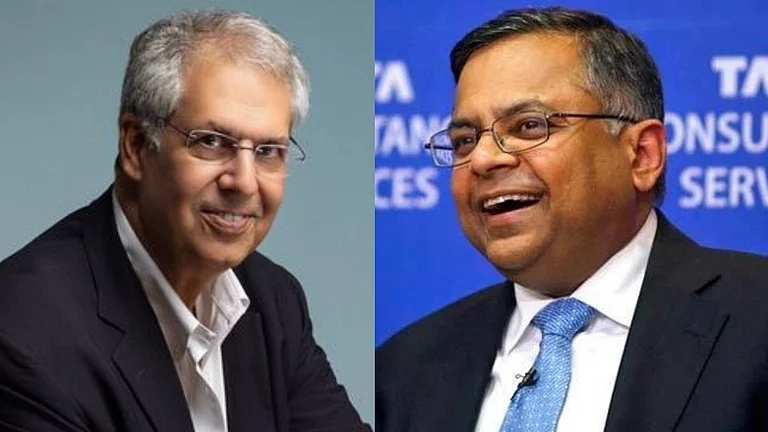
The regulatory case became harder to avoid after the RBI replaced its earlier multi-factor assessment model, based on asset size, interconnectedness and systemic importance, with a clear ₹1 lakh crore asset threshold for identifying Upper Layer NBFCs.
Tata Sons, with standalone assets of about ₹2.01 lakh crore as of March 2026, remains well above this limit. The revised rules also broadened the scope to include holding companies linked to entities that raise public funds, narrowing Tata Sons’ room to avoid the listing requirement.
However, the RBI’s rejection does not itself constitute an IPO announcement. The eventual timing, structure and size of any listing remain uncertain.
What Does RBI's Push Mean For Noel Tata?
The decision puts Noel Tata under pressure on two fronts: the control battle over Tata Sons and the group’s leadership transition.
The RBI’s decision comes as Noel faces uncertainty over N Chandrasekaran’s succession. Chandrasekaran has said he will step down when his current term ends in February 2027.
A public listing would also change how Tata Sons operates by bringing greater disclosure, shareholder scrutiny and market accountability to the group’s apex holding company.
Subramanian said that capital allocation for very high cash-sucking enterprises like Tata Digital or Air India or Tata Electronics, etc., would come under much more scrutiny. “Investors will keep asking questions over every quarterly call,” he remarked.

For Noel Tata, therefore, the question is no longer simply whether Tata Sons should remain private. It is how the Trusts can preserve their influence while responding to a regulatory decision that has sharply narrowed the company’s room to avoid a listing.
What Are Tata Sons' Options Now?
Tata Trusts is examining several possible responses, including legal action, as per a report by Bloomberg (BBG). Options such as reducing Tata Sons’ balance sheet below the regulatory threshold or restructuring the holding company and even splitting it are also being considered.
According to Subramanian, the only option seems to be going to court without agreeing to RBI, or doing some corporate actions at Tata Sons such that the listed company has some shareholding, but the unlisted companies are sort of spun off to their specific shareholders. “Or the large companies like Air India and Tata Digital, etc., are spun off to other shareholders or specific shareholders,” he said.
“But taking the RBI to court may not be advisable because then Tata Group could also be seen to be defying RBI regulations,” he cautioned.
The immediate focus is the Tata Sons board meeting scheduled for September 17. The board is expected to discuss the regulatory situation and possible next steps.