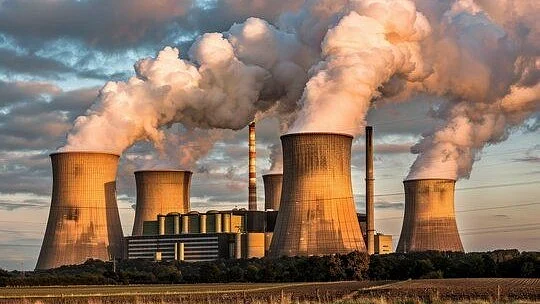

NTPC has signed NDAs with Russia’s Rosatom and France’s EDF to explore large nuclear power projects using Pressurised Water Reactor technology.
NTPC's talks with these 2 firms focus on indigenisation, aiming to boost Indian manufacturing, local supply chains and technology absorption.
The exploratory discussions align with India’s 100 GW nuclear target by 2047, with NTPC planning to add 30 GW.
India’s largest power producer, National Thermal Power Corporation (NTPC), has signed non-disclosure agreements (NDAs) with Russia’s state-owned nuclear company Rosatom and France’s Electricite de France (EDF) to explore nuclear projects.
The NDAs will lead to potential collaboration on large Pressurised Water Reactor (PWR) projects, in a move that highlights India’s plan to increase nuclear power generation to meet growing electricity needs.

1 September 2026
Get the latest issue of Outlook Business

The discussions will cover the entire life of a nuclear power project, from designing and building the plant to running it and maintaining it over several decades.
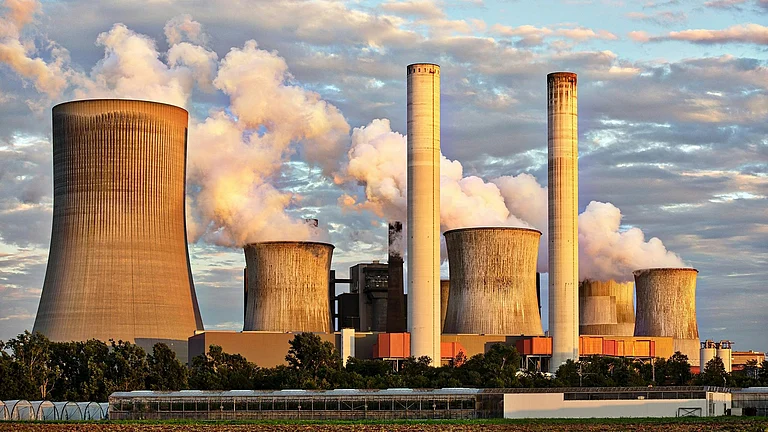
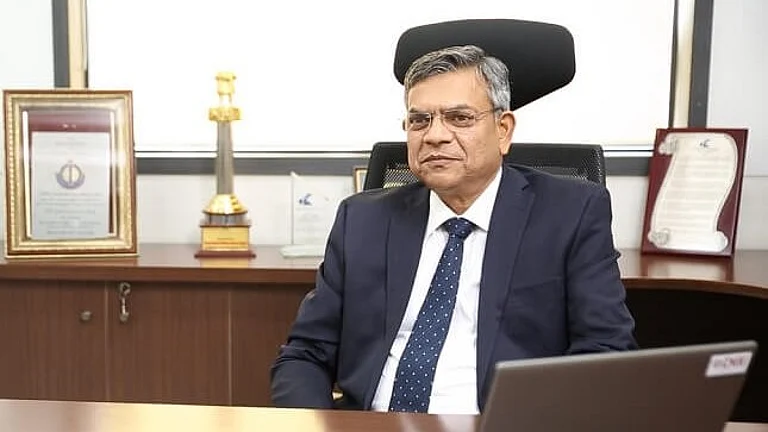


A key focus for NTPC is making more of the equipment and components in India. This means using Indian factories, suppliers and workers, and gradually learning and absorbing the technology, in line with the government’s push for self-reliance.

India is turning to nuclear power because it provides steady, round-the-clock electricity without carbon emissions. Unlike solar and wind power, which depend on weather conditions, nuclear plants can run continuously. This makes nuclear energy an important support for renewable power and a key part of India’s climate goals.
Advertisement
NTPC’s talks with Russia’s Rosatom and France’s EDF also fit with recent government steps to make it easier for private companies to enter the nuclear sector. Earlier, nuclear power was almost entirely handled by public sector firms. The new rules aim to bring in more investment, modern technology and global expertise.
Rosatom and EDF are among the world’s most experienced nuclear power companies and have built and operated large nuclear plants in many countries. If a partnership goes ahead, their technical know-how would be combined with NTPC’s experience in executing large infrastructure projects, while ensuring more work and value stay within India.
Advertisement
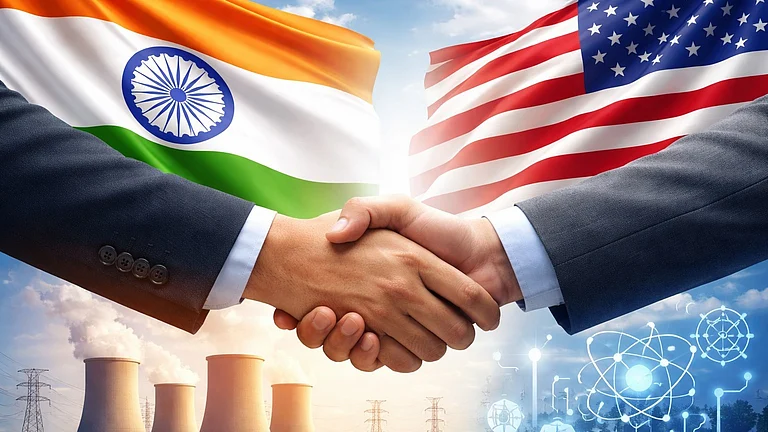
At this stage, the agreements are only for exploration and do not guarantee that any project will be built. However, they allow both sides to study technical and financial details more closely. This is part of India’s wider plan to speed up nuclear power expansion with foreign partnerships and stronger local manufacturing.
India has set a long-term target of producing 100 gigawatts (GW) of nuclear power by 2047. NTPC plans to contribute 30 GW of this capacity through its nuclear arm, NTPC Parmanu Urja Nigam Limited (NPUNL), and its joint venture ASHVINI with the Nuclear Power Corporation of India Limited (NPCIL).
According to The Print, NTPC is also in advanced talks with states such as Gujarat, Andhra Pradesh, Madhya Pradesh and Chhattisgarh to identify suitable land and ensure reliable water supply for future nuclear power plants.