




Honeywell Aerospace expects to deliver all 16 TPE331-12B engines directly to HAL ahead of the original mid-2029 schedule.
The company has already delivered four engines and expects to deliver more than double that number by end-2026.
Honeywell expects India to remain a key growth market, said Ben Driggs, SVP, Chief Commercial & Strategy Officer.
Honeywell Aerospace expects to deliver 16 TPE331-12B engines to Hindustan Aeronautics (HAL) for the Indian Air Force’s HTT-40 trainer aircraft ahead of the original mid-2029 schedule, a senior executive from the American defence and aerospace firm said on Thursday. Honeywell has already delivered four TPE331-12B engines to HAL and expects to deliver more than double that number by the end of 2026.
Honeywell and HAL signed a more than $100 million contract in July 2022 for the supply and manufacture of 88 TPE331-12B engines and kits, along with maintenance and support, for the HTT-40 aircraft. Under the agreement, Honeywell is to directly supply the first 16 engines, following which technology transfer is expected to enable HAL to assemble the engines in India and expand its repair and overhaul capabilities.

1 October 2026
Get the latest issue of Outlook Business

"We'll actually deliver the full complement ahead of the projected schedule, which was early 2029. So, we're on track to be ahead of schedule on the total TPE331-12B deliveries to support the HTT-40. We feel very good about the progress that's been made. We had a few supply-chain challenges that we've been able to address, and that's why we're very confident about full delivery ahead of schedule," said Matt Milas, President of Defense & Space at Honeywell Aerospace.
Advertisement
The HTT-40 is India’s indigenous basic trainer aircraft and is intended to be used by the Indian Air Force for training pilots. On technology transfer, the executive said that it should be viewed as an ongoing process, with opportunities extending beyond engine assembly.
“We're looking at additional things that we can do across the TPE331 as far as sustainment, component production, as well as overhaul,” added Milas.
The updated delivery timeline comes as Honeywell works through supply-chain challenges that had affected the TPE331 programme. Milas said the availability of two engine components became a concern after a fire destroyed a supplier’s facility. Honeywell has since added alternative sources and stepped up production to ease the bottlenecks. Milas said the company remains confident about meeting its commitments, pointing to continued investments to strengthen the supply chain and expand capacity, which he described as a key constraint across the industry.
Advertisement
Honeywell has since been working to create multiple sources across geographies and has deployed its own employees to supplier sites to help manufacture parts and accelerate recovery.
“Capacity is one of the biggest premiums in the entire industry,” the executive said.
The company is also looking at opportunities to use the TPE331 engine family in India’s growing unmanned aircraft ecosystem. Honeywell said the engine is being used on multiple aircraft and could see further applications as India expands its use of unmanned platforms.
'Growth Market India'
Beyond the HTT-40 programme, Honeywell is seeking to position India as a long-term technology and manufacturing partner. A Honeywell executive said it is in discussions with Indian legacy companies and startups on applications involving autonomous and unmanned systems, although it does not disclose a specific target for business growth in the country.
"We do expect India to be a good growth market for us. We've experienced that in the past, and we expect that to continue in the future," said Ben Driggs, SVP, Chief Commercial & Strategy Officer at Honeywell Aerospace.
Honeywell Aerospace became an independent, publicly listed company following its spin-off from Honeywell International in June 2026. The Nasdaq-listed company has operated in India for over three decades as a division of Honeywell International. It has invested more than $150 million over the past three decades in local infrastructure, including FAA-certified laboratories in Bengaluru, Hyderabad and Madurai. The aerospace firm has around 3,600 employees in India, of whom around 3,000 are engineers.
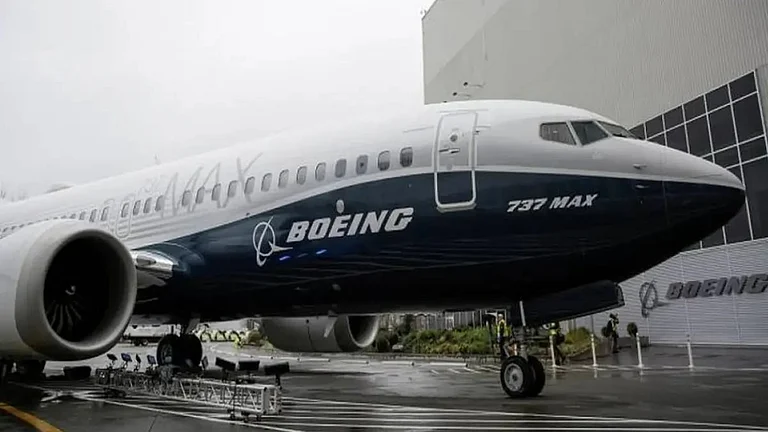


The company’s India opportunity extends beyond defence. Honeywell has a strong presence across Indian airlines and aircraft operating in the country, with its equipment used across Boeing and Airbus aircraft. In July, Honeywell Aerospace said IndiGo had selected its avionics and power systems for 810 Airbus A320neo-family aircraft. Honeywell called it its largest-ever commercial equipage and service deal.
Driggs said Honeywell has strong relationships with airlines across India and expects the growth in the country's aircraft fleet to translate into increased business for the company.
The company is also developing new digital and predictive-maintenance applications for its equipment. Its Ensemble offering, for instance, collects, transmits and analyses engine-performance data and is currently focused on Honeywell turbine engines used on business jets.
Honeywell is also expanding its maintenance, repair and overhaul (MRO) footprint in India, covering the inspection, repair and maintenance of aircraft components and systems. In July, it signed a licensing agreement with GMR Aero Technic, the MRO facility of the airport operator. It allows the latter to undertake licensed repairs on seven Honeywell components used in CFM engines.
The company says around 90% of aircraft use its avionics or navigation systems, while more than 47,000 of its APUs are in service. It also estimates that Honeywell starters are used to start the engines on 75% of commercial flights.









