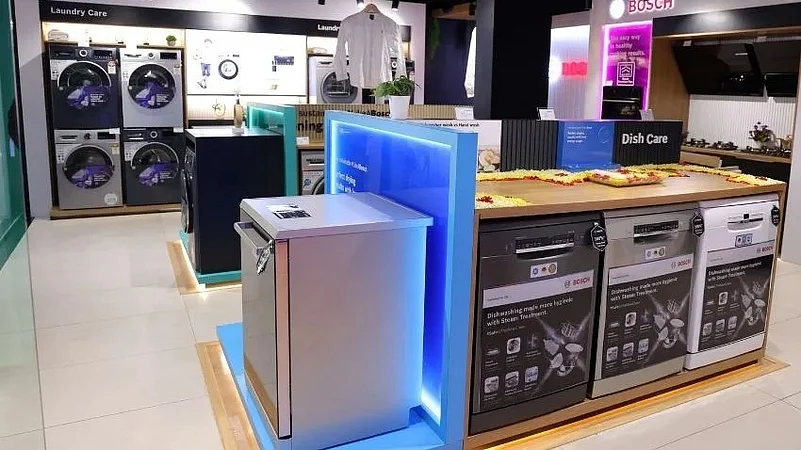
India is a "key strategic market" for BSH Home Appliances, the Munich, Germany-based global manufacturer, which is targeting to corner around 8 per cent market share by 2030, helped by category expansion, deeper retail penetration, and investments in high-growth segments, according to its India MD & CEO Saif Khan.
BSH Home Appliances India is quite encouraged after recording a 15 per cent overall growth in 2025, outpacing rivals and even recorded over 50 per cent growth in the first quarter of 2026.
In addition to the domestic market, BSH, which has invested substantially in centres for manufacturing, R&D and design here, is also looking for export opportunities, making India an "innovation hub plus a very, very cost-competitive production hub" for other global markets in a couple of years, in the next stage of growth.

1 September 2026
Get the latest issue of Outlook Business

Besides, the company, which operates in the Indian market with three brands -- Bosch, Siemens, and Gaggenau -- targeting affordable, premium, and ultra-luxury segments, is expanding its retail presence by adding 100 brand stores every year, taking the total number to over 500 by 2030 across Metro and Tier II cities.
BSH Home Appliances India is also deepening its localisation drive, taking its 'Make in India' strategy beyond assembly towards deeper indigenisation and circular manufacturing practices.

"The intent (for localisation) is to go to 90 per cent at least by 2030, and we are working quite aggressively on that," BSH Home Appliances India MD & CEO Saif Khan told PTI.
Advertisement
The current geopolitical situation also provides an opportunity to speed up indigenisation and to become quite self-sufficient, he added. Currently, BSH Home Appliances India's localisation level is around 66 per cent.
The "endeavour for BSH in India is to produce as much locally as possible", he said.
On how the German headquarters views India, Khan said, "It is a key strategic market for BSH. India is now one of the most important markets." BSH has recently elevated India as a separate region from 2026 onwards, a move which reflects its size, dynamism and strategic importance of the market here. This will provide wider autonomy to the India operations, enabling sharper focus on local consumer needs and faster decision-making.
Advertisement
About the outlook for BSH in 2026 in India, he said, "2026 looks like a very positive year, started off with the first quarter extremely positive with a 53 per cent growth over the previous year, and we are investing heavily in developing the product range." Despite geopolitical events in West Asia, Khan expects the growth outlook "will be 50 per cent plus (in revenue terms). The growth will come from across categories, right from cooling (refrigerator), washing machine, dish-washing, cooking, helped by the ongoing trend of premiumisation", he said.
Like other makers, BSH has also announced a price increase between 5 to 12 per cent, depending on each category, following hike in raw material prices after the West Asia crisis, among others. However, he does not see any major impact on sales.
"Looking ahead, the company is targeting 8 per cent market share by 2030, supported by focused category expansion, deeper retail penetration, and continued investments in high-growth segments such as food preparation, air fryers, and premium coffee solutions," Khan added.
He further said BSH Germany also understands India's diversity and unique needs.
"We have introduced products that are relevant to the market and we will continue to do so. And that is where the focus shows that India is really really strategically important and constantly we have been investing, whether it is in factories, R&D, consumer studies... and we will continue to do so," Khan said.
He also added that BSH India's first priority will be the domestic market but it is also "thinking how to make India also an innovation hub plus a very very cost-competitive production hub so that it can cater to the export markets also in the next stage".

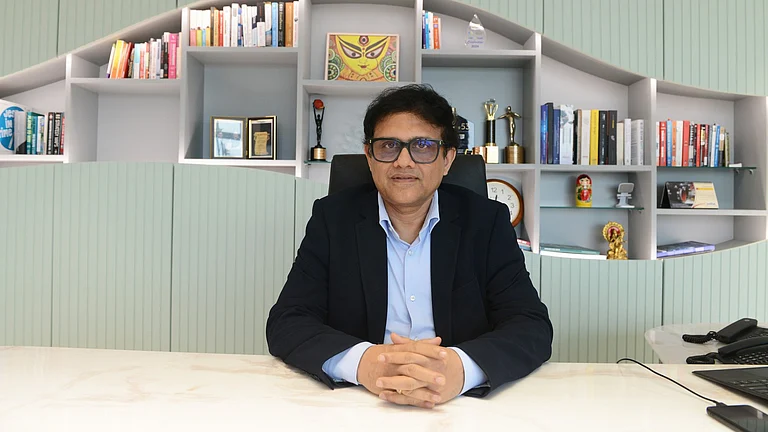


Khan also acknowledged that India's home appliances market is very competitive, and has several companies operating in it. However, the penetration level is very low, hence it offers an opportunity. A consumer coming for BSH knows what to expect from a brand that is German-engineered for Indian consumers.
"...Constantly we are becoming competitive. We are basically giving a wider range of product offering and while the market is competitive. I think what separates India from the rest of emerging markets is that you have constantly a lot of new consumers coming to the market whereas many other mature markets or emerging markets there is a replacement consumer," he said.