




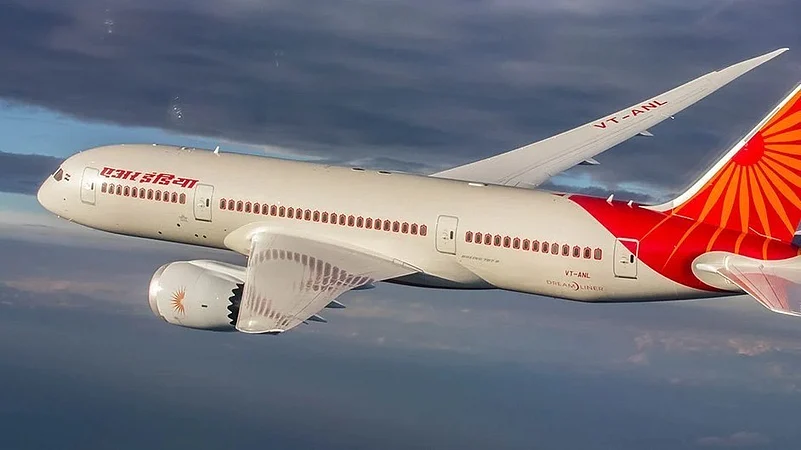
Air India has rolled out a voluntary testing drive for its entire pilot workforce, exceeding what regulators currently mandate, as the airline draws greater attention following the Phuket-Delhi flight scare earlier this month.
The carrier shared this in a post on social media on Tuesday, describing the initiative as part of its ongoing commitment toward safety and professional standards.
"Air India has voluntarily undertaken a testing programme covering all pilots, beyond regulatory requirements in line with our unwavering commitment to safety and professionalism," the airline said.

1 September 2026
Get the latest issue of Outlook Business

Airline Cautions Against Premature Reporting
Air India asked the press and other parties to hold off on drawing conclusions while the process is still underway. "As the process is ongoing, we urge media and other stakeholders to refrain from speculation or reporting based on unverified or unsubstantiated information," the airline said, adding that conclusions should wait until the process concludes and facts are confirmed.


"Any assessment should await the completion of the process and verified facts," the advisory stated.
The Phuket-Delhi Incident
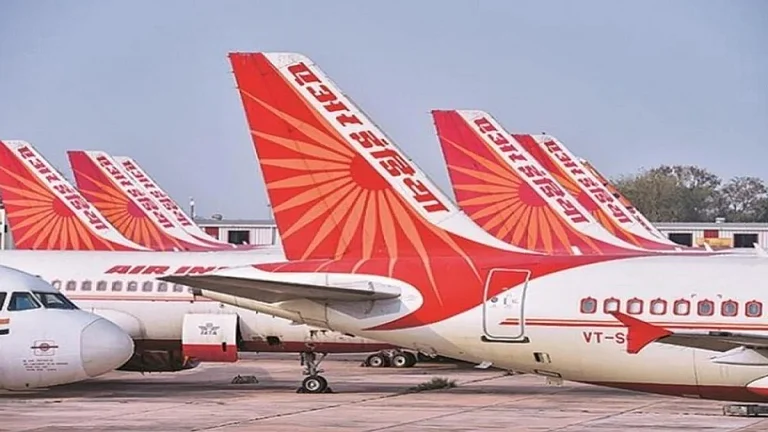
This comes in the aftermath of an episode involving flight AI2379, an Airbus A320 travelling from Phuket to Delhi on August 4, which dropped roughly 300 feet in altitude without warning. What was first described as turbulence is now being formally investigated.
As per Airbus' initial findings, the plane briefly lost hydraulic pressure across all three of its backup systems, causing key controls to stop responding for a short window, according to previous media reports. Several passengers and crew members sustained injuries during the episode, leading the Aircraft Accident Investigation Bureau (AAIB) to open a probe, with Airbus assisting the process.
Advertisement
What Went Wrong Mid-Air
The aircraft relies on three separate hydraulic systems, called Green, Blue and Yellow, precisely so that one system failing does not compromise overall control. Yet flight data revealed that pressure fell across all three within about a second, briefly knocking out the plane's elevators and ailerons, both essential for steering the aircraft.
Instead of moving in opposite directions as intended, the ailerons shifted together, which pushed the nose upward unexpectedly and forced the autopilot to switch off automatically, a built-in safety response. The first officer stepped in to manually correct the aircraft's position, pushing the nose back down. This sudden movement threw passengers and cabin crew off balance, causing injuries. Full hydraulic pressure returned about five seconds afterward, restoring normal control to the pilots.
Advertisement
Whether the fault lay with the hydraulic hardware itself or with a defective sensor sending a false alert has not yet been determined. Airbus has directed Air India to examine one of the hydraulic pressure switches physically to rule out a transmission error.
Authorities have labelled the episode a serious incident, with the AAIB leading the investigation. Early findings from the flight recorders have ruled out any pilot error as a contributing factor so far.









