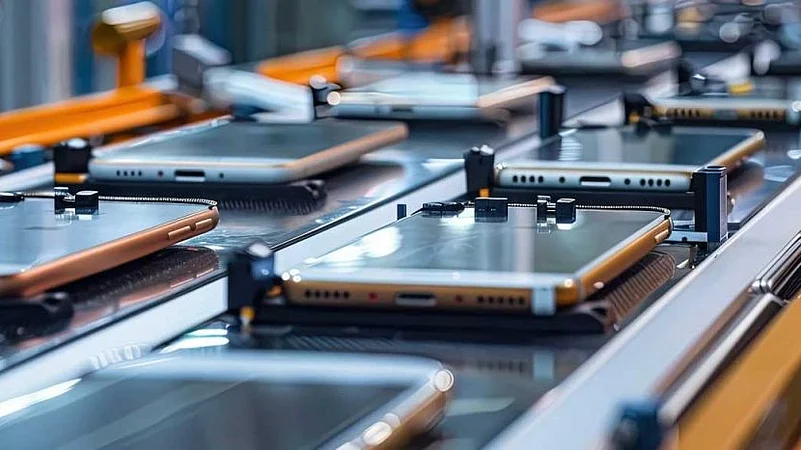

Apple’s contract manufacturers have pushed iPhone exports from India to over $16 billion in the first nine months of FY26.
The surge has been driven by the government’s production-linked incentive (PLI) scheme for large-scale electronics manufacturing.
Despite the gains, the government believes smartphone manufacturing needs continued fiscal support.
Different vendors of iPhone maker Apple have reportedly pushed Indian exports of the flagship smartphone to over $16 billion in the first nine months of the 2025–26 financial year (FY26). This takes total iPhone exports from India over the past five years to around $50 billion, according to a report by The Economic Times (ET).
This export surge was fuelled by the Indian government’s production-linked incentive (PLI) scheme for large-scale electronics manufacturing, which is set to end in March 2026. However, the report said the government still believes the smartphone manufacturing industry needs further fiscal support to compete with countries such as China and Vietnam.

1 September 2026
Get the latest issue of Outlook Business

Apple’s ecosystem in India is anchored by five iPhone factories, three run by Tata and two by Foxconn, supporting nearly 45 suppliers, many of them MSMEs. Powered by iPhone exports, which account for about 75% of smartphone shipments, smartphones became India’s top export category in FY25, rising from 167th place in 2015.


Advertisement
Samsung, one of Apple’s biggest global rivals, has also exported nearly $17 billion worth of mobile phones from India between FY21 and FY25.
The report said that while the smartphone PLI scheme is set to end in March next year, the government plans to continue supporting the sector. Officials told ET that a new incentive framework, drawn up in consultation with the industry, will aim to promote manufacturing, noting that Indian manufacturers still face disadvantages compared with China and Vietnam.

S Krishnan, secretary at the Ministry of Electronics and IT (MeitY), said in an interview with Mint that the government is discussing either an extension or a completely new PLI plan for mobile phone assembly in India, though a final decision on the exact contours has not yet been taken.
Advertisement
“There’s an analysis which shows that some degree of disability continues in the mobile phone electronics industry. While the situation has improved significantly, there still are areas that require improvement and support. The electronics component manufacturing scheme (ECMS), too, will take at least two years or so to really provide support in terms of cost reduction,” Krishnan told the newspaper.
He added that support in the form of cheaper imports and other benefits through the ECMS, which would reduce such disadvantages, would still take time to materialise.
“It’s important that we see what can be done. Mobile manufacturing is one PLI that has been very successful, so ending it too early may jeopardise the gains India has made,” he said.
The electronics PLI scheme, covering mobile phones and related segments, had drawn committed investments of over ₹1.61 lakh crore by November 2025, with realised investments close to ₹1.76 lakh crore. Mobile phone production alone reached ₹5.45 lakh crore in FY25.
Although some mobile phone exports predated the PLI scheme, exports gained real momentum after its launch, largely due to Apple bringing its suppliers to India, the only country apart from China where iPhones are manufactured.
Samsung was the only one among the 10 beneficiaries to complete the scheme by FY25, having met its production targets in FY21 due to its existing manufacturing base.
Apple and others, including Dixon Technologies, missed first-year targets amid the pandemic and strained India–China ties, prompting the government to extend the scheme by a year.
Under the revised terms, companies could claim incentives for any five consecutive years within the six-year window. Samsung opted for FY21–FY25, while others chose FY22–FY26. Key participants include Motherson, Tata Electronics and Foxconn for iPhone enclosures, ATL for Li-ion cells, and Hindalco for aluminium extrusion.