Vedanta's Anil Agarwal has taken his challenge against Adani's winning bid for Jaiprakash Associates, which owns India's only F1 track.
Despite bidding ₹16,726 crore against Adani's ₹14,535 crore, Vedanta lost because lenders preferred Adani's faster repayment terms.
The legal battle now directly threatens India's F1 revival, which hinges on Adani completing the Jaiprakash acquisition.
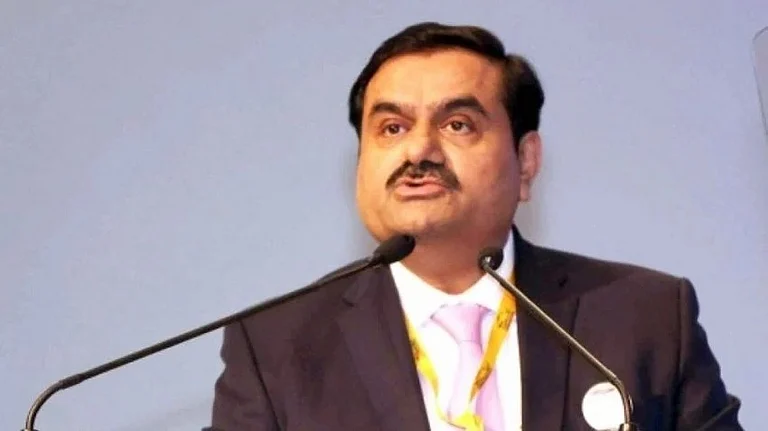
Vedanta Chairman Anil Agarwal has taken the fight against rival tycoon Gautam Adani's winning bid for bankrupt infrastructure conglomerate Jaiprakash Associates all the way to the Supreme Court, putting the future of India's only Formula One track in jeopardy, according to Reuters.
Vedanta filed its plea on March 25, a day after the National Company Law Appellate Tribunal (NCLAT) refused to stay the implementation of Adani Enterprises' ₹14,543 crore resolution plan for Jaiprakash Associates, according to a Mint report.

1 October 2026
Get the latest issue of Outlook Business

At the heart of the dispute is a nearly $4 billion pool of assets belonging to Jaiprakash Associates, including residential properties, power and cement plants, and the Buddh International Circuit near New Delhi, the country's only F1 racing venue.


What Is The Dispute About
Jaiprakash Associates was admitted for insolvency in June 2024 after defaulting on loans worth over ₹57,000 crore. The sale process drew competing bids from both Vedanta and the Adani Group. Vedanta tabled the higher offer at ₹16,726 crore, against Adani Enterprises' ₹14,535 crore bid.
Despite submitting the larger bid, Vedanta lost out when the Committee of Creditors (CoC) backed the Adani proposal. The NCLT subsequently approved the Adani resolution plan. Vedanta challenged this before the NCLAT, arguing its higher financial offer should have prevailed, but the tribunal declined to intervene.
Advertisement
Lenders have defended the process, saying the Insolvency and Bankruptcy Code does not automatically favour the highest bidder. The CoC preferred Adani's offer because it included approximately ₹6,000 crore upfront and a faster two-year repayment schedule, compared to Vedanta's payout timeline stretching up to five years.
Agarwal, however, has publicly contested this account. Writing on X, the Vedanta chairman said the bidding process was "transparent" and that Vedanta was "declared the highest bidder publicly" during the insolvency proceedings. "We were informed in writing that we had won," he said, adding that the outcome was later reversed. He expressed disappointment at how the process was handled and wrote, "We will place the facts in the right way."
Advertisement
What This Means for F1 in India
The legal battle casts fresh uncertainty over India's long-delayed Formula One comeback. F1 races have been stalled in the country for 13 years, derailed by regulatory hurdles and taxation disputes that forced organisers to pull out after the 2013 season.
Revival hopes had been pinned on the Adani Group taking control of the Buddh International Circuit. As recently as last month, Karan Adani said at a public event that he is "very personally engaged" in bringing F1 back to India.
Those plans now hinge on the Supreme Court's decision. Any prolonged legal dispute over ownership of the Jaiprakash assets could delay or derail the infrastructure upgrades, government negotiations, and commercial agreements needed to host a Grand Prix, pushing India's F1 return further into uncertainty.