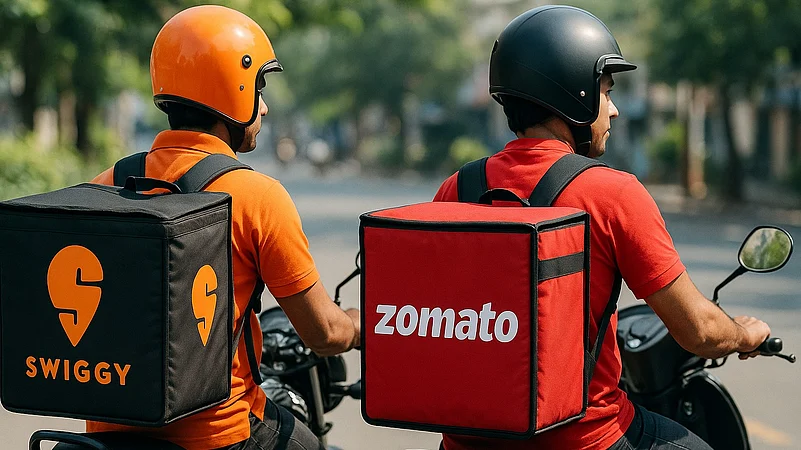


● Food delivery platforms support 1.37 million workers
● This ecosystem creates spillover benefits across restaurants, agriculture, logistics and technology.
● Each job on a food delivery platform supports more than 2.7 additional jobs
The food delivery sector directly employed 1.37 million workers during the year, up from 1.08 million in 2021–22, according to a report by the National Council of Applied Economic Research (NCAER). Released on Wednesday, the report is based on two large-scale studies conducted in partnership with global technology investor Prosus. The studies examine the economic footprint of food delivery platforms in India and analyse how digital food platforms are reshaping restaurants, labour markets and broader economic activity.
NCAER’s analysis also finds that every job linked to food delivery platforms supports an additional 2.7 jobs elsewhere in the economy.
Titled Impact of Food Delivery Platform on the Indian Economy: GDP, Employment and Taxes and Impact of Food Delivery Platforms on Restaurants, the research combines micro-level restaurant data with economy-wide input & output analysis. The findings are based on a survey of 640 restaurants across 28 cities spanning Tier 1, Tier 2 and Tier 3 markets. Together with an earlier platform survey published in 2023, the reports conclude a three-year research programme focused on India’s food delivery platform economy.

3 February 2026
Get the latest issue of Outlook Business


According to the economic impact study, food delivery platforms generated ₹1.2 trillion in gross output in 2023-24, expanding at a pace faster than the overall economy.
“These studies offer a comprehensive empirical picture of how digital food delivery platforms are intersecting with India’s economy,” said Dr Bornali Bhandari, Professor at NCAER. She noted that the sector’s contribution to output, employment and indirect taxes is now both measurable and consequential, and that platform participation is driving structural changes in how restaurants operate, comply with regulations and access markets.
The restaurant-focused study also highlights tangible shifts at the business level. Nearly 59% of restaurant owners reported an expanded reach to new customers after joining platforms, while 50.4% said they experienced an overall increase in customers. More than half of surveyed restaurants added new menu items, and the share of restaurant revenue coming from platforms rose from 22% in 2019 to 29% in 2023.
Beyond sales, platforms were found to provide operational capabilities such as onboarding support, menu optimisation, advertising tools and accounting features that many small and home-based kitchens previously lacked. This has been particularly relevant for first-time entrepreneurs and informal food businesses entering the formal economy.

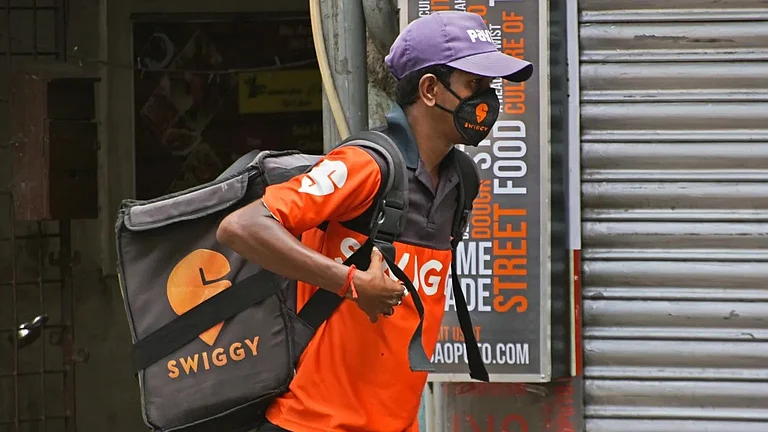


Sehraj Singh, Managing Director for India and Vice President for Group Public Policy and Corporate Affairs at Prosus, said the findings reflect the reality of small restaurants and platform workers. “Platforms have become an essential bridge to demand,” he said, adding that digital visibility and decision-making have altered how restaurants grow and operate.
The studies also outline policy considerations, including the opportunity to encourage MSME formalisation through digital adoption, especially in smaller cities. With more than a million workers engaged in the sector, NCAER points to the need for balanced regulation and improved portability of social protections in India’s platform economy.