




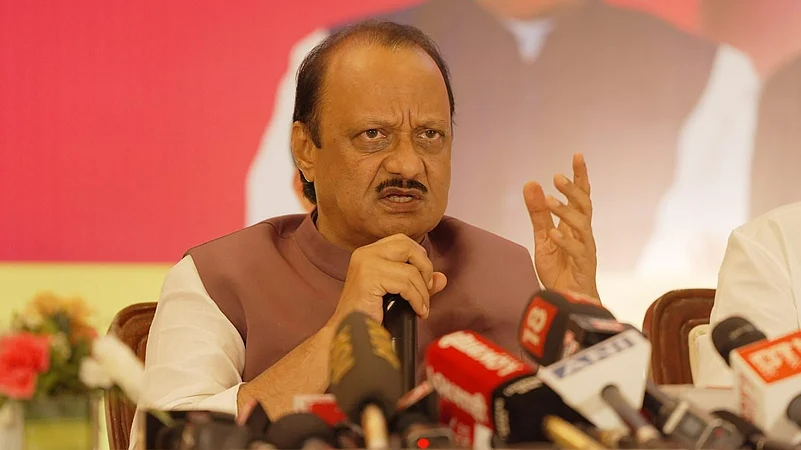

Ajit Pawar dies in Baramati, marking end of political legacy.
Baramati Model integrates agriculture, industry, cooperatives and technology for growth.
Region attracts FDI, boosts farmer incomes, productivity and sustainable practices.
The plane carrying NCP leader and Maharashtra Deputy Chief Minister Ajit Pawar crashed on the morning of January 28 while attempting land at Baramati airfield, killing all five people on board according to the Directorate General of Civil Aviation (DGCA).
The irony is that the constituency that helped shape Pawar’s political career, became a witness to his death. Baramati had been influenced and developed by the Pawar family, their home bastion, for decades. The region was shaped under Ajit Pawar from 1991 onwards, when he was elected to the Lok Sabha from Baramati, who debuted electoral politics on a Congress ticket before switching to the NCP after the part was formed in 1999.

1 September 2026
Get the latest issue of Outlook Business

Ajit Pawar’s grassroot work in the constituency became the basis of his popularity, helping him build a loyal support base over the years. On November 23, 2024, when the vote counting ended, his works paid off again when Ajit Pawar won the State Assembly election against his nephew Yugendra Pawar, by a massive margin of 1,00,899 votes.
Over the decades, the Baramati region has emerged as a major agricultural hub, producing grapes, sugarcane and pomegranates for both domestic and export markets.
The Baramati has also been lauded by leaders including Prime Minister Narendra Modi, Union Finance Minister Arun Jaitley and Chief Minister Devendra Fadnavis who have lauded it as an ‘exemplar of rural development’, according to The Hindu.
Advertisement
Baramati has transitioned into a model of combined rural and industrial development as a result of decades of planning and investment.
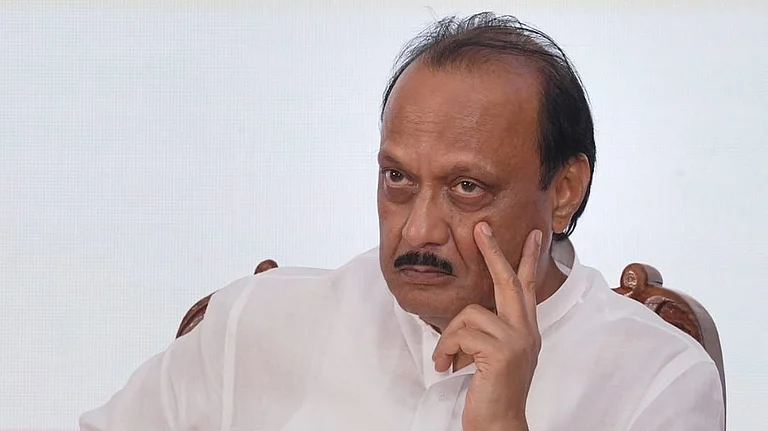
What’s Baramati Model
The Baramati model of development is an integrated rural transformation framework that evolved a once drought-prone region in Maharashtra into a prosperous agricultural and industrial hub.
In the early 19th and 20th centuries, when British authorities developed irrigation infrastructure such as the Nira Left Bank Canal and the Loyed Bhatghar Dam, in response to devastating famines, the infrastructure benefitted only 22 of Baramati’s villages, while the remaining 43 grappled with water scarcity and poverty. It was in the 1967 when Sharad Pawar initiated grass root efforts to provide respite to the local farmers and installed the first percolation tank in Tandulwadi under a 'Food for Work' scheme with the support from Hessel Skues and Edna Wazar of the Church Auxiliary for Social Action (CASA). This innovative model soon expanded and led to the construction of over 80 percolation tanks before the Agricultural Development Trust (ADT) was formally established in 1971.
Advertisement
Pawar collaborated with international aid organisations such as Lutheran World Relief (USA), Christian Aid (London) and Teredes Homes (Germany), securing financial guarantees to facilitate well construction. He also partnered with Kirloskar Oil Engines, providing affordable pump sets to local farmers.
In 1976, Apparsaheb Pawar joined the trust and revolutionised it by implementing contemporary irrigation and dryland farming, establishing a 110-acre demonstration farm in Malegaon (Kh) as a live training facility for farmers. In order to improve local incomes and well-being, the Trust expanded into dairy, poultry, goat rearing, agri-processing, mechanised farming and healthcare initiatives. Pawar concentrated on women's education in the late 1980s, building a safe residential complex in Shardanagar that currently accommodates more than 6,000 students. Following his demise in 2000, Rajendra and Sunanda Pawar broadened the Trust's focus to include cultural projects, SHGs, environmental conservation and international partnerships with leading institutions.
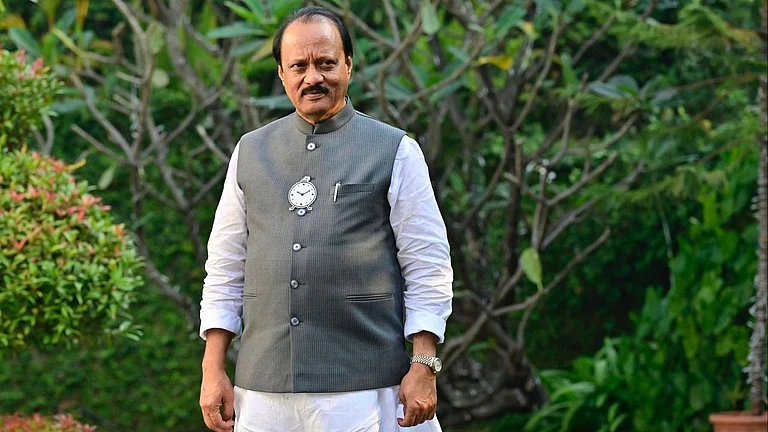
Core Pillars of the Model
Water Conservation & Irrigation
Water Conservation & Irrigation form the foundation of the model, with over 80 percolation tanks constructed and the Nira Left Bank Canal leveraged to secure year-round availability of water for farming. This dependable irrigation base has allowed farmers to shift to higher-value and more resilient cropping patterns
Cooperative Ecosystem
Regional development is driven by a strong cooperative ecosystem including sugar, milk and poultry sectors. These cooperatives provide farmers with direct market access and fair pricing.
Technological Innovation
Innovation plays a central role in advancing agricultural infrastructure. A pioneering collaboration with Microsoft and Oxford University has introduced artificial intelligence (AI) in farming to optimise irrigation and fertiliser use and reduced input costs by 30%. In addition, Indo Dutch collaboration commissioned Centers of Excellence (CoEs) for vegetables and genetic improvement in cattle bring global best practices to local fields at Baramati.
Education & Skill Development
Furthermore, Education and skill building are closely integrated with industry through institutions such as the Krishi Vigyan Kendra (KVK) and specialised agriculture colleges.
Apart from farming, Baramati hosts a major Maharashtra Industrial Development Corporation (MIDC) zone, with industries ranging from food processing, including firms like Schreiber Foods, to manufacturing units, creating opportunities related to non-farm employment.
Inside Baramati’s Economic Ecosystem
The Baramati model deploys a blend of traditional cooperative spirit and aggressive private enterprise. The Baramati Agro Ltd, an agribusiness conglomerate led by Rohit Pawar, is central to this model. According to Tracxn, the company reported a revenue of ₹5,590 crore for FY 2024-25. The industrial capacity of the Baramati model is complemented by powerful cooperative pillars like the Malegaon Sahakari Sakhar Karkhana, which acts as a “growth centre” for local farmers by providing irrigation facilities, medical aid and educational infrastructure, with a turnover that usually ranges between ₹700 to ₹800 crore.
According to ChiniMandi.com website, the cooperative is one of the most financially sound in the state, offers a procurement rate of ₹3,636 per tonne. It has a sugar production capacity of 8,250 tonnes of cane per day and runs a 35 MW co-generation unit, as detailed in a September 2018 Environmental Impact Assessment (EIA) report.
According to a report published by The Bridge Chronicle in April 2025, Baramati Cooperative Bank reported a ₹3,577 crore turnover. According to Acuite Ratings, Shri Datta Shetkari Sahakari Sakhar Karkhana Ltd (SDSSSKL) reported revenue of ₹611.06 crore in FY2024, with sugar contributing 84% and ethanol and distillery operations accounting for 15–22% of total revenue over the past three years. Collectively, these entities in the region contribute to a regional turnover exceeding ₹10,000 crore, forming the economic foundation of the Baramati development model.
According to a report published by Microsoft, farmers have seen more than 20% increase in the crop production, while reducing cost of fertilisers by 25% through spot fertilisation technique. These interventions have led to an 8% reduction in water consumption and a 12% decrease in post-harvest wastage. The intervention also helped conserve the environment by reducing water wastage, soil erosion, deforestation, chemical runoff and greenhouse gas emissions. Furthermore, the solution supports rural development and food security by increasing farm productivity, profitability and resilience.
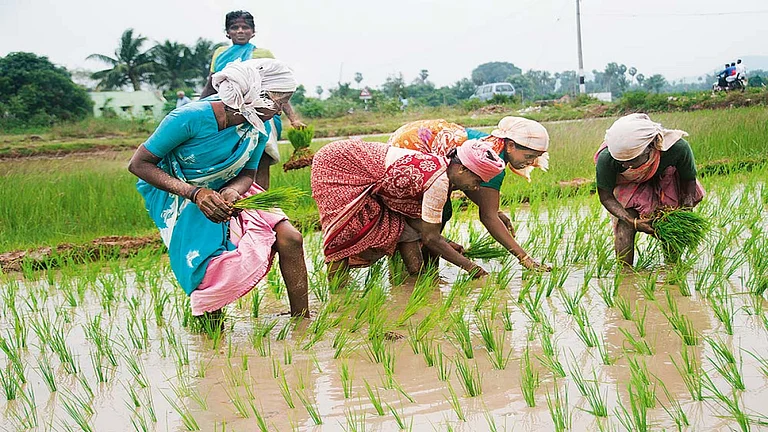
Foreign Direct Investment in Food Processing
By providing a plug-and-play ecosystem for multinational food processing ecosystem, the Baramati model draws substantial foreign direct investment (FDI). Through the Agricultural Development Trust, the region offers dependable power, fast connectivity, and a direct raw material link by utilising the Maharashtra Industrial Development Corporation (MIDC) Baramati Industrial Area.
Large-scale manufacturing hubs have been set up by major FDI players like Ferrero (Italy), which makes Ferrero Rocher, Nutella, Tic Tac and Kinder Joy, and Schreiber Foods (USA), which processes milk for companies like McDonald's. Baramati appeals to international agribusinesses as a capital which is strengthened by Indo-Dutch technical partnerships and adherence to global quality standards.









