

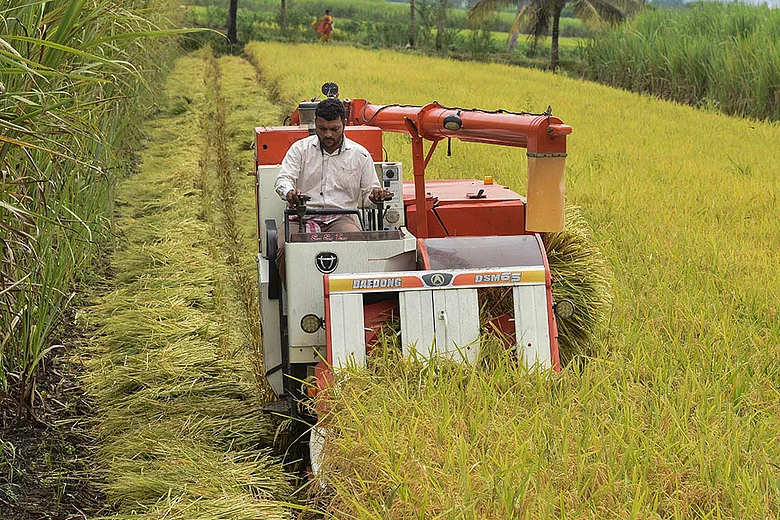
While producing a good crop is important, it is only half the battle won for a farmer. To ensure their prosperity, it is equally important to give them the right price for their produce at the right time in the right market. When farmers get good facilities for storage, smooth transportation, and new-age processing of agricultural products, it has a positive and direct impact on their income, and it also strengthens the rural economy. To develop the agriculture sector, the Uttar Pradesh government is doing some great work with this very approach in place.
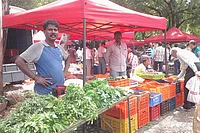
The state government led by Chief Minister Yogi Adityanath has initiated several programs to connect farmers with modern and digital markets alongside traditional Mandis. The objective of these initiatives is to simplify the sale of agricultural products and provide farmers with multiple opportunities in the market.
e-NAM, i.e., the Electronic National Agriculture Market, has emerged as an important medium for the sale of agricultural produce. This digital system connects farmers and traders with agricultural mandis. Through this, the government has made efforts to make the buying and selling process of agricultural products more convenient and transparent.
In Uttar Pradesh’s e-NAM-linked mandis, 11,565 online gate passes have been issued. To establish farmer trade centres and other facilities, an additional amount of Rs 78.42 crore has been spent. These efforts by Uttar Pradesh place emphasis on improving basic infrastructure in agricultural markets. They also simplify the trading process for farmers.
Advertisement
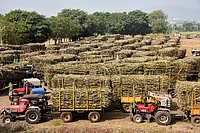
The UP government has expanded the sale and storage facilities of agricultural products in the state. To provide farmers with more opportunities to sell their produce, 10 new mandis and sub-mandis are being constructed. Additionally, in Lucknow, the state capital, construction work of the Kisan Agri Mall costing Rs 76.41 crore is in full swing.
In addition to the development of agricultural markets, special importance is also being placed on food processing activities. When farm produce is processed and converted into new byproducts, they give better returns with increases in its value. This process benefits farmers as well as small entrepreneurs and local traders.
Advertisement
In Uttar Pradesh, 26,677 food processing units have been established against a set target of 33,335 units under the Pradhan Mantri Formalisation of Micro Food Processing Enterprises (PMFME) scheme. Through the PMFME scheme, assistance is being given to small entrepreneurs to help them start or expand their food processing businesses.
Cold storage, pack houses, and other facilities also hold great importance in the food processing sector. These facilities make it easier to preserve agricultural products for a longer duration, maintain their quality, transport them to the market and also increase the possibilities of reducing post-harvest losses.
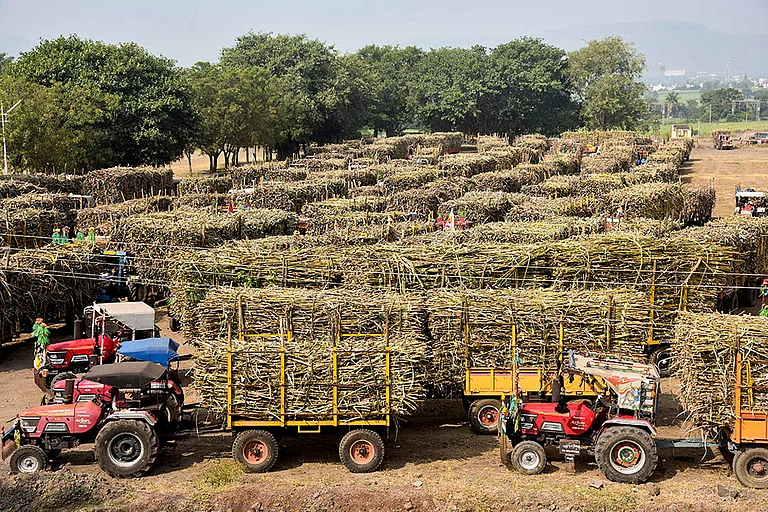


New opportunities for employment and entrepreneurship in rural areas of Uttar Pradesh have been created by this initiative of connecting agriculture with business. These efforts have been particularly beneficial for small farmers, local traders, and entrepreneurs associated with food processing as they have opened new pathways for their growth.
The efforts to modernise agricultural markets and promote food processing indicate that farming in the state is not being confined merely to production. Under the leadership of Chief Minister Yogi Adityanath, immense work is being carried out to make the rural economy much stronger by linking it with trade, industry, and employment.