Ban stretched up to nine days due to surge in suspicious alcohol sales.
Authorities seized ₹427 crore worth of cash, liquor and freebies.
Industry faces losses exceeding ₹1,400 crore due to prolonged shutdown.
The Election Commission of India (ECI) has imposed an unusually prolonged alcohol ban across parts of West Bengal ahead of the state's two-phase assembly election on April 23 and 29—stretching what is typically a 48-hour dry period to nine days, or 96 hours, in certain areas.
The decision has significant economic consequences for an industry that generates tens of crores in daily sales, and reflects growing alarm at the scale of suspected voter inducement activity detected in the run-up to polling.

1 October 2026
Get the latest issue of Outlook Business

What Triggered the Extended Ban
Monitoring exercises flagged an "unusual spurt" in alcohol sales across the state during the Model Code of Conduct period, with a sharp rise in the lifting of packaged liquor from depots in April 2026 compared to the same period last year. Authorities also noted a significant increase in the number of outlets classified as sensitive liquor shops — a designation that raises flags for potential misuse.
"It has been observed that there is an unusual spurt in sale of liquor," the Commission said, adding that the findings had emerged from multiple rounds of monitoring and analytics. The concern, in essence, was that alcohol was being stockpiled for distribution to voters — a practice the Commission moved to pre-empt by extending the ban window well beyond its standard duration.
Advertisement
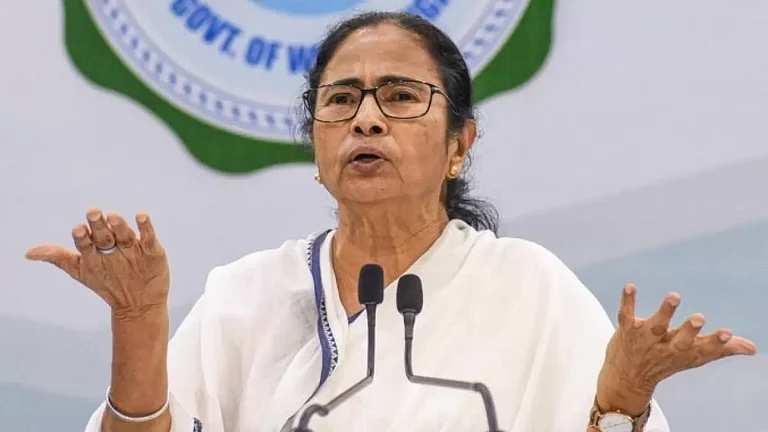
Authorities have seized over ₹427 crore worth of cash, liquor, drugs and other freebies in West Bengal during the Model Code of Conduct period — a steep jump from the ₹181 crore recorded as recently as March, reflecting how sharply enforcement has intensified as polling dates have drawn closer.
Of the total, more than 31.9 lakh litres of alcohol valued at roughly ₹81 crore have been confiscated — one of the most prominent components of the overall haul, and a figure that underscores why the Commission concluded that standard measures were insufficient.
Advertisement
The Economic Toll
The extended shutdown is extracting a significant price from the industry. West Bengal has around 5,000 bars and retail liquor outlets, which together typically generate daily sales of between ₹80 crore and ₹90 crore. Industry estimates, cited by the Times of India, put potential losses from the extended ban at over ₹1,400 crore, with Kolkata alone accounting for nearly ₹900 crore of that figure.