The National Payments Corporation of India (NPCI) is likely to issue guidelines on charges for UPI transactions above ₹2,000 within the next week, according to sources cited by CNBC-TV18.
The guidelines are expected to be based on recommendations made by the UPI Services Steering Committee, which is headed by NPCI, the sources said.
The move comes after the government notified amendments to the Payment and Settlement Systems Act, under which UPI transactions of up to ₹2,000 and payments made using RuPay-powered debit cards cannot attract charges.

1 September 2026
Get the latest issue of Outlook Business

Banks and payment system providers have been barred from imposing charges, either directly or indirectly, on UPI transactions of up to ₹2,000 or on payments made through RuPay debit cards.

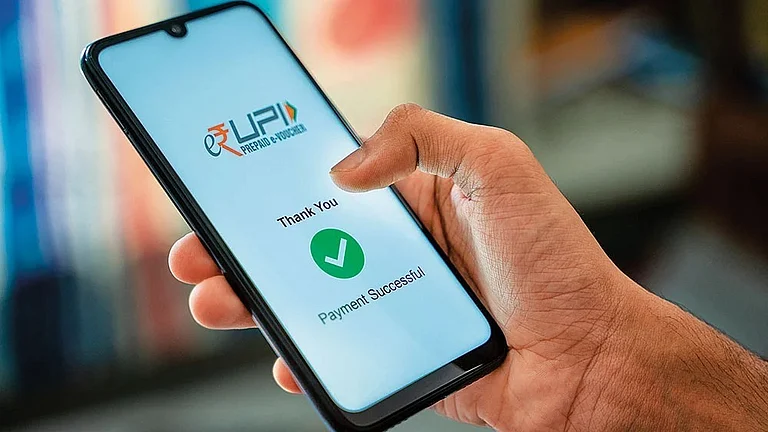

However, the government has not clarified whether a charge would be levied on UPI transactions above ₹2,000, particularly those paid by merchants. UPI transactions currently do not attract charges, regardless of their value.
Consumers To Remain Exempt From UPI Charges
The government has also maintained that consumers will not have to bear any UPI charges.
Finance Minister Nirmala Sitharaman had earlier said, “Will consumer pay any UPI charge — No,” reiterating that UPI has remained free for consumers since its launch and would continue to remain so.
According to a gazette notification dated September 14, no bank or system provider can impose any charge, directly or indirectly, on a person making or receiving a UPI payment of up to ₹2,000 or a payment through a RuPay debit card.
Advertisement
MDR Framework Could Apply To Higher-Value Transactions
The notification followed an amendment to Section 10A of the Payment and Settlement Systems Act, 2007.
The amendment provides an enabling framework for imposing a Merchant Discount Rate (MDR) on UPI and other notified electronic payment modes.
The amendment was passed by Parliament during the Monsoon Session, which ended on August 13, 2026.
Following its passage, the government said the UPI Services Steering Committee, headed by NPCI, would determine the applicable MDR rates.
Government pitches charges for UPI sustainability
The government has cited the rapid expansion in UPI transaction volumes and the need for continued investment in cybersecurity, fraud prevention and payment infrastructure as reasons for introducing a potential charge mechanism.
Advertisement
It has argued that such charges are necessary to support further market expansion and make the payments ecosystem financially sustainable. A sustainable revenue model could also encourage greater competition by enabling more companies to expand their operations, the government said.
Expanding Digital Transactions
UPI is operated by NPCI, an initiative of the Reserve Bank of India (RBI) and the Indian Banks’ Association. The system enables real-time payments between individuals and allows consumers to make direct payments to merchants.
Launched on August 25, 2016, UPI has significantly reshaped India's digital payments ecosystem. Transaction value rose from ₹0.07 lakh crore in FY17 to around ₹314 lakh crore in FY26, representing an increase of more than 4,000 times over the decade.