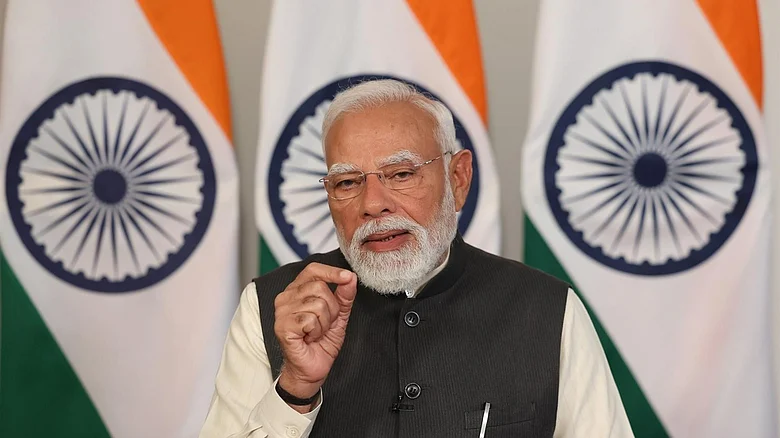

PM Modi and Australian Prime Minister Anthony Albanese are expected to push forward negotiations on the Comprehensive Economic Cooperation Agreement (CECA) to expand trade and investment beyond the existing ECTA.
Defence cooperation, critical minerals, technology, maritime security and supply-chain resilience are expected to dominate discussions as both countries strengthen their role in the Indo-Pacific.
The Prime Minister will also meet Governor-General Sam Mostyn, address the India-Australia CEOs Forum and interact with the Indian diaspora, highlighting education, mobility and community links.
After concluding the Indonesia leg of his three-nation tour, Prime Minister Narendra Modi is set to arrive in Melbourne on Wednesday for a three-day visit to Australia. The visit is expected to inject fresh momentum into one of the Indo-Pacific's fastest-growing strategic partnerships, with trade, defence, critical minerals, technology and regional security high on the agenda.
During the visit, Modi will hold bilateral talks with Australian Prime Minister Anthony Albanese, call on Governor-General Sam Mostyn, address the India-Australia CEOs Forum and interact with members of the Indian diaspora.

1 October 2026
Get the latest issue of Outlook Business

According to the Ministry of External Affairs (MEA), the visit is expected to advance negotiations on a Comprehensive Economic Cooperation Agreement (CECA), which is seen as the next phase of the economic partnership between the two countries.
Modi last visited Australia in 2023, while his first bilateral visit as prime minister was in 2014.
Why Is the Visit Significant?
India and Australia have transformed their ties over the past decade from a traditional bilateral relationship into a Comprehensive Strategic Partnership, cooperating closely across trade, defence, technology, energy and the Indo-Pacific.
Advertisement
The visit comes at a time when both countries are seeking to strengthen supply chains, expand economic cooperation and deepen strategic coordination amid rising geopolitical competition in the Indo-Pacific.
Australian High Commissioner to India Philip Green recently described the growing warmth between the two leaders as a key driver of the relationship.
"This is the third time Prime Minister Narendra Modiji has visited Australia as prime minister, and he is taking time for a substantial visit to Melbourne," Green told NDTV. "The relationship between our two leaders has always been strong, but it has really been galvanised. Prime Minister Albanese is enormously looking forward to meeting his friend, Narendra Modiji."
Advertisement
Trade and CECA Talks to Take Centre Stage
Economic cooperation is expected to dominate the discussions. The two sides are working towards concluding a Comprehensive Economic Cooperation Agreement (CECA), which would build on the existing India-Australia Economic Cooperation and Trade Agreement (ECTA) that came into force in December 2022.
The ECTA has significantly expanded bilateral trade by lowering tariffs and improving market access for exporters from both countries. A broader CECA is expected to further liberalise trade in goods and services, encourage investments and enhance cooperation in emerging sectors. The MEA has said the visit will provide fresh momentum to the ongoing negotiations.
Critical Minerals and Supply Chain Resilience
Critical minerals are expected to be another major focus of the summit. Australia possesses some of the world's largest reserves of lithium, cobalt, nickel and rare earth elements—resources that are essential for electric vehicles, batteries, semiconductors and clean energy technologies.
As countries seek to reduce dependence on concentrated global supply chains, India is looking to diversify its access to these strategic resources. Greater collaboration with Australia could help strengthen India's ambitions in renewable energy, advanced manufacturing and semiconductor production.
Defence and Indo-Pacific Security
Strategic and defence cooperation has steadily become a cornerstone of the bilateral relationship. As members of the Quad—alongside the United States and Japan—India and Australia have increased military cooperation through joint exercises, defence dialogues and maritime coordination.
The leaders are expected to discuss regional security, maritime cooperation, counter-terrorism and efforts to maintain a free, open and inclusive Indo-Pacific. According to the Australian High Commission, the visit is also expected to reinforce India's MAHASAGAR vision and strengthen cooperation between two major Indo-Pacific partners.
Growing concerns over regional security and competition among major powers have made defence cooperation an increasingly important pillar of the relationship.
Emerging Technologies, Education and Mobility
Beyond security and trade, the discussions are also expected to cover emerging technologies, innovation and research collaboration. Prime Minister Modi has said the visit will help expand cooperation in areas such as critical and emerging technologies, sports and sports science.
Education and mobility are also likely to feature prominently, with both countries looking to strengthen student exchanges, research partnerships and skilled workforce mobility.
Indian Community to Feature Prominently
The Indian diaspora remains one of the strongest pillars of India-Australia relations. During his visit, Modi will interact with members of the Indian community in Melbourne, recognising their growing contribution to Australia's economy, education system and multicultural society.
Before departing for Australia, the Prime Minister highlighted the diaspora's role in strengthening bilateral ties.
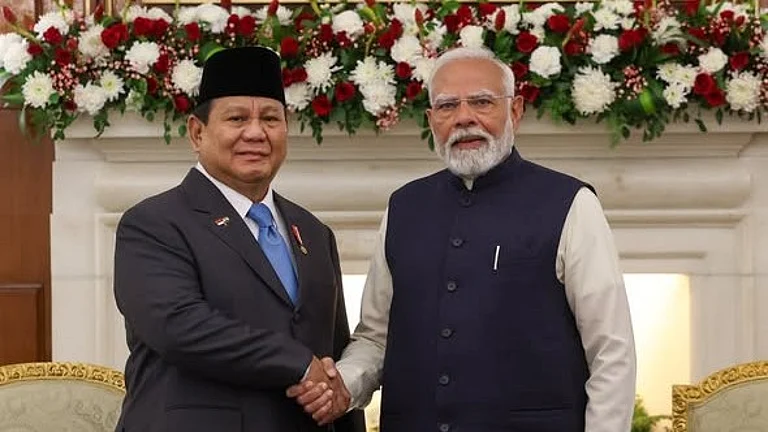
"My visit will strengthen our Comprehensive Strategic Partnership, and I shall, in my discussions with Prime Minister Albanese, take forward our relations in the areas of defence and security, trade and investments, education and mobility, and people-to-people ties," Modi said.
Why Experts Are Watching the Visit Closely
Analysts believe the visit comes at a pivotal moment for the Indo-Pacific, where strategic competition among major powers is reshaping regional partnerships.
Lisa Singh, Chief Executive Officer of the Australia India Institute and a former Australian senator, said stronger India-Australia ties send an important signal to the wider region.
"Strengthening the India-Australia partnership sends an important message, not just to each other, but to developing nations in our region that Australia and India want to play a leading role in creating security and prosperity for all," Singh told India Today.
She identified maritime security and defence cooperation as key areas for future collaboration.


From trade negotiations and critical minerals to defence, technology, education and regional security, the partnership is becoming increasingly comprehensive.
With both countries playing larger roles in the Indo-Pacific and sharing an interest in resilient supply chains and strategic stability, the visit is expected to further cement one of the region's most important bilateral relationships.