
Maruti Suzuki market share falls to 39.26%, 13-year low in FY26
SUV shift, rising competition from M&M, Tata erode dominance
Targets 50% share by FY31 amid slowing small-car segment growth
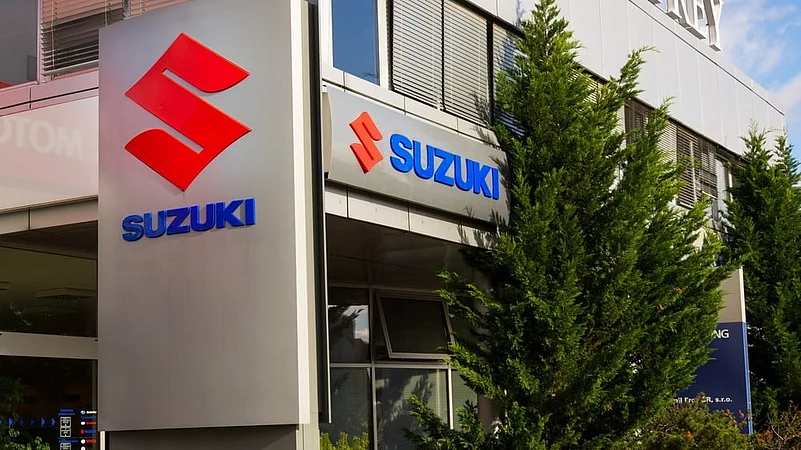
Maruti Suzuki saw its grip on India's passenger vehicle market weaken further in FY26, with market share declining to a 13-year low of 39.26%, as changing consumer preferences and rising competition dented its long-standing dominance.
This marks the third consecutive year of market share decline for the country's largest carmaker. Having once commanded nearly 50% of the market, Maruti has lost close to 12 percentage points since FY20, according to data from the Society of Indian Automobile Manufacturers.
1 September 2026
Get the latest issue of Outlook Business

The decline comes despite the company introducing new models such as the Jimny and Invicto in the fast-growing SUV segment over the past few years. However, the broader utility vehicle segment now accounts for nearly 67% of India's passenger vehicle market, while Maruti's share in this category remains below 25%, highlighting its relative underperformance in the segment driving industry growth.

The company continues to rely heavily on its stronghold in the sub-4 metre segment, with models like Wagon R, Swift and Baleno, where it commands around 67% market share. However, growth in this segment has slowed significantly to under 2% in FY26, compared to 11% growth in utility vehicles, reflecting a structural shift in consumer demand.
Advertisement
Rivals Gain Ground as SUV Demand Surges
Maruti's declining share has coincided with strong gains by competitors. Mahindra & Mahindra more than doubled its market share over the past five years to 14.21% in FY26, driven by strong demand for models such as Thar, Bolero and Scorpio. The company has emerged as the second-largest carmaker in India.
Tata Motors followed closely with a 13% market share, supported by popular models like Nexon, Punch and Safari.
Maruti's partnership with Toyota has delivered mixed outcomes. The Grand Vitara, rebadged as the Toyota Urban Cruiser Hyryder, has at times outsold its Maruti counterpart, indicating potential internal competition.
Advertisement
In the premium MPV segment, the gap remains stark. While Maruti's Invicto sells around 300–400 units a month, the Toyota Innova Hycross records monthly sales of 9,000–11,000 units, underscoring challenges around brand perception in higher-end segments.

Road to Recovery and Focus on Inclusion
Despite the decline, Maruti Suzuki has maintained its target of regaining a 50% market share by FY31. Achieving this would require the company to recover in five years nearly the same share it has lost over the past seven years, making it a significant challenge amid evolving market dynamics.
Alongside its market strategy, the company has also been focusing on improving workforce diversity. It has expanded the role of women in its manufacturing operations, particularly at its Gurugram and Manesar plants, where they are now involved in core vehicle assembly and engine transmission processes.
Over the past year, more than 190 women have been deployed on the shopfloor, taking the total number of women employees across functions to over 1,300. These roles include assembly-line and quality-control operations, marking a shift towards greater inclusion in traditionally male-dominated areas.
Managing Director and CEO Hisashi Takeuchi said the company is working to build a supportive ecosystem that enables greater participation of women in manufacturing, with a focus on embedding inclusion into everyday operations rather than merely meeting diversity targets.
The twin challenge for Maruti now lies in regaining momentum in the fast-growing SUV segment while strengthening its brand positioning in premium categories, even as it adapts to changing consumer preferences and intensifying competition.