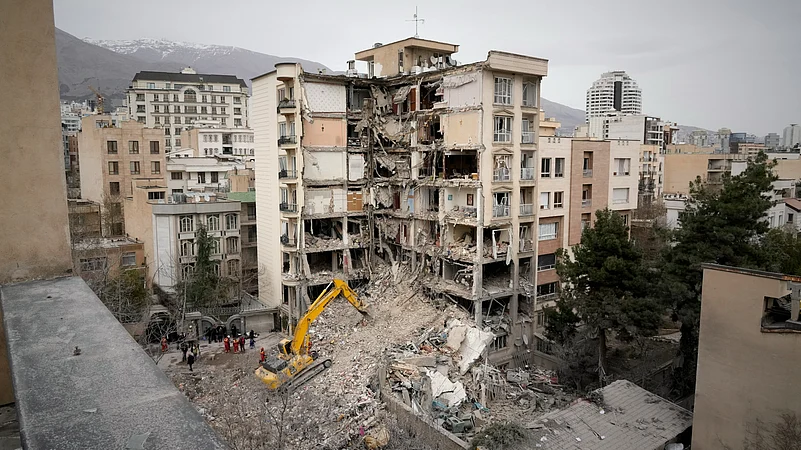

IRGC warns of attacks on US naval assets and signals activation of its regional “Resistance Front.”
Trump rejects Iran’s latest proposal, insisting nuclear issues be addressed upfront.
Strait of Hormuz remains shut, raising fears of wider conflict and disruption to global energy supply.
Iran’s Islamic Revolutionary Guard Corps (IRGC) has issued fresh threats against the United States, warning of retaliation against US naval assets and signalling a broader regional response if Washington undertakes further military action.
An official from the IRGC Navy said that in the event of escalation, Tehran could activate the wider “Resistance Front”—a network of Iran-aligned groups across West Asia.

1 September 2026
Get the latest issue of Outlook Business

“We will employ the capabilities of the Resistance Front if Washington commits a new act of aggression,” state media reported, citing the official.
The rhetoric intensified with direct threats to US maritime forces. “If America miscalculates again, we will burn its giant ships at sea,” the IRGC Navy’s political deputy said.
“In another miscalculation by the US, we will burn their warships. We will respond to every new aggressive action with a new surprise,” the official added.
Trump Signals Discontent with Iran Proposal
Meanwhile, US President Donald Trump indicated dissatisfaction with Tehran’s latest proposal, signalling that Washington is unwilling to proceed with further negotiations without addressing Iran’s nuclear programme.
Advertisement
During the first round of talks—which failed to yield results—the US demanded a complete halt to Iran’s uranium enrichment and a 20-year moratorium. Tehran rejected the demands as “excessive,” maintaining that it has the right to pursue a nuclear programme for peaceful purposes.
Advertisement
Iran’s New Proposal
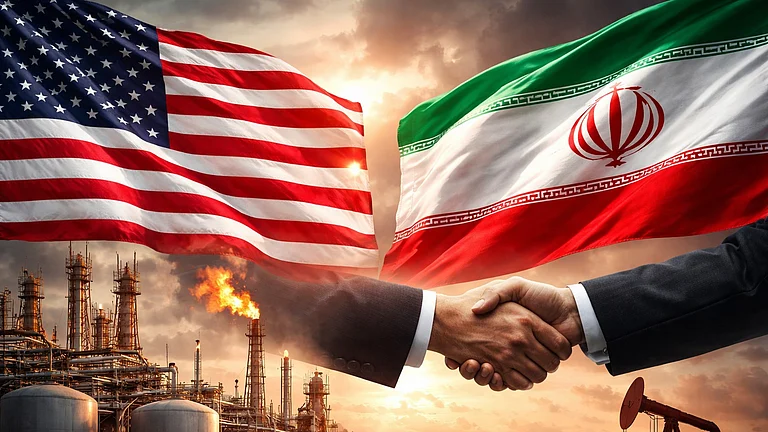
According to reports, Iran’s latest proposal calls for an immediate ceasefire in West Asia and the reopening of the Strait of Hormuz. Contentious issues—including its nuclear programme, missile development, and sanctions—have been deferred to later stages.
However, the US has insisted that Iran’s nuclear capabilities be addressed upfront, creating a key hurdle in efforts toward conflict resolution.