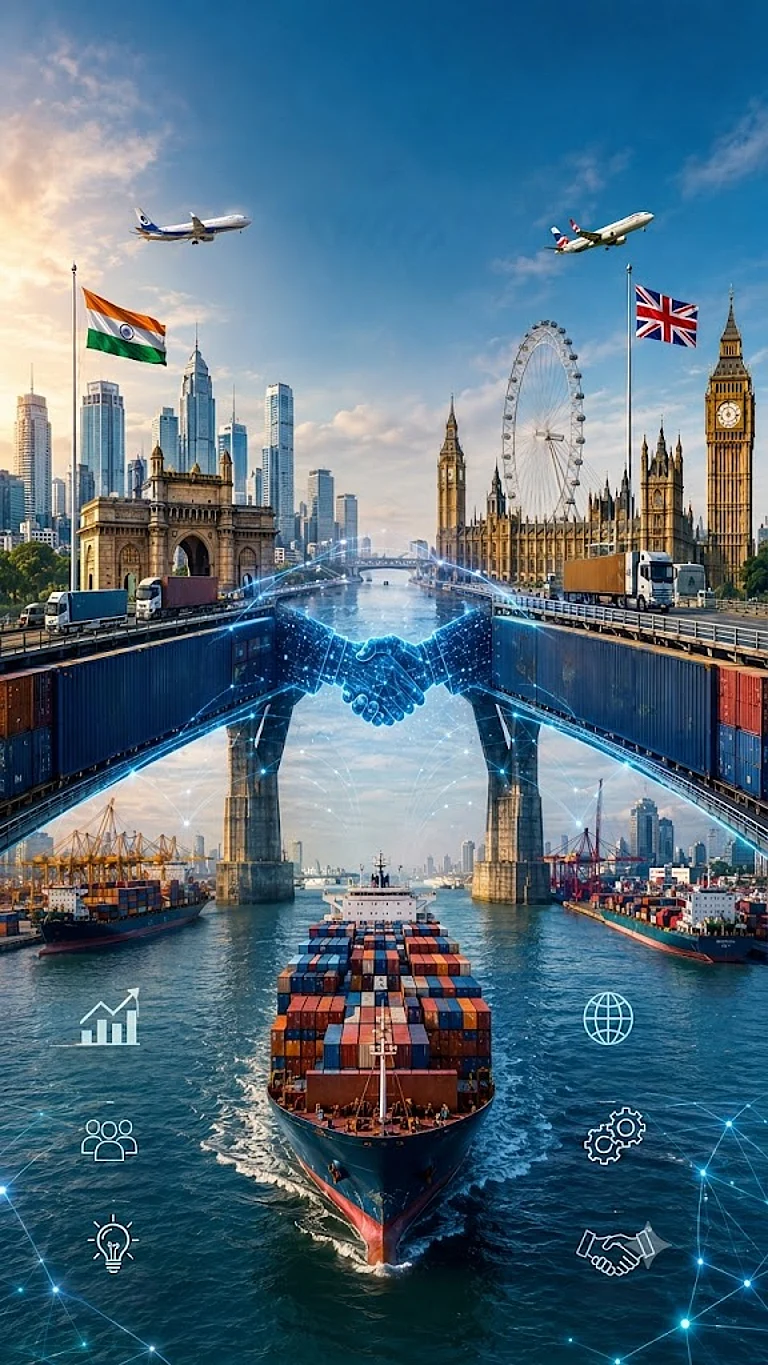
India-UK FTA comes into effect on July 15, allowing all Indian exports to enter the UK at zero import duty
The agreement benefits sectors including agriculture, fisheries, MSMEs and manufacturing while improving market access
Indian professionals working in the UK for up to three years will be exempt from British social security contributions under the Double Contribution Convention (DCC)
The India-UK Free Trade Agreement (FTA) will allow all Indian exports to enter the United Kingdom at zero import duty from July 15. It will benefit sectors including agriculture, fisheries, MSMEs and manufacturing, Union Commerce and Industry Minister Piyush Goyal said on Sunday, as reported by PTI.
"From July 15, any item exported from India to the UK will attract zero import duty," Goyal told reporters, adding that the agreement goes beyond merchandise trade by introducing provisions that directly benefit Indian professionals working in the United Kingdom.
One of the most significant provisions is the Double Contribution Convention (DCC), which exempts Indian professionals employed in the UK for up to three years from contributing to the British social security system.

1 October 2026
Get the latest issue of Outlook Business

Previously, under the arrangement, around 25% of their salaries went towards the UK social security system.
Advertisement
Under the DCC, however, that amount will instead be deposited into their provident fund accounts in India, earning 8.25% annual interest on a tax-free basis.
"Earlier, nearly 25% of their salaries used to go towards the UK government's social security contributions. Now, that amount will be deposited into their provident fund accounts in India, earning 8.25% annual interest. It will remain tax-free and help secure their retirement savings," Goyal said.
He also credited Prime Minister Narendra Modi's leadership for helping conclude the negotiations.
Goyal also announced that he will travel to four countries with a business delegation to expand India's trade and investment partnerships, as reported by PTI.
Advertisement
Additionally, he will attend the India-European Union Trade and Technology Council meeting in Brussels on July 14 and 15, where discussions will focus on resolving pending trade issues, advancing technology cooperation, and pushing forward negotiations on the proposed India-EU Free Trade Agreement.
He also said that stronger technical partnerships with European countries would benefit India's long-term growth while deepening economic ties with the region.
Beyond eliminating tariffs, the India-UK Free Trade Agreement signals a broader shift in India's trade strategy—from negotiating market access to securing tangible benefits for its workforce and businesses.



If the agreement is implemented effectively, it will strengthen India's export competitiveness, promote the global mobility of skilled professionals, and serve as a model for future trade agreements with other major economies.