GTRI said Indian exporters use only 20-30% of eligible FTA benefits, versus 60-70% by exporters selling into India.
It said many partner countries already have low tariffs, so the savings from FTA paperwork often do not justify the compliance burden.
The think tank warned that FTAs have also made India’s inverted duty structure problem harder to fix.
India's utilisation of free trade agreement benefits remains low at just 20-30% of eligible exports, compared with 60-70% by the FTA partners, due to high compliance costs and already low tariffs in partner countries, think tank GTRI said on Tuesday.
It also said that Free Trade Agreements (FTAs) have made the inverted duty structure issue harder to fix because many finished goods now enter India at low or zero duty from partners such as ASEAN, Japan, South Korea, the UAE and Australia.
As a result, Indian manufacturers often pay high duties on imported inputs, especially those sourced from non-FTA countries, while competing against finished products imported duty-free under FTAs, the Global Trade Research Initiative (GTRI) said.
1 September 2026
Get the latest issue of Outlook Business

Citing an example, it said steel and aluminium attract MFN (duty applicable for all countries) duties of 7.5-10%, but machinery, industrial equipment and engineering products made from these materials can enter India duty-free under several FTAs.
Indian manufacturers, therefore, face higher input costs when competing with tariff-free imported machinery produced with globally priced inputs, it said.
"Just 20-30% of India's eligible exports utilise FTA benefits, compared with 60-70% utilisation by exporters shipping to India. High compliance costs and low foreign tariffs discourage Indian exporters from using FTA preferences. Many small firms prefer to avoid the compliance burden for modest tariff savings," it said, adding most of India's FTA partners are already open economies with low tariffs.
Advertisement
Average MFN tariffs are close to zero in Singapore and below 4% in Japan, Australia, Malaysia and the UAE.
In contrast, India's trade-weighted MFN tariff is about 12.6%, with rates ranging from zero to 150%.
"As a result, when India cuts tariffs under an FTA, exporters from partner countries gain a significant price advantage in the Indian market. A 50% tariff reduction, for example, can translate into a major cost advantage over competing suppliers," GTRI Founder Ajay Srivastava said.
He said that FTAs are no longer limited to reducing tariffs; they increasingly shape how governments regulate businesses, manage data, design industrial policies, support domestic industries and pursue broader development objectives.
Advertisement
"While presented as modern trade rules, such provisions can reduce India's policy flexibility, create new compliance burdens for exporters, and constrain future industrial and development strategies," he said.
Traditional trade pacts focused mainly on reducing tariffs and expanding trade, while the new-generation deals increasingly regulate how governments design policies in areas such as procurement, healthcare, environment, digital governance, and intellectual property, he added.
He further noted that over the past three years, India's average annual trade deficit with ASEAN, Japan and South Korea has reached about $62 billion.
To deal with these issues, Srivastava suggested that tariff schedule revision, addressing inverted duty structure, strengthen domestic manufacturing ecosystems and supply chains, setting up of an FTA Impact Monitoring Authority to track utilisation, and prioritise mutual recognition of standards, testing and conformity assessment to reduce non-tariff barriers faced by Indian exporters.
"Most of India's FTA partners had already rationalized their tariff structures before embarking on the FTA journey, ensuring that trade pacts led tariff cuts did not trigger import surges or worsen inverted duty structures. India continues on these deals without reviewing its regular tariff structure," he said.
INDIA'S FIRST GENERATION FTAs (IMPLEMENTED BEFORE 2012): Sri Lanka FTA (2000); South Asian Free Trade Area (2006); Nepal Trade Treaty (2009); Bhutan Trade Agreement (1972); Thailand Early Harvest Scheme (2004); Singapore Comprehensive Economic Cooperation Agreement (2005); ASEAN (between 2010 and 2011); South Korea Comprehensive Economic Partnership Agreement (2010); Japan CEPA (2011); and Malaysia CECA (2011).
FTAs IMPLEMENTED AFTER 2020: After nearly a decade of limited FTA activity, India resumed negotiations with a stronger focus on strategic partners, investment and supply-chain integration.
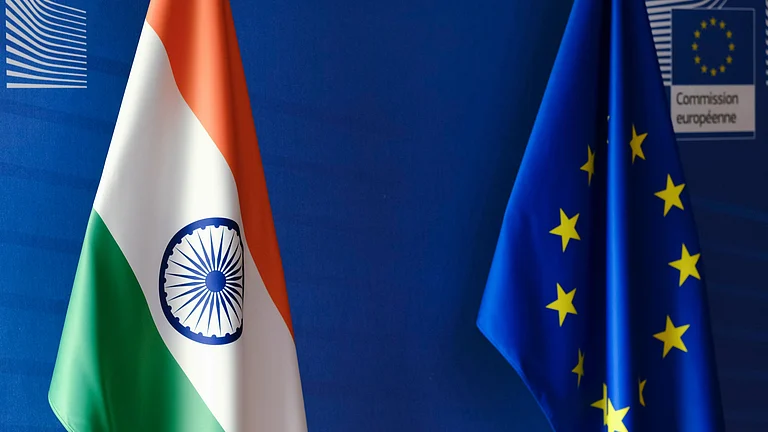


The new generation agreements include: Mauritius Comprehensive Economic Cooperation and Partnership Agreement (2021); UAE (CEPA - 2022); Australia Economic Cooperation and Trade Agreement (ECTA - 2022); EFTA Trade and Economic Partnership Agreement (TEPA - 2025); and Oman CEPA (2026).
FTAs SIGNED BUT NOT IMPLEMENTED: The UK and New Zealand.
FTA TALKS CONCLUDED European Union FTA NEGOTIATIONS UNDERWAY: -USA, Israel, Canada , Peru, Chile, Gulf Cooperation Council (Bahrain, Kuwait, Qatar and Saudi Arabia), Eurasian Economic Union (EAEU - Armenia, Belarus, Kazakhstan, Kyrgyzstan and Russia).
India now has 15 implemented FTAs covering 27 countries, while another 9 agreements are pending implementation or under negotiation, covering 42 additional countries.
Together, these 69 countries account for more than three-quarters of India's exports, highlighting how central FTAs have become to India's trade strategy.