
India plans to operationalise nine free trade agreements within 10 months
Commerce Minister says they will complement India’s growth story and reinforce its role as a manufacturing and investment hub
He stressed that long-term global capital increasingly views India as the only credible alternative for diversified, trusted supply chains and sustained high growth.
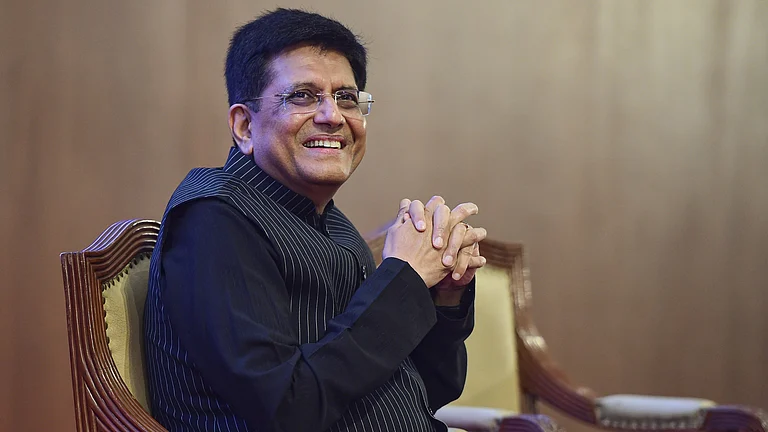
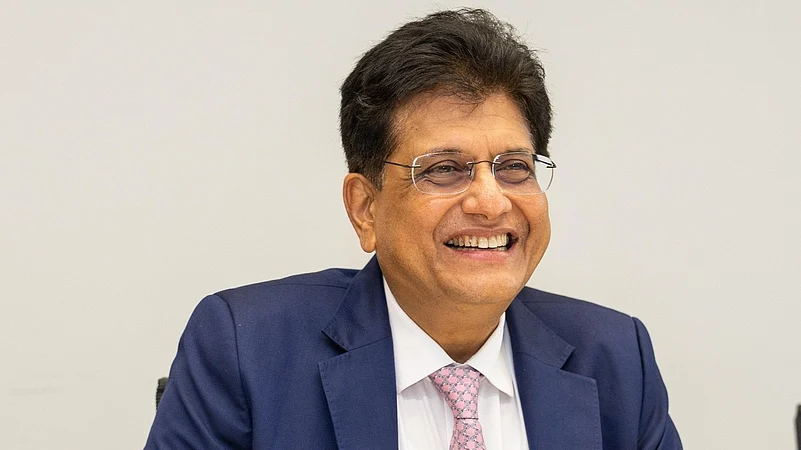
Union Commerce Minister Piyush Goyal said India is set to execute nine free trade agreements (FTAs) within the next 10 months. These agreements were signed over the period of past three years with 38 developed economies.
To be specific, India has finalised agreements with countries, including Mauritius, the UAE, the UK, New Zealand, Australia, the European Free Trade Association (EFTA), the European Union, the Oman and the Unites States.

1 September 2026
Get the latest issue of Outlook Business

Speaking at the Citi 2026 India Conference in Mumbai, Goyal said that two to three "very substantive" FTAs will come into force in the next six months, after the implementation of the Oman FTA on June 1. He added that the nine agreements are intended to support and strengthen India's growth story rather than compete with it.
His remarks emphasise the government's efforts to make the country a manufacturing and investment destination while strengthening its presence in the global markets.

Addressing global investors, Goyal highlighted that India has positioned itself as the most credible alternative manufacturing destination as multinational corporations realign global supply chains.
Advertisement
"....will see us executing at least another three or four significant free trade agreements and the coming into effect of all nine free trade agreements over the next nine to ten months," he added.
Goyal said that his interaction with around 50 foreign companies has "indicated that the world increasingly sees India as a reliable alternative for manufacturing, a trusted partner, and a secure investment destination.
He further expressed his confidence that India would remain the world's fastest-growing economy for the next two decades.
What India is Actually Offering
The Commerce and Industry Minister attributed India's demographic advantage, expanding domestic markets and technological advancements as the primary drivers of the foreign investments.
Advertisement
He highlighted the government's programme of $3.5 billion fund allocation to develop 100 industrial parks, which aim to provide ready-to-use industrial infrastructure, including land, utilities, housing units, environmental clearance and digital connectivity.
He told investors that the government's plans are increasingly positioning itself as a facilitator rather than a regulator. The recent regulatory reforms, including the four labour laws, provide a simplified framework, and help create a more business-friendly environment.
India has safeguarded its energy security and managed the recent geopolitical crisis effectively through diversified supply sources and uninterrupted fuel availability and stable prices amid the West Asia Crisis.