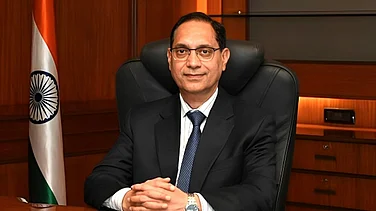
Ackermann said renewable energy is now an economic and strategic necessity, not just a climate issue.
India’s renewable sources account for around 26% of electricity generation, he noted.
The two countries are working together on renewables, battery storage, grid integration, green mobility and climate action.
India and Germany share a common challenge of reducing dependence on imported fossil fuels and increasing energy independence, said German Ambassador to India Philipp Ackermann.
He was speaking at the tenth edition of the GSDP Conversation Series under the theme ‘Energy Security through Renewable Energies’ on Thursday.
"India has made significant progress in renewable energy deployment, with renewable sources now contributing around 26 per cent of electricity generation," he added.

1 September 2026
Get the latest issue of Outlook Business

The Indo-German Partnership for Green and Sustainable Development (GSDP) hosted the tenth edition of the GSDP Conversation Series in partnership with the Ministry of New & Renewable Energy (MNRE).
In his opening address, Ackermann said renewable energy is no longer just a climate imperative but also an economic and strategic necessity.
Renewables create a powerful trinity of climate action, economic opportunity, and energy security, he opined.
The GSDP partnership is particularly significant as India and Germany mark 75 years of diplomatic relations.

The longstanding bilateral development cooperation has evolved into a partnership addressing climate action and sustainable development for resilient economic growth.
Advertisement
Both countries are working closely on areas such as renewable energy (deployment and manufacturing, battery storage, grid integration), energy efficiency and transition of the hard-to-abate sectors, green urban mobility, biodiversity, climate change mitigation and adaptation, sustainable urban development and vocational education.
New & Renewable Energy Secretary Santosh Kumar Sarangi talked about the relevance of energy security and expectations from international cooperation.



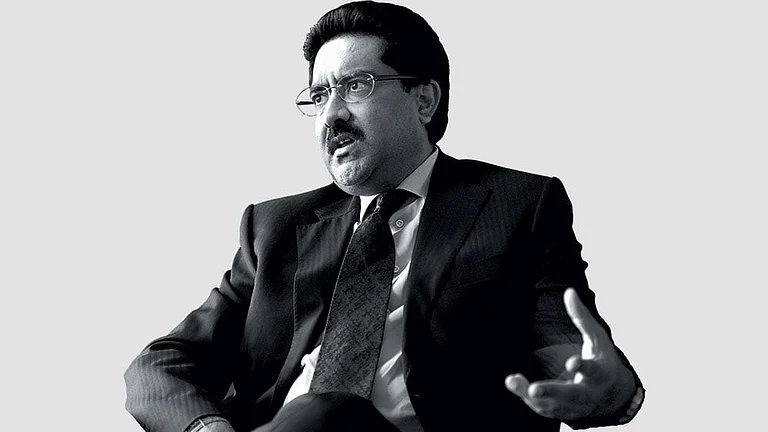
"The recent crisis in West Asia has once again highlighted the critical importance of energy security. Renewable energy, including solar, wind, battery energy storage systems and green hydrogen - has immense potential to strengthen energy security while supporting sustainable development," he said.
Advertisement
India has set an ambitious target of achieving 500 GW of non-fossil fuel capacity by 2030 and net zero emissions by 2070.
The Indo-German Partnership for Green and Sustainable Development (GSDP), launched in 2022, is a strategic cooperation framework supporting sustainable and climate-aligned development.
The partnership advances solutions that contribute to the Sustainable Development Goals and the goals of the Paris Agreement.