
Around $500 million (nearly ₹4,900 crore) has entered India over the past three months through 29 investment proposals following the easing of investment rules.
India has allowed automatic approval for non-controlling land-border ownership of up to 10%, while continuing to scrutinise strategic sectors and maintain domestic control.
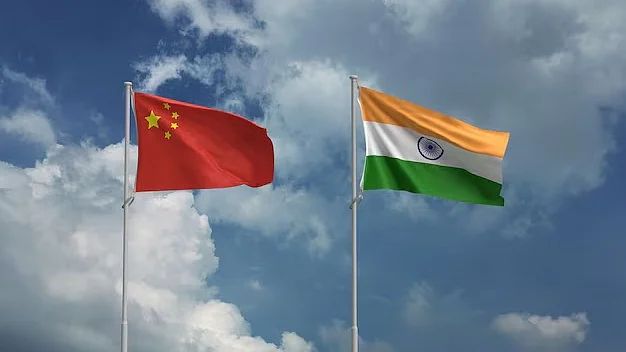
Ajit Doval’s Beijing talks with Wang Yi and Xi Jinping’s expected visit for the September 2026 BRICS Summit come amid renewed flights, business links and broader efforts to stabilise bilateral ties.
National Security Adviser Ajit Doval arrived in Beijing on Monday to hold border talks with Chinese Foreign Minister Wang Yi under the Special Representatives mechanism and prepare for the upcoming BRICS summit.
The diplomatic manoeuvres run alongside a quiet economic shift. More than $500mn (nearly Rs 4,900 crore) in Chinese-linked capital has entered India over the past three months. This follows relaxed investment rules, reports said.

1 October 2026
Get the latest issue of Outlook Business

President Xi Jinping is widely expected to visit New Delhi for the BRICS gathering in September 2026, although Beijing has not formally confirmed his participation.
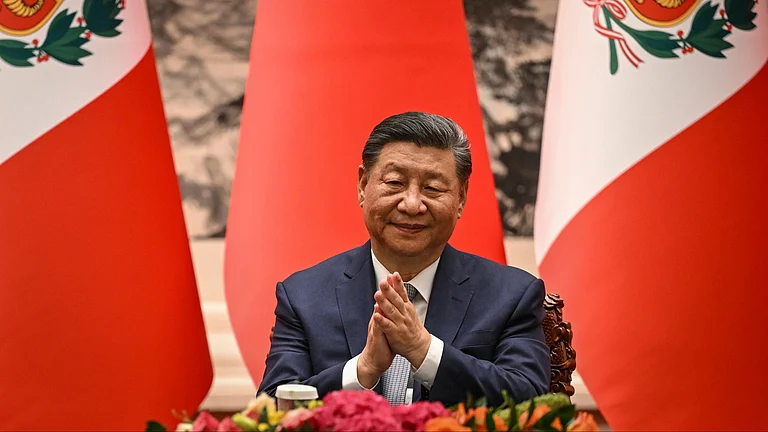
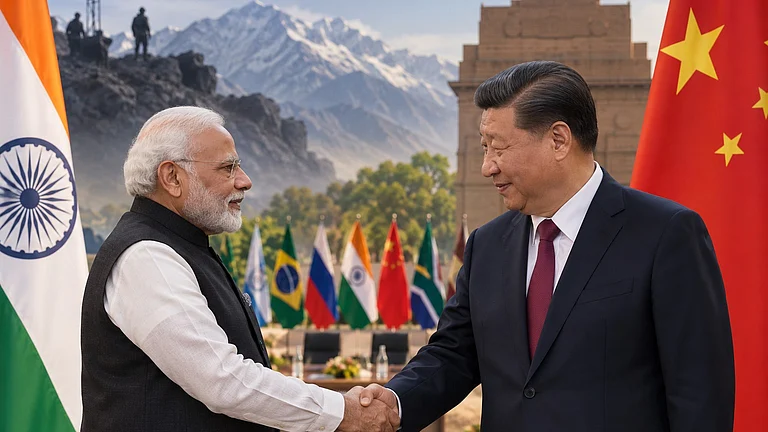


The expected visit and the resumed capital flows show that diplomatic and economic channels are reopening. Bilateral ties and financial channels were heavily restricted following the 2020 Galwan Valley border clash.
The fresh investments signal a measured reopening rather than a return to pre-2020 access. India maintains scrutiny over strategic sectors while allowing specific industrial cooperation.
Advertisement
Policy Shift Drives Capital
The government introduced Press Note 3 in April 2020 to mandate federal approval for all foreign direct investment from countries sharing a land border with India.
The policy aimed to block opportunistic asset acquisitions during the Covid-19 pandemic. The restrictions immediately stalled capital flows. Investment proposals faced severe delays, trapping venture capital and follow-on funding rounds in prolonged approval processes.
The government adjusted its policy in May 2026. It eased the restrictions to permit an automatic approval route for non-controlling land-border ownership of up to 10 per cent.
This move shifted the beneficial ownership assessment to the level of the investing entity, which greatly lowered regulatory barriers for international investment vehicles holding minor Chinese stakes.
Advertisement
Since the rule change, 29 investment proposals worth Rs 4,900 crore have been reported.
These capital injections span several sectors, including information technology, artificial intelligence, manufacturing, pharmaceuticals, data centres, information and communication services and transport.
The capital is arriving via entities located in the US, Mauritius, Singapore, Japan, South Korea, Luxembourg and the Cayman Islands.
New Models Protect Control
India relies heavily on Chinese component ecosystems for its domestic manufacturing ambitions, particularly in electronics, electric vehicles and batteries.
Blanket restrictions on Chinese capital raised costs for local manufacturers, prompting calls for regulatory reform.
Economists, including Sajjid Chinoy, argue that drawing Chinese manufacturing capital to India is a more productive economic strategy than relying entirely on import tariffs.
Policymakers are now favouring structures that allow technology transfers while keeping corporate governance firmly in domestic hands.
The government recently approved a joint venture between Vivo and Dixon Technologies.
Under this model, Dixon retains the majority stake while Vivo acts as a minority partner. This secures domestic control while providing access to established foreign manufacturing expertise.
Similar minority-partnership arrangements are surfacing with display manufacturer HKC and original design maker Longcheer. These agreements mirror the previous joint venture between JSW Group and MG Motor in the automobile sector.
The partnerships allow Indian firms to secure technical know-how rapidly without compromising strategic independence.
Pragmatic Diplomacy Stabilizes Ties
The renewed investment flows coincide with a broader normalisation of bilateral relations. Ties have gradually improved following a meeting between Prime Minister Narendra Modi and Xi in Kazan, Russia, in October 2024.
Modi also visited Tianjin for the Shanghai Cooperation Organisation summit last year.
Since late 2024, the two nations have resumed direct flights, opened business travel channels and restarted border trade. Diplomatic engagement has also expanded, with Foreign Minister S Jaishankar's recent discussions with Wang Yi focusing on market access, supply chains and trade imbalances.
Despite the diplomatic progress, structural challenges persist. India still runs a trade deficit of more than $100bn with China. The border disputes along the Line of Actual Control also remain unresolved. The latest developments point toward selective engagement rather than a complete resolution of bilateral differences.