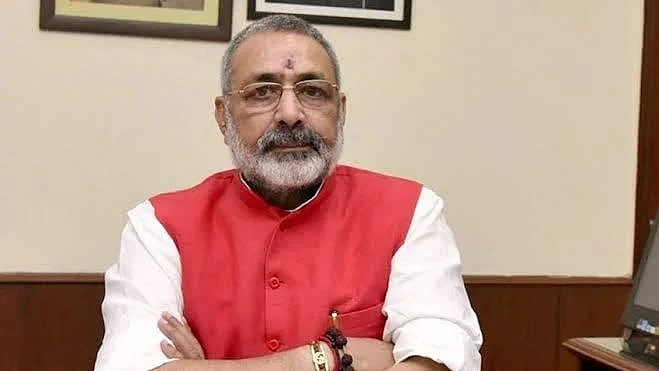
Union Minister for Textiles Giriraj Singh has reviewed the availability of raw jute and announced a series of measures to support the industry and farmers, amid a tight supply situation in the current season, officials said.
Singh assessed the prevailing market conditions and directed steps to boost the availability of raw jute for environment-friendly foodgrain packaging, they said.
As part of the measures, the government has allowed higher stock limits for jute mills and increased the prices of B-twill jute bags to help the industry cope with elevated raw material costs, according to an official statement.

1 September 2026
Get the latest issue of Outlook Business





The Centre has also decided to further intensify the ongoing dehoarding drive being carried out by the Office of the Jute Commissioner to detect and act against entities holding raw jute beyond permissible limits, it said.
The Jute Commissioner has tightened raw jute stockholding norms for traders and mills with immediate effect, amid a sharp surge in prices to around ₹13,000 per quintal, the officials said.
The move partially modifies an earlier order issued in December, 2025, and is aimed at curbing hoarding and stabilising the market, they said.
Under the revised norms, registered balers can now hold a maximum of 1,200 quintals of raw jute, while other registered stockists have been capped at 25 quintals.
Advertisement

Unregistered traders have been barred from holding more than five quintals. Jute mills have been allowed to maintain stocks equivalent to only 45 days of consumption, calculated on the basis of current production levels, the statement said.
Jute Commissioner Amrit Raj has directed all entities holding stocks beyond the revised limits to liquidate the excess within 10 days of the order.
The state police and enforcement agencies have been authorised to enter premises, verify stock declarations and seize raw jute held in violation of the order, the officials said.
In order to cushion the impact of high raw jute prices, the Centre had raised B-twill jute bag prices in phases from ₹58-60 per bag in September 2024 to ₹74 in September 2025, and further to ₹87.20 per bag in January 2026.
Advertisement

The measures reflect the government’s commitment to safeguarding the interests of jute farmers and workers, nearly 80% of whom are based in West Bengal, they said.
The Jute Balers’ Association (JBA), however, expressed reservations over the tightening of norms, terming the narrative around raw jute availability “misleading”.
In a letter to the Ministry of Textiles, the association said balers were excluded from recent tripartite consultations chaired by West Bengal Labour Minister Moloy Ghatak, during which some stakeholders even suggested banning private trading in raw jute, a move the JBA warned could disrupt livelihoods across the value chain.
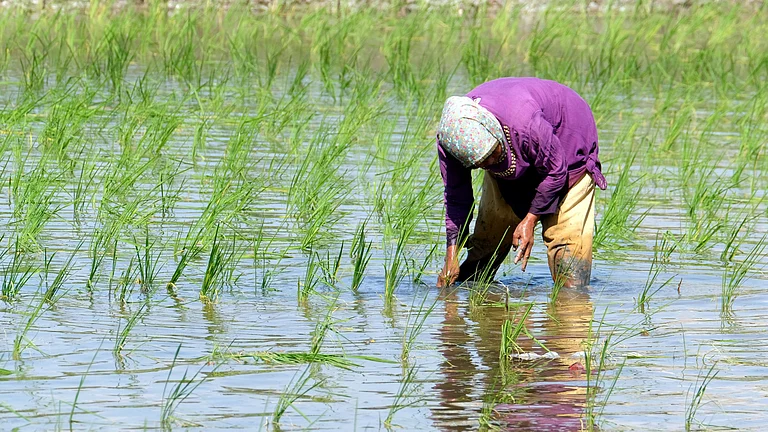
The association also cautioned that such statements, coming barely two months ahead of the sowing season, could discourage farmers. It urged enforcement agencies to adopt a compassionate approach towards small traders, particularly in remote areas.
Questioning claims of an acute shortage, the JBA said raw jute arrivals between July and December 2025 were about 30% higher than the corresponding period of the previous year, and called for a detailed assessment of the crop situation.