
Ajay Banga says World Bank’s core goal is creating jobs and reducing poverty.
Institution originally rebuilt Europe and Japan before shifting focus to developing countries.
World Bank funds infrastructure, climate, health and social projects across developing economies.
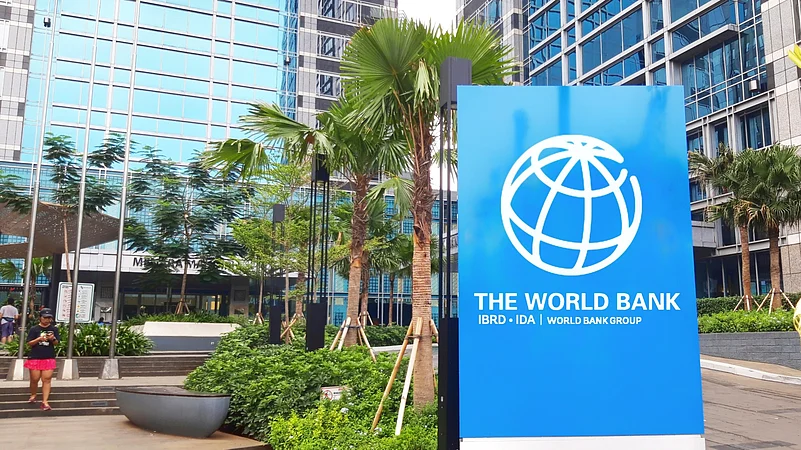
President Ajay Banga told Nikhil Kamath during his interview series, ‘People by WTF’ that the World Bank has many purposes. He talked about how the group started and how its goals have changed since then. The first version was meant to help Europe and Japan rebuild after World War II. Now, its goal is to end poverty and help countries in need.
Kamath further asked Banga to explain the World Bank’s purpose in simple terms. Banga said its core aim is to create jobs for young people and reduce poverty, adding that employment not only gives incomes but also brings stability and hope.

1 September 2026
Get the latest issue of Outlook Business

He also noted that this was not always the objective of the World Bank. Originally, the International Bank of Reconstruction and Development (IBRD) was set up after World War II to rebuild Europe and Japan, before later shifting towards supporting developing countries.
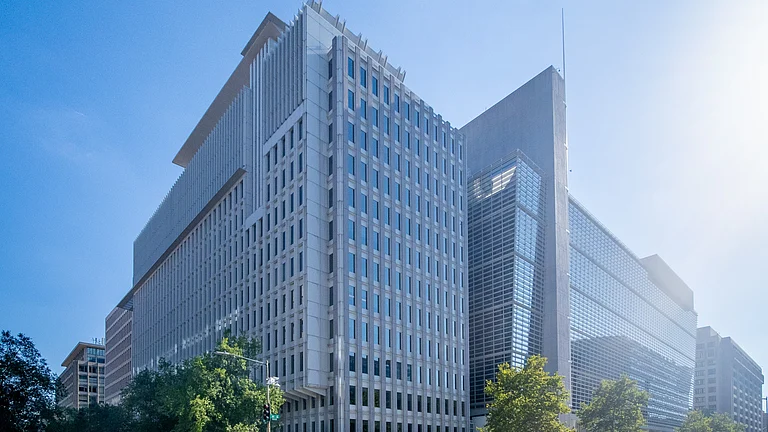
Global Development Role Explained
The World Bank is a global financial organisation that helps low- and middle-income countries fight poverty and promote long-term growth. It gives money, loans, and technical help to projects in areas like infrastructure, healthcare, education, agriculture and making communities more resilient to climate change. The World Bank also gives governments policy advice, research and data to help them make social and economic programmes that work.
Advertisement
According to the World Bank website, the organisation has funded over 15,000 development projects via traditional loans, interest-free credits, and grants.
It wants to work with countries, institutions and the private sector to boost economic growth, raise living standards and make people more resilient to global problems like climate change, inequality and unstable economies.

How The Bank Funds
The International Bank for Reconstruction and Development makes money through earnings from loans and investments. It raises most funds by selling bonds and debt securities on world financial markets.
Advertisement
Additional revenue comes from shareholders’ capital, retained earnings, and a small service fee charged on loans. While not a profit-maximising institution, the Bank has posted a profit every year since 1947 to maintain its long-term credit standing.
World Bank Projects in India
The World Bank has paid for many different kinds of projects in India, including those in health, education, infrastructure and climate. The National Ganga River Basin Project and its second phase are two of these projects. They focus on cleaning and restoring the Ganga.
The Dam Rehabilitation and Improvement Project (DRIP) and DRIP-2 are two other projects that aim to make dams safer and more resilient. It has also helped improve infrastructure and promote sustainable development across the country by funding rural roads, rail connections, solar energy expansion, irrigation systems and healthcare and social protection programmes.