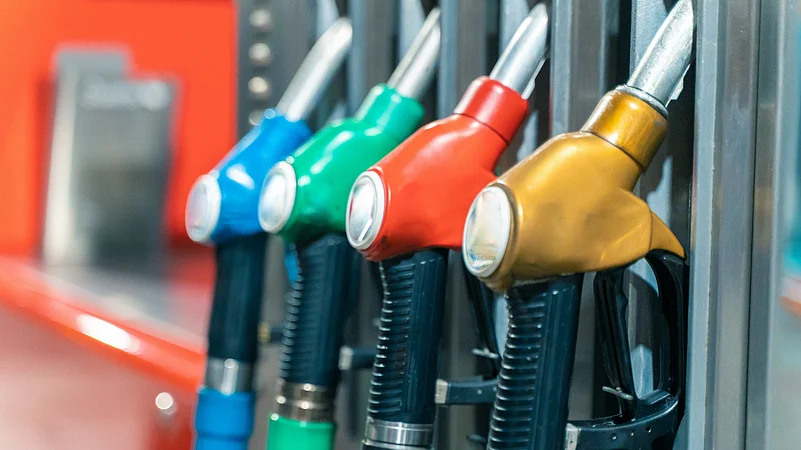
About ₹700-1,000 crore loss per day. ₹30,000 crore every month. India's state oil companies are quietly absorbing a massive financial hit to keep petrol, diesel and LPG prices unchanged even as global energy markets face a turmoil that is bigger than all previous crises combined.
While countries from Japan to United Kingdom have raised petrol and diesel prices by up to 30% since the start of the West Asia conflict, fuel prices in India continue at two-year-old levels.
The war disrupted India's import of 40% of crude oil (raw material for making petrol and diesel), 90% cooking gas LPG and 65% natural gas (used to generate electricity, make fertilizer, turned into CNG and piped to household kitchens for cooking), but state-owned oil companies have maintained uninterrupted fuel supplies with no rationing or shortage at any point in the last 10 weeks.

1 September 2026
Get the latest issue of Outlook Business

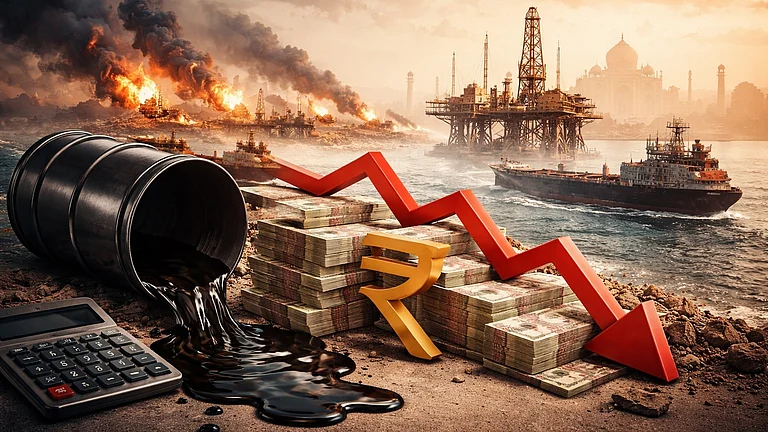
But this has come at a cost - ₹30,000 crore under-recovery or loss every month for the three oil marketing companies - Indian Oil Corporation (IOC), Bharat Petroleum Corporation Ltd (BPCL) and Hindustan Petroleum Corporation Ltd (HPCL), two sources with direct knowledge of the matter said.
The under-recoveries - the gap between input costs and realised retail prices - rose sharply in March/April before tapering a bit. Daily under-recoveries during April were estimated at about ₹18 per litre on petrol and ₹25 per litre on diesel, translating into average losses of ₹700-1,000 crore a day for OMCs, they said.
At a news briefing on developments in West Asia, Sujata Sharma, Joint Secretary in the Ministry of Petroleum and Natural Gas, said prices in the international markets, on which India relies to meet 88% of its oil needs, have been volatile and supplies impacted.
Advertisement
Crude oil prices which were around $70 per barrel two months ago, are now at $120, she said. "It has been government's endeavour to keep prices stable so far and that there is no price increase for consumers," she said. "This has hit finances of OMCs... monthly under-recoveries are of the order of ₹30,000 crore." She, however, refused to say if retail petrol and diesel prices will continue to hold.
"As I said, the endeavour so far has been to see that there is no price increase," she said.
The three oil marketing companies (OMCs) have worked overtime to keep the supply lines running even when demand spiked due to panic buying.
Advertisement
The government intervention included excise duty reductions and absorption of part of the fuel cost burden. The special additional excise duty on petrol was cut to ₹3 per litre from ₹13, while excise duty on diesel was reduced to zero from ₹10 per litre.
The under-recoveries would have swelled to nearly ₹62,500 crore had the government not cut excise duty on petrol and diesel by ₹10 per litre each.
The government, Sharma said, has taken a hit of ₹14,000 crore a month in cutting the excise duty.
The Centre's effective absorption at peak crude prices was estimated at around ₹24 per litre for petrol and ₹30 per litre for diesel.
The February 28 strikes by the United States and Israel on Iran triggered a sharp escalation in West Asia tensions. Energy prices surged as the conflict widened and shipping risks intensified in the Strait of Hormuz - the shipping lane through which India and other countries imported crude oil, LPG and natural gas from Gulf countries. Tanker movement was disrupted.
The companies also faced additional costs from emergency crude sourcing, higher freight charges due to vessel diversions, elevated marine insurance premiums and refinery optimisation expenses. Despite these pressures, fuel and LPG supplies remained uninterrupted across the country.
The surge in crude prices and the decision to shield consumers from higher retail prices placed significant strain on OMC balance sheets and refining margins, sources said.
They added that the measures reflected a policy decision to prioritise consumer stability and economic continuity during a global energy shock.
Sources warned that a prolonged period of elevated crude prices could lead to higher working capital borrowings and force some recalibration of capital expenditure plans. However, investments linked to refining expansion, energy security infrastructure, ethanol blending, biofuels and transition fuels would continue with government backing, they said.
India's approach contrasted with measures adopted by several other economies, where fuel prices rose sharply after the conflict-driven energy shock.
Petrol prices increased by about 34% in Spain, 30% in Japan, Italy and Israel, 27% in Germany and 22% in the United Kingdom, according to estimates. Several countries also introduced rationing, conservation advisories, emergency relief packages or fuel caps.
In India, petrol prices remained ₹94.77 per litre and diesel at ₹87.67, with no rationing, mobility restrictions or supply disruptions, they added.
Sharma said the revenues that OMCs earn are used to buy crude oil, build infrastructure to process it into fuel and create channels that will take the fuel to consumers.


Their capex spending is all dependent on the revenues they earn, she added.