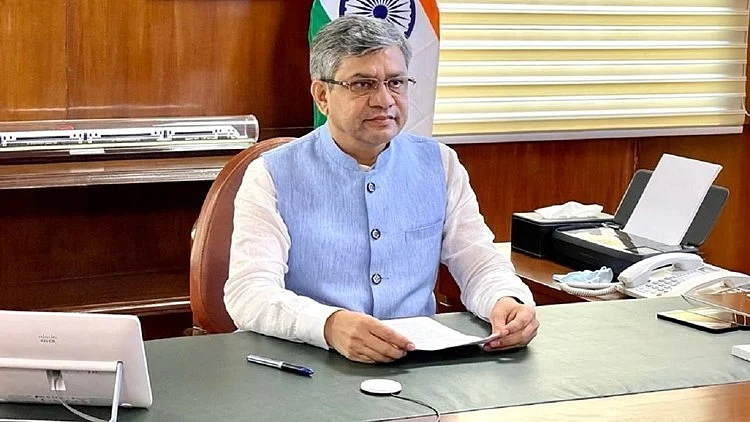
As India hosts its first global AI event, Union Minister for Electronics and Information Technology Ashwini Vaishnaw said at the India AI Summit that the country is expecting strong investment inflows of up to $200 billion over the next two years, spanning all five layers of the AI stack, including infrastructure, common computing facilities, applications, and related technologies.
IndiaAI Mission 2.0 will focus on strengthening research and development and enhancing common computing facilities for startups, entrepreneurs, and researchers.
“We are witnessing strong investment opportunities taking shape, with expected inflows exceeding USD 200 billion. We are also seeing strong participation from venture capitalists, as well as major investments in infrastructure and energy,” he added.
Vaishnaw also informed that the government is also looking for IndiaAI Mission 2.0 that will expand its focus on AI research and development, accelerate AI diffusion, and strengthen common computing facilities for all stakeholders.
Vaishnaw further said that the ministry will soon add 20,000 GPUs and, within the next week, strengthen the country’s AI computing capacity.

1 September 2026
Get the latest issue of Outlook Business

He also informed that collaboration with the Ministry of Education (India) and the All India Council for Technical Education, the government is focused on building a strong talent pipeline by working closely with educational institutions and industry partners.

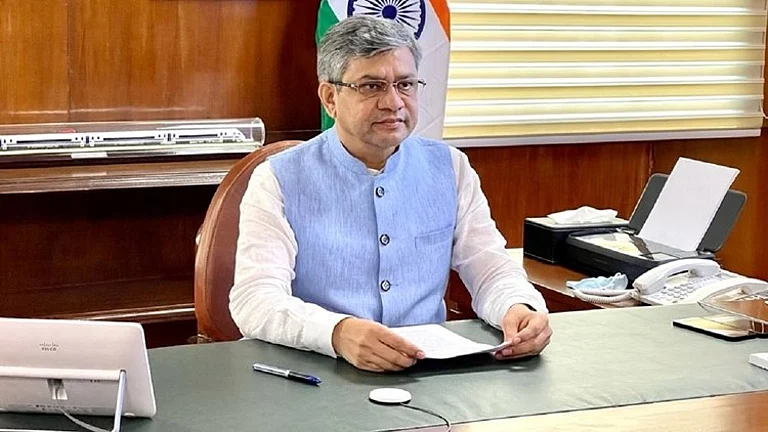

While addressing the media at the India AI Summit, the Union Minister said that beyond regulation, there is a need for a broad consensus on using artificial intelligence for social good.
Advertisement
He emphasized that a strong techno-legal framework is essential to prevent misuse and mitigate risks, adding that the government is working closely with several academic institutions in this regard.
Responding to questions on age restrictions for social media, deepfakes, and platform accountability, Vaishnaw shared with Outlook Business that all companies must operate within the legal framework of the country in which they function.
He said multinational firms are expected to respect local laws and cultural contexts, noting that practices permitted in one country may be restricted in another.
On the issue of deepfakes and child safety, Vaishnaw added that the need for stronger guidelines and said discussions are underway to enhance protections.
Advertisement
“We have also had discussions about protecting children. We definitely must create a consensus within parliament. Part of our DPDP, when we created age based differentiation, we already took the forward looking step. Right now, we are in conversations with social media platforms around this,” he underlined.