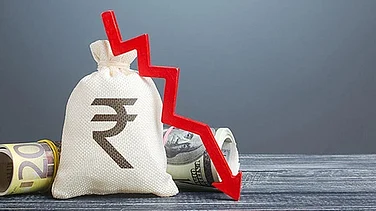

Sensex rose 510 points and Nifty topped 24,150 in early trade.
Brent crude fell below $73, easing inflation and growth concerns.
Stronger Asian markets and a firmer rupee boosted investor sentiment.
Indian benchmark indices traded higher on Friday morning, tracking gains across Asian markets as crude oil prices fell below levels seen before the Iran conflict, easing concerns over inflation and economic growth.
At around 9:50 a.m., the BSE Sensex was up 509.73 points, or 0.66%, at 77,500.95, while the NSE Nifty 50 gained 153.05 points, or 0.64%, to 24,174.70.

1 September 2026
Get the latest issue of Outlook Business

The rally was driven by a sharp decline in crude oil prices, firm global cues and broad-based buying across sectors. Fifteen of the 16 major sectoral indices traded in positive territory, while the broader market also remained firm, with the Nifty Midcap and Smallcap indices rising around 0.4% each.



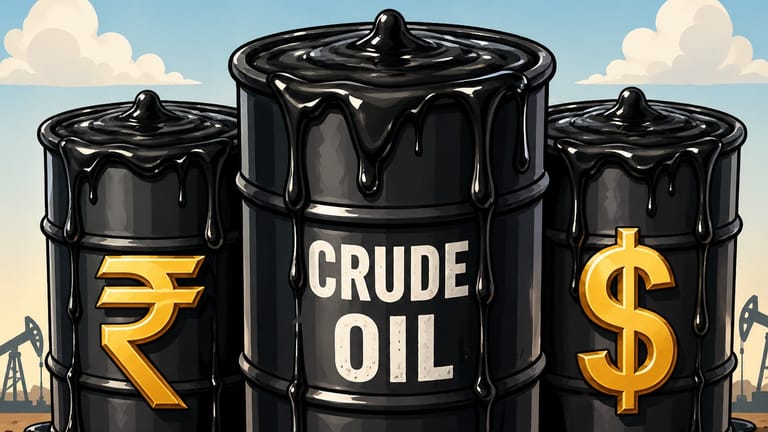
Crude Oil Drops Below Pre-War Levels
A key driver behind the market's advance was the continued decline in crude oil prices as supplies through the Strait of Hormuz improved following the initial peace agreement between the United States and Iran.
Brent crude fell around 1.7% to 1.8% and traded near $72.5 per barrel, while WTI crude slipped below $70. Crude oil futures have now declined for a fourth consecutive session, bringing prices back below levels prevailing before the conflict erupted.
The fall in oil prices is particularly positive for India, the world's third-largest crude importer, as lower energy costs help reduce inflationary pressures, improve the current account balance and support economic growth.
Advertisement

Asian Markets Extend Gains
Global sentiment also remained supportive after strong earnings and guidance from semiconductor majors Micron and Qualcomm helped ease concerns surrounding the sustainability of the artificial intelligence-led rally.
Asian markets rose about 1.3%, with investors returning to technology stocks after recent volatility in semiconductor-heavy markets such as South Korea and Taiwan.
The positive global backdrop helped lift risk appetite across emerging markets, including India.
The Indian rupee opened stronger against the US dollar, supported by lower crude oil prices.
The domestic currency opened at 94.30 per US dollar, compared with the previous close of 94.65, extending its recent gains as easing oil prices improved India's external outlook.
Advertisement
However, broader Asian currencies remained under pressure from safe-haven demand for the US dollar amid lingering uncertainty around global interest rates.
Falling Crude A Major Positive
VK Vijayakumar, Chief Investment Strategist at Geojit Investments, said Brent crude falling below $73 per barrel has significantly reduced concerns surrounding India's current account deficit and balance of payments position.
He noted that lower oil prices could positively influence India's GDP growth and inflation trajectory in FY27, making it a strong bullish factor for domestic equities.
According to Vijayakumar, the major risk for the economy remains the deficient monsoon. Sectors dependent on rural demand, including tractors, agro-machinery, fertilisers, crop-protection products, FMCG and entry-level two-wheelers, could face pressure if rainfall remains below normal.
In contrast, premium consumption segments, luxury automobiles, export-oriented businesses, information technology and pharmaceuticals are likely to remain relatively insulated from monsoon-related risks.
He also pointed to continued volatility in South Korean markets, where semiconductor stocks have witnessed sharp swings in recent sessions, as an important factor influencing global fund flows.
Investors will continue to monitor crude oil prices, monsoon progress and foreign institutional investor activity for further cues on market direction.