





Sensex and Nifty fell for a third straight session as banks and pharma stocks dragged benchmarks.
Surging crude oil prices, a weaker rupee and geopolitical tensions kept investor sentiment subdued.
Trump's proposed generic drug tariffs triggered a sharp selloff in pharmaceutical stocks.
Indian benchmark indices extended their losing streak for a third consecutive session on Wednesday as surging crude oil prices, weakness in banking and pharmaceutical stocks, and escalating geopolitical tensions dampened investor sentiment.
The Sensex fell 715.06 points, or 0.92%, to close at 76,755.05, while the Nifty 50 declined 191.45 points, or 0.79%, to settle at 23,996.25, slipping below the 24,000 mark.

1 September 2026
Get the latest issue of Outlook Business

Market breadth remained weak, with selling visible across sectors. Among the sectoral indices, all Nifty indices ended in the red except the Nifty Auto index, which edged higher. The broader market also came under pressure, with the Nifty Smallcap 100 falling 1.02% and the Nifty Midcap 100 declining 0.79%.


Auto stocks bucked the broader trend, with Bajaj Auto gaining around 4% and TVS Motor rising 3.5% after both companies reported strong June-quarter earnings.

Crude Oil Rally Adds Pressure
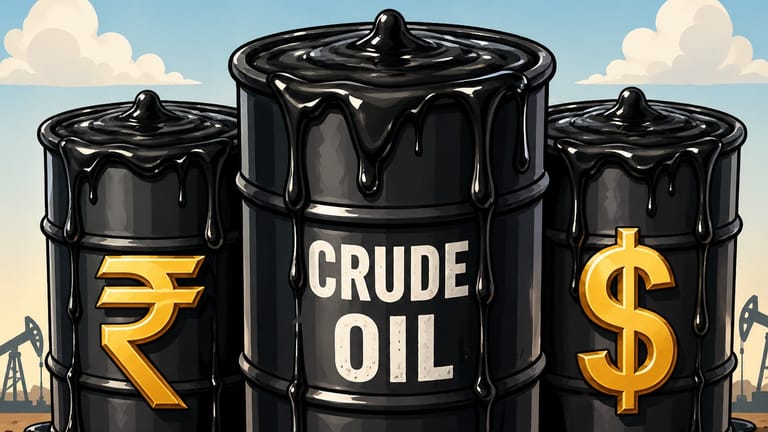
A sharp rise in crude oil prices remained one of the biggest drags on market sentiment. Brent crude, the global benchmark, climbed 4% to $94.72 per barrel, its highest level in more than five weeks, as the widening conflict in West Asia heightened concerns over potential supply disruptions through the Strait of Hormuz.
Advertisement
The benchmark was on track for a fourth straight session of gains. Higher oil prices are seen as a significant risk for India, the world's third-largest crude importer, as they could stoke inflation, widen the current account deficit and increase input costs for businesses.
The rupee depreciated 11 paise to 96.36 against the US dollar as rising crude prices and geopolitical uncertainty boosted demand for the greenback.
At the interbank foreign exchange market, the domestic currency opened at 96.36, compared with its previous close.
Meanwhile, India VIX, the market's fear gauge, jumped more than 6% to 13.39, reflecting heightened investor caution and expectations of increased market volatility.
Advertisement

Banks, Pharma Lead Declines
Banking stocks remained under pressure. Bandhan Bank plunged 17% despite reporting better-than-expected quarterly earnings after the lender lowered its return-on-assets guidance for FY27, citing expectations of lower net interest margins and higher operating expenses.
HDFC Bank declined another 1%, extending its post-results fall to around 8% over the past three sessions after disappointing investors with weaker-than-expected net interest margins.
The Nifty Bank index fell more than 1%, with both private and public sector banking indices declining up to 1.5%.
Pharmaceutical stocks also witnessed heavy selling after US President Donald Trump unveiled a phased tariff plan for imported generic medicines.
The Nifty Pharma index dropped more than 2%, making it the worst-performing sectoral index. Sun Pharma, Cipla and Dr Reddy's Laboratories were among the biggest losers on the Nifty as investors assessed the potential long-term impact of higher US tariffs on Indian drugmakers, many of which derive a significant share of their revenue from the US market.
Geopolitical Risks Remain In Focus
Investor sentiment also remained fragile amid escalating tensions in West Asia. Two oil tankers carrying Saudi crude to Asia reportedly reversed course in the Red Sea on Tuesday, while another tanker was struck in the Strait of Hormuz. Continued hostilities between the US and Iran, along with threats by Houthi rebels to commercial shipping, kept a geopolitical risk premium embedded in global markets.
Vinod Nair, Head of Research at Geojit Investments, said Indian equities remained under pressure as the US-Iran standoff and Houthi-led disruptions to key global shipping routes intensified concerns over oil supply, pushing crude prices higher and weakening the rupee.
He said the resulting risk-off sentiment and renewed concerns over domestic inflation overshadowed stronger-than-expected business updates and encouraging June-quarter earnings. Nair added that rate-sensitive sectors such as realty, banking and consumer durables led the decline, while pharmaceutical stocks came under pressure following renewed uncertainty over proposed US tariff measures. Despite the cautious backdrop, FMCG and auto stocks outperformed on the back of resilient quarterly earnings, highlighting investors' preference for companies delivering consistent earnings growth amid broader market volatility.









