




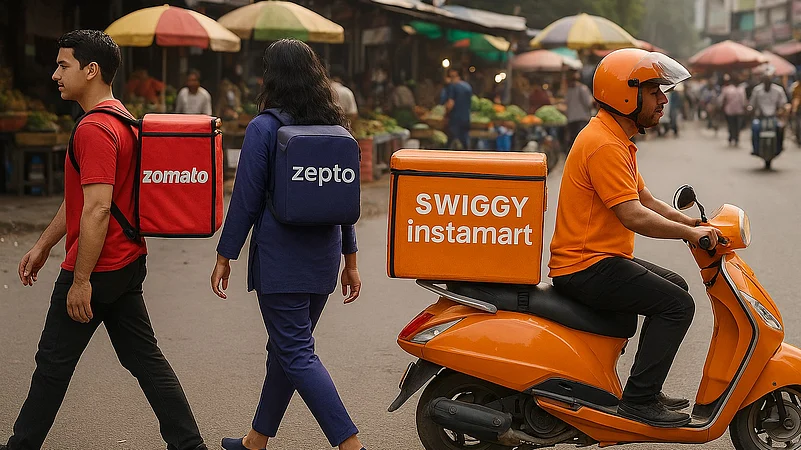
Maharashtra is considering bringing food delivery, quick-commerce and e-commerce platforms under its existing bike-taxi regulatory framework, potentially increasing compliance costs for companies such as Swiggy, Zomato, Zepto and Meesho.
The state's Law and Judiciary Department is reviewing proposed amendments to the Maharashtra Bike-Taxi Rules, 2025, according to reports.
If approved, the changes would extend several requirements currently applicable to bike-taxi operators to platforms that rely on delivery partners and two-wheelers for their operations.

1 September 2026
Get the latest issue of Outlook Business

What The Proposed Rules Could Mean
The proposed framework would require covered platforms to use electric vehicles, introduce GPS-based tracking for drivers and vehicles, provide insurance coverage and contribute 2% of each trip's fare towards a driver welfare fund.
The fund is expected to support benefits including pensions, accident insurance, loans for purchasing electric vehicles and educational assistance for drivers' children.
Maharashtra Transport Minister Pratap Sarnaik told The Indian Express that the rules would apply to bike trips of less than 15 km.
The EV mandate and other compliance requirements would come into force once the proposed amendments are approved.
The state also plans to establish a dedicated portal through the transport commissioner's office to enable real-time monitoring of vehicles.
However, applying the proposed 2% welfare contribution to food delivery and quick-commerce platforms could pose a regulatory challenge.
Advertisement
Bike-taxi operators typically charge passengers based on a defined fare, whereas delivery platforms use varying fee structures and compensate delivery partners differently.
It remains unclear whether the levy would be calculated based on the distance covered by a delivery partner, the amount paid to the partner or the value of the underlying customer order.
Maharashtra's Push For Gig-Worker Regulation
The proposed amendments come amid growing efforts by states to regulate platform-based work and provide social-security benefits to gig workers.
Karnataka has already introduced the Platform-Based Gig Workers (Social Security and Welfare) Act, 2025. The legislation requires platforms to contribute 1% towards a welfare fund.
Advertisement
The Karnataka government subsequently fixed the levy at 1% per transaction, subject to a cap of ₹0.50 for food and grocery deliveries. For ride-hailing services, the cap ranges from ₹0.50 to ₹1 depending on the vehicle category.
Platforms Challenge State-Level Levies
The Karnataka framework has faced opposition from several technology companies and industry bodies, including IAMAI, Eternal, Swiggy, Zepto, Urban Company, Uber and Meesho's logistics arm Valmo Transportation.
The companies have challenged the constitutional validity of the legislation, arguing that state-specific welfare laws could create overlapping obligations alongside the Centre's Code on Social Security, 2020.
They have also warned that having different contribution structures across states could increase compliance and operating costs for businesses with nationwide operations.

The Karnataka High Court declined to suspend the legislation but granted petitioners interim protection against coercive action, subject to them depositing the welfare contributions due for the April-June quarter with the court.
The matter is scheduled to come up again on August 14. For Maharashtra, the proposed framework could mark a significant expansion of state oversight over the gig economy, particularly as food delivery, quick commerce and e-commerce companies increasingly depend on large networks of delivery workers and two-wheelers.









