
GIVA is benefiting from the shift towards organised jewellery brands, as young consumers increasingly prefer branded players over unorganised sellers.
Strong traction in 14k and 9k gold, along with lab-grown diamonds backed by lifetime buyback and price assurance, is strengthening the 35% gold segment.
With business split evenly between online and offline, GIVA plans retail expansion from 300 stores today to 800–1,000 stores over the next few years.
Rising gold prices and sharp volatility in silver have reshaped consumer behaviour, positioning silver as an accessible fine jewellery choice, particularly among Gen Z. "One thing we keep hearing is that silver is the Gen Z gold," GIVA Founder Ishendra Agarwal tells Outlook Business. As gold prices climbed, the brand expanded from 18k to 14k and now 9k gold, seeing strong traction.
Lab-grown diamonds are being pushed with zero making charges, lifetime buyback, and price assurance to build trust and drive adoption.

1 September 2026
Get the latest issue of Outlook Business

Jewellery is increasingly being viewed as a fashion accessory rather than an investment, especially among younger buyers who prefer lightweight, expressive pieces.
GIVA is also witnessing growth in men’s jewellery and strong repeat purchases driven by gifting occasions. With business split evenly between online and offline channels, the brand is scaling up its physical presence from 300 stores currently to a significantly larger national footprint over the next few years.
Edited Excerpts:
The silver market has seen wild price swings and rising consumer interest lately. What are you seeing on the ground at GIVA, and how is the category evolving?
Advertisement
So there are multiple things going on. The first is the craziness and pride around silver. Every day we wake up to a very different story. All predictions have gone for a toss. Silver has moved from about ₹80,000 a kg six to nine months ago to nearly ₹3.5 lakh at one point…On a daily basis, there’s almost a 20% fluctuation. So there’s definitely a lot of pricing movement happening in silver.
Having said that, it has actually branded the metal a lot. With gold and silver prices rising, gold has become even more inaccessible, and women are now buying silver as a fine jewellery metal. So these are some of the macro-level changes we’re clearly seeing in silver.
Advertisement
How do you manage price fluctuations within an affordable price bracket for customers?
So we have inventory bought at lower rates, which means immediate price fluctuations don’t affect us as a brand because we’re still selling stock purchased at earlier price points. Also, we sell silver on a per-piece basis, so we do some periodic price revisions. For example, we increased prices slightly about 1–1.5 months ago. Beyond that, we try to absorb some of the price impact internally and work on improving costs through better sourcing. Those are the three levers we use.
Across the industry, brands are moving down the purity ladder, from 22k to 18k, then 14k and even 9k, to keep prices accessible. GIVA has done this too. How has that shift played out for you?
So when we started our gold lab-grown diamond jewellery brand, we initially began with 18k. At that time, gold was around ₹60,000–₹70,000. When gold went up to about ₹90,000, we introduced 14k, and it started picking up well. We were seeing roughly 40% sales from 14k and 60% from 18k. But with current prices, we did a pilot of 9k about three months ago and saw a great response. So now we’re going big on 9k as well.
If the price trend continues, then I think 9k will also move faster in India. In the US and Europe, it already is there, but in India, it will move faster.
What is the proportion of silver and gold jewellery in your overall revenue?
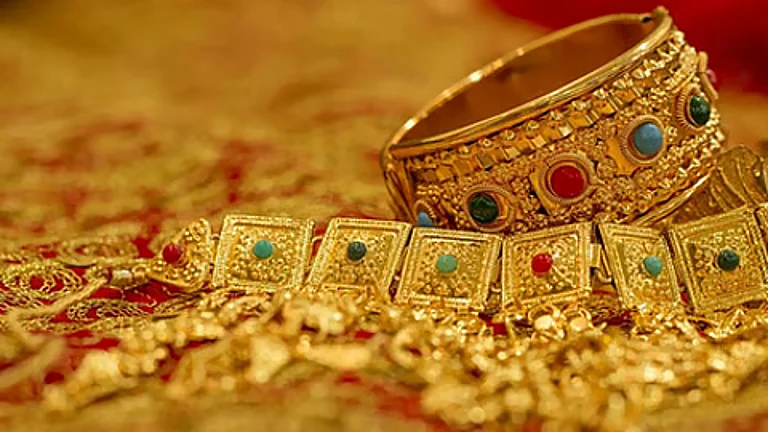
So for us, GIVA is about 65% of the overall revenue, which is silver. And our gold lab-grown diamond business is about 35% of our overall revenue.
In gold, we’ve seen a clear shift in purity from 22k to 9k. Is there a similar change in purity happening in silver?
In that sense, there’s no change in silver. In terms of purity, it’s all 925 only. If you look at the per-piece price of jewellery, the silver component itself is relatively small, so the metal doesn’t make up a huge proportion of the cost. Price changes in silver do affect the product price, but not enough for customers or brands to move to lower purities.
Currently, gold and diamonds account for about 35% of your mix. Do you see that 9k gold share increasing going forward?
We are seeing growth there. But at the same time, in the last two months, silver demand has increased a lot because gold prices have gone up. The broader trend is that people are moving from 22k–18k to more affordable fine metals. If someone has a ₹20,000 budget, they’re either choosing 9k or 14k gold, or buying three or four silver pieces for the same amount, instead of one piece in 18k. So it really depends on how customers want to spend their budget.
What trends are you seeing in the market right now, and how are you tapping into younger consumers?
We have a fairly balanced mix between millennials and Gen Z. Our silver offering is largely Gen Z-driven, while gold is more millennial-driven. One thing we keep hearing is that silver is the Gen Z gold. That’s how they see it.
Gen Z wants more designs and more variety. They’re not looking at jewellery as an investment; they see it as a fashion accessory and a way to express themselves. In our stores, we often see Gen Z customers coming in with their mothers and convincing them to buy silver from GIVA. So in a way, they’ve become our brand ambassadors, telling people why buy gold when you can buy silver. They’re much more experimental and comfortable with lower-priced fine metals.

What is GIVA’s buyback and exchange policy?
In silver, we don’t have a buyback. In gold, we do. We offer lifetime buyback and lifetime exchange. We’re also coming up with a best price guarantee for our lab-grown diamonds. If you bought a diamond at a certain price and the price later increases or drops, you get the better of the current price or your purchase price. So you’re price-assured. It helps build more trust in lab-grown diamonds.
How do you see the lab-grown diamond market evolving, especially compared to natural diamonds?
Over the last year, lab-grown diamond prices fell about 30-35%. For the past six months, they’ve been stable, and now they’re gradually moving up. There’s a fixed cost to making diamonds: manufacturing, polishing, setting. I think prices have more or less bottomed out and will stabilize in the long term. The price difference of lab-grown diamond versus natural diamonds is almost half to one-third.
What strategies are you using to promote lab-grown diamond jewellery?
Right now, we’re offering zero making charges across products. We have lifetime buyback and a 15-day no-questions-asked return policy.
How do you see the gifting culture, and what role does GIVA play in it?
Gifting has always been our forte. Valentine’s keeps us very busy. Jewellery is a natural gifting option with proposals, occasions, everything. And our price points help. We’re not a ₹1–3 lakh gift brand. You can buy a great silver gift for ₹3,000–₹4,000, or gold starting ₹15,000–₹20,000. So it’s meaningful but affordable.
Our repeat rate is strong. Customers usually come back within five to six months. Valentine’s is the biggest season, followed by Mother’s Day, Akshaya Tritiya, GIVA Birthday, Raksha Bandhan and Diwali.
How do you see the industry evolving over the next 5–10 years, especially with rising competition?
The market is getting more organised. People prefer buying from brands rather than unorganised players, similar to what happened in gold earlier. The per-piece price of jewellery has come down, and women now see jewellery more as something to wear and accessorise, not just store in lockers. Lightweight pieces are preferred, and heavy gold volumes are getting affected.
What about men’s jewellery?
Our men’s jewellery share has gone from zero three years ago to over 12% now. It’s still early but growing. Men are accessorising more with chains, bracelets, rings, and single earrings. And they’re willing to spend. Preference is largely towards silver.
How do you see offline versus online retail playing out?
Discovery happens online, but purchases happen both online and offline. Digital drives discovery, but shopping in India is also an experience. Offline lets you try products, check sizing and see how it looks. Online has returns and other hassles. Right now, we’re about 50-50 between online and offline. We have around 300 stores and plan to add 180–200 next year. Over the next 3–4 years, we aim to scale to 800 to 1,000 stores.
Currently, how much of your consumers are Gen Z?
Around 30–40% are Gen Z and about 60% millennials. That share will go up as Gen Z starts earning more and their fashion needs evolve.
Which jewellery pieces or collections are you focusing on now?
Our recent collection, Glow in Motion, is focused on signature statement pieces, and we launched it with Barkha Singh, an actor and influencer. Glow in Motion has been growing very well. We also introduced the All Yours collection, emoji jewellery, since people express themselves through emojis now. We’re also launching a pearl collection soon.