Subhadra has benefited 1.04 crore women, with over ₹20,600 crore disbursed through direct transfers.
Women saving for businesses rose to 53%, up from 25.5% after the second instalment.
Demand for skill training jumped to 64%, signalling rising aspirations for economic independence.
Odisha’s flagship Subhadra scheme has begun driving women towards entrepreneurship and greater financial independence, with a sharp rise in the number of beneficiaries seeking skill development and setting aside money for businesses, said Dr. (Ms.) Mrinalini Darswal, IAS, Commissioner-cum-Secretary, Women & Child Development Department, Government of Odisha.
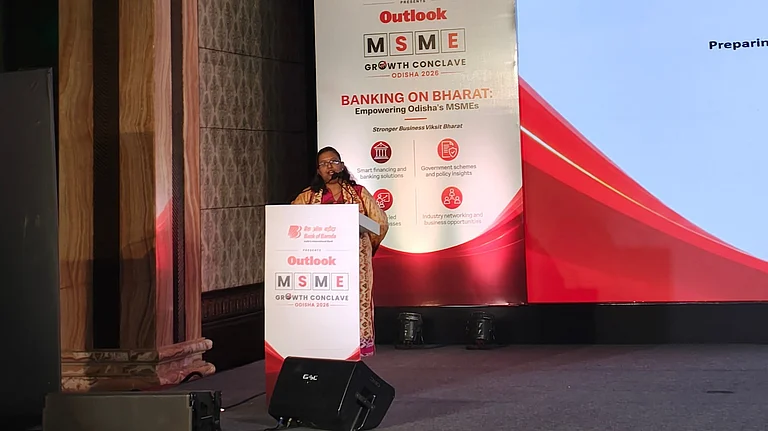
Speaking at the Outlook MSME Growth Conclave – Odisha 2026, Darswal said the state’s focus should now move beyond providing financial assistance to helping women convert financial agency into enterprises, income and leadership.

1 October 2026
Get the latest issue of Outlook Business

“The topic is women's economic empowerment from financial agency to enterprise, income and leadership,” Darswal said, adding that Subhadra had created the foundation for this transition by putting money directly into women’s own bank accounts.

Under Subhadra, eligible women receive ₹10,000 annually in two instalments over five years, with the money credited to accounts held in their own names. Darswal said more than 1.04 crore women across all 30 districts had benefited, with more than ₹20,600 crore disbursed through direct benefit transfers and CBDC.

According to evidence gathered by the state, the impact of the scheme is going beyond household spending. Darswal said that after the second instalment, 25.5% of women had used the money towards setting up a business. After the fourth instalment, the share of women putting the money aside for business had risen to 53%.
Advertisement
She said financial independence among beneficiaries increased from 63.9% to 78%, while three in four women reported feeling genuinely empowered. Average bank balances of Subhadra beneficiaries also increased by ₹6,887, while average spending rose by ₹1,950.
But, according to Darswal, perhaps the strongest signal of changing aspirations is the rising demand for skills.
“After the second instalment, 12.5% of women said yes” when asked if they wanted skilled training. “When we asked them after the fourth instalment, 64% of women said yes,” she said.
“Financial security did not make her want less, it made her want more. She did not return asking for a larger transfer, she returned asking for capability,” Darswal said.